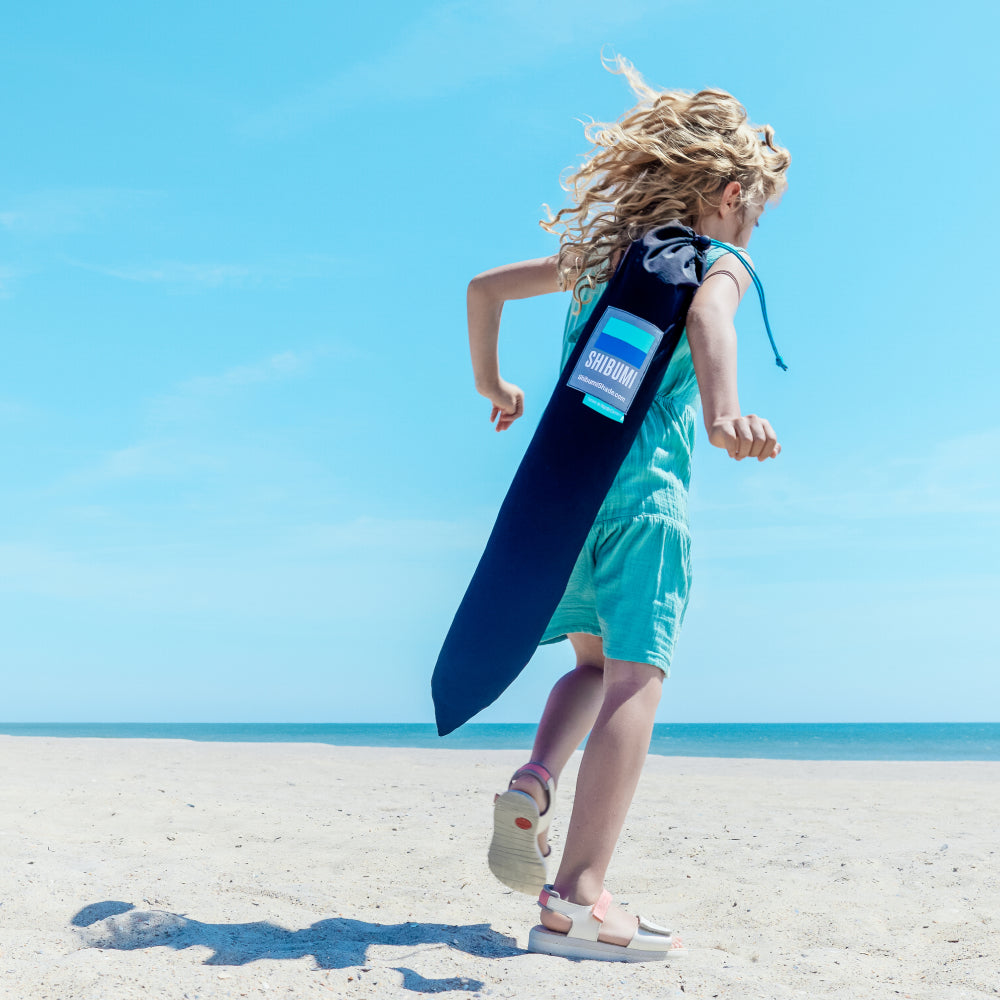
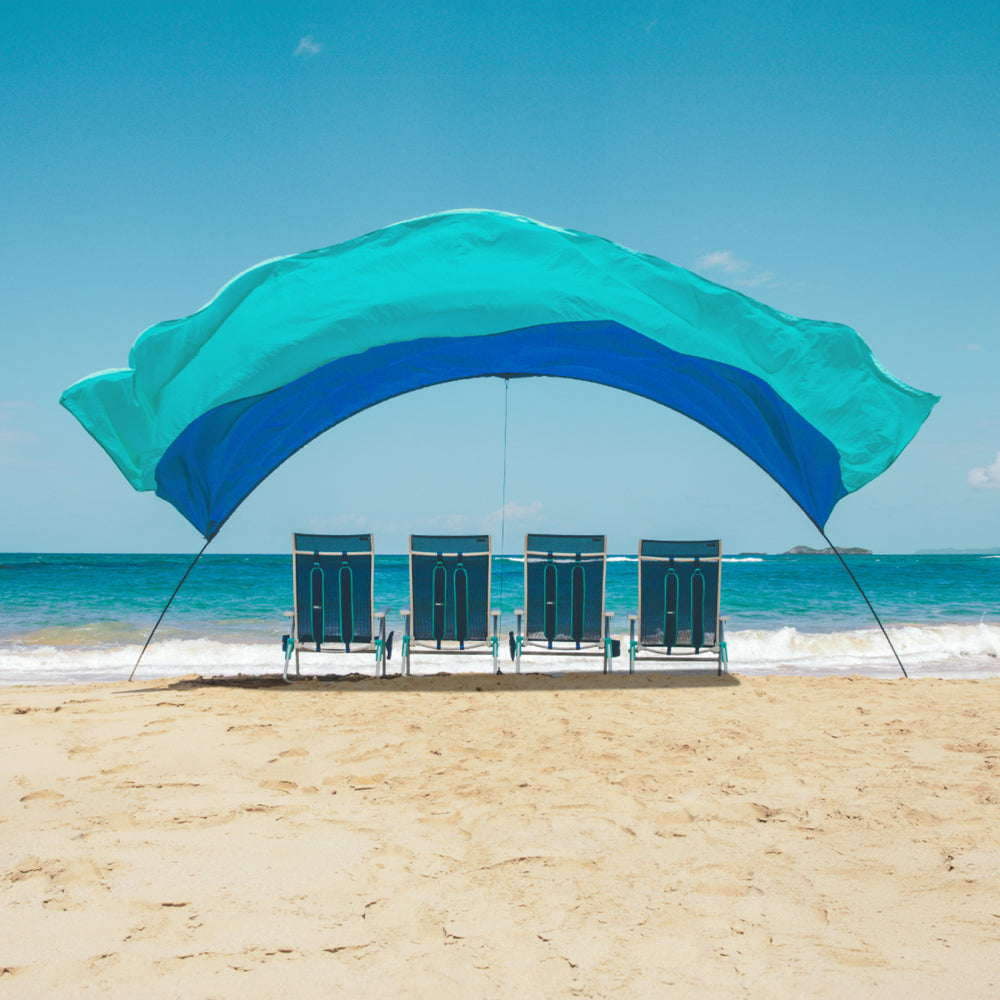
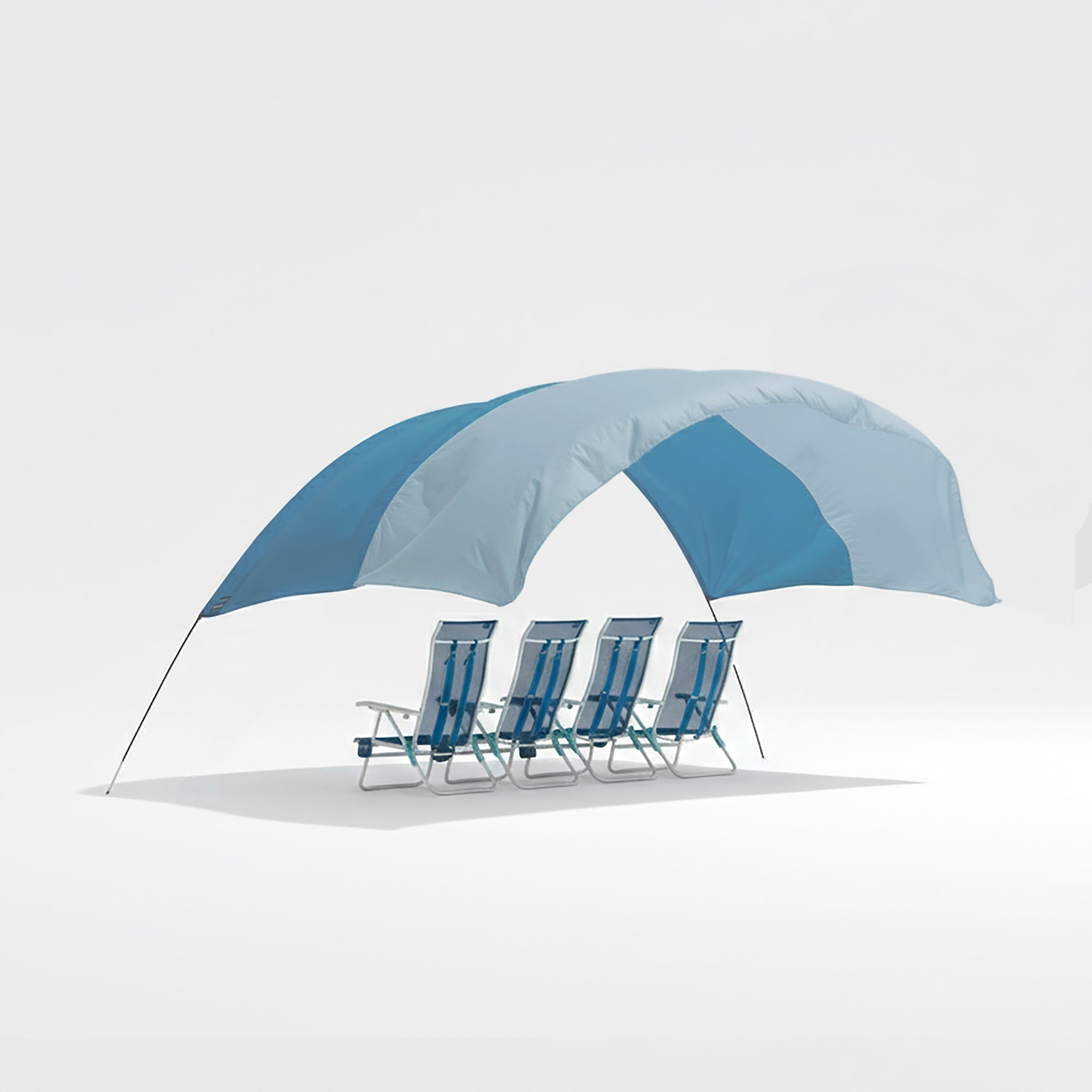
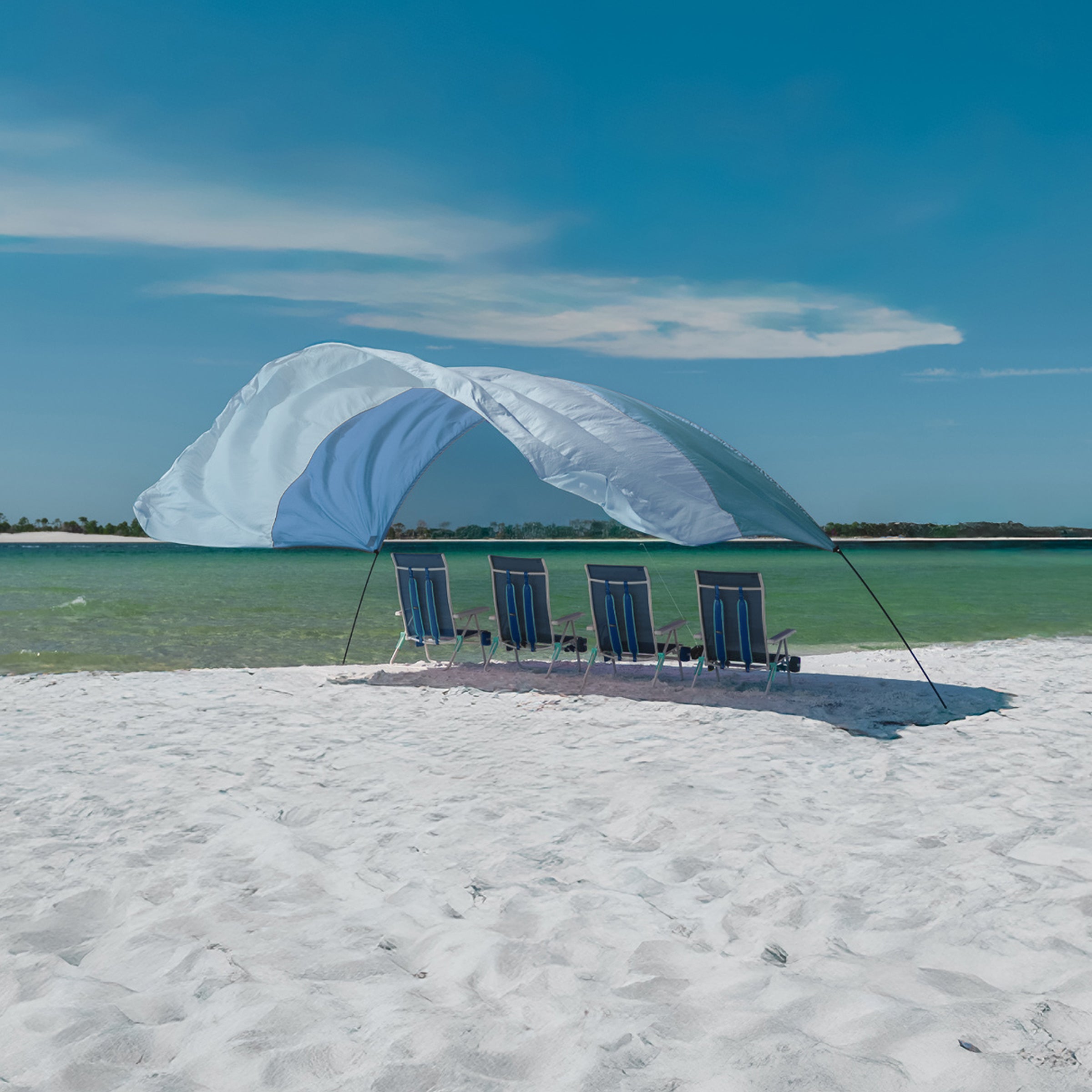
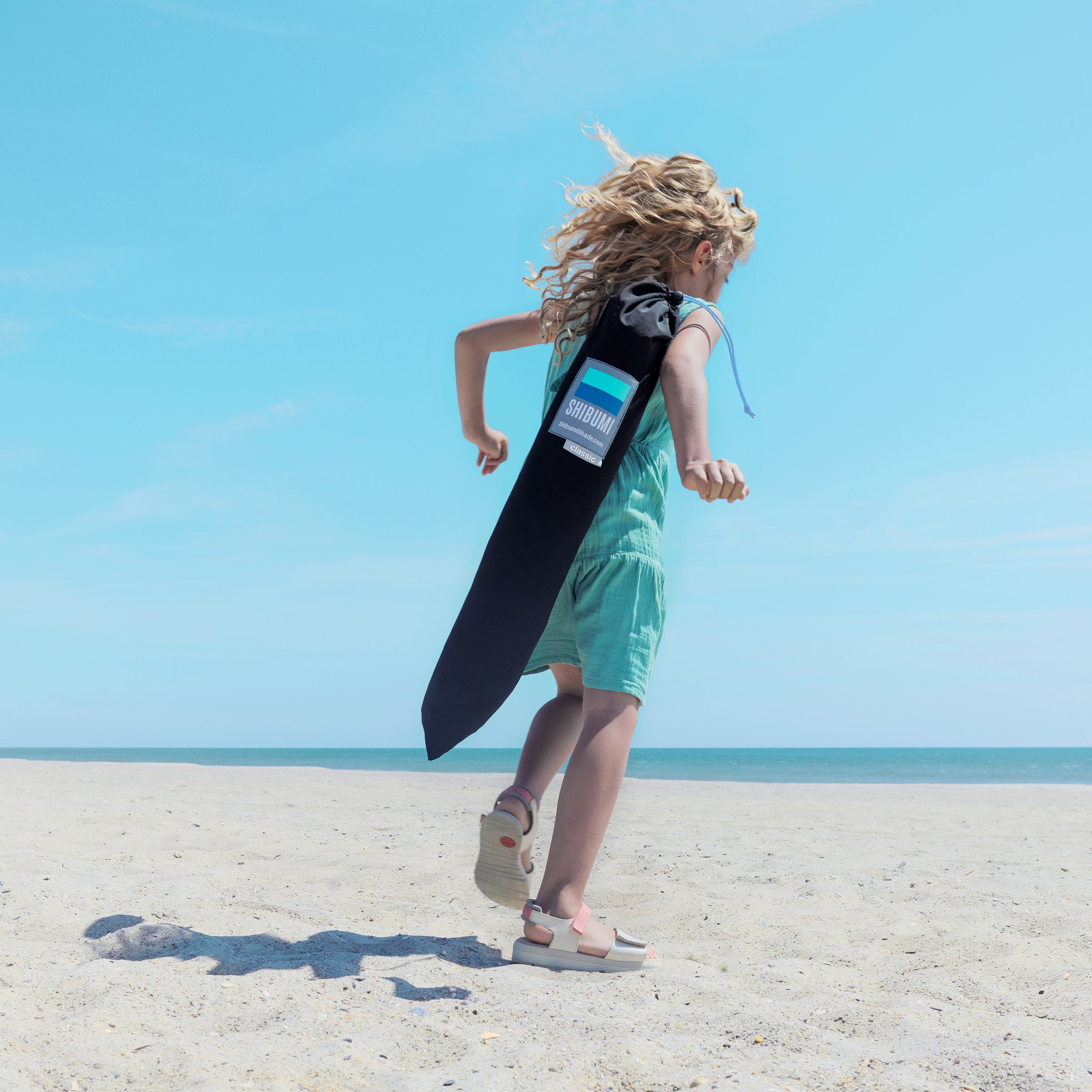
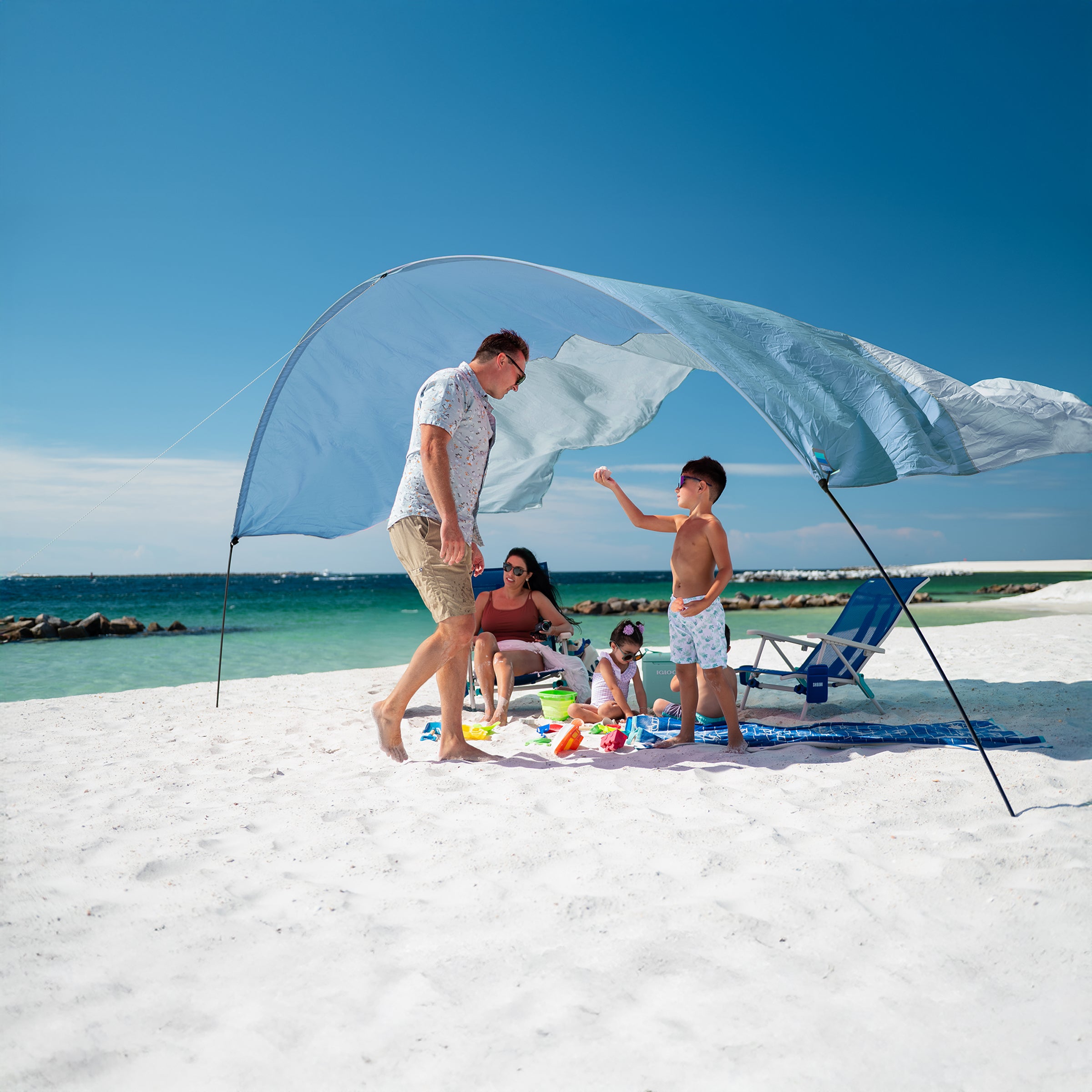
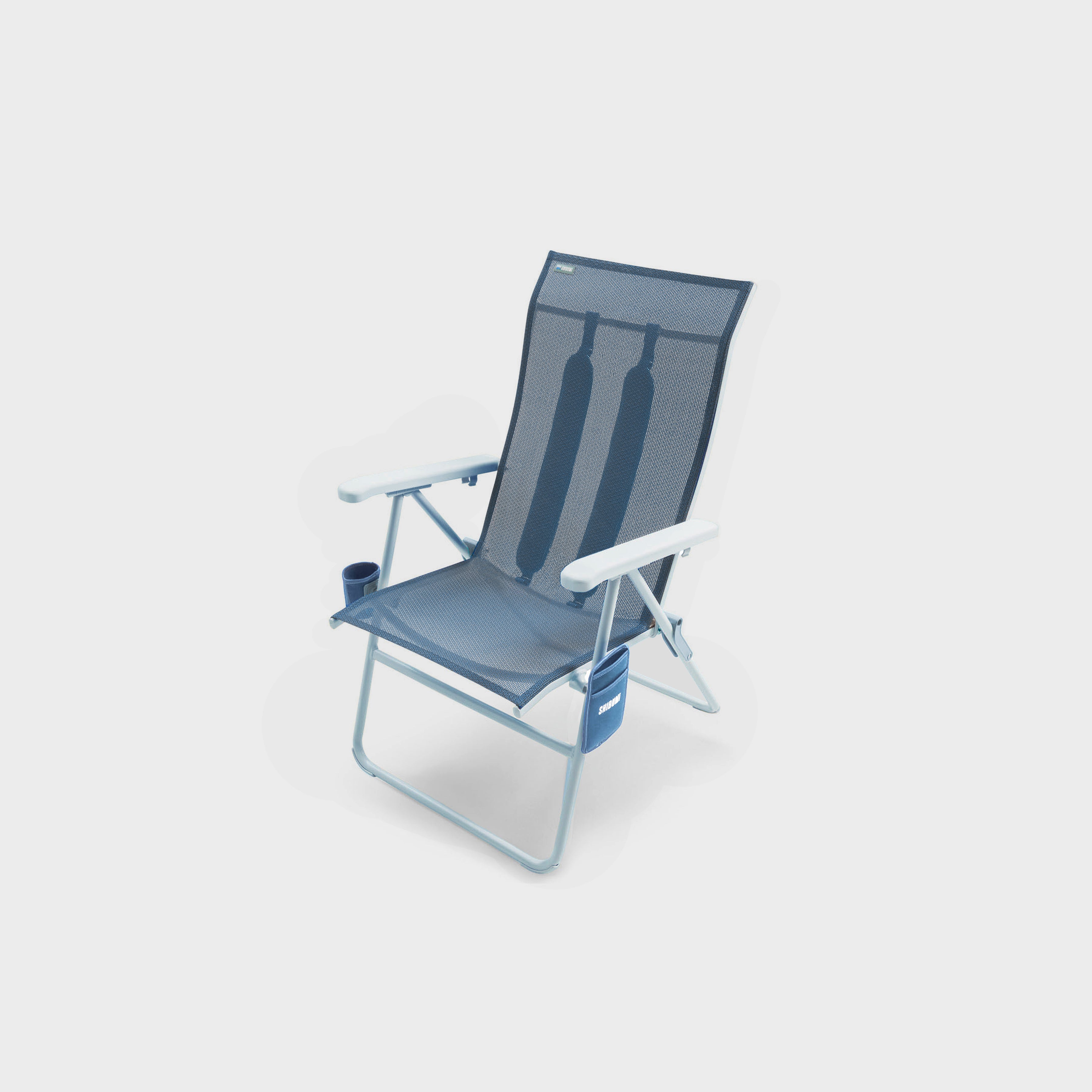
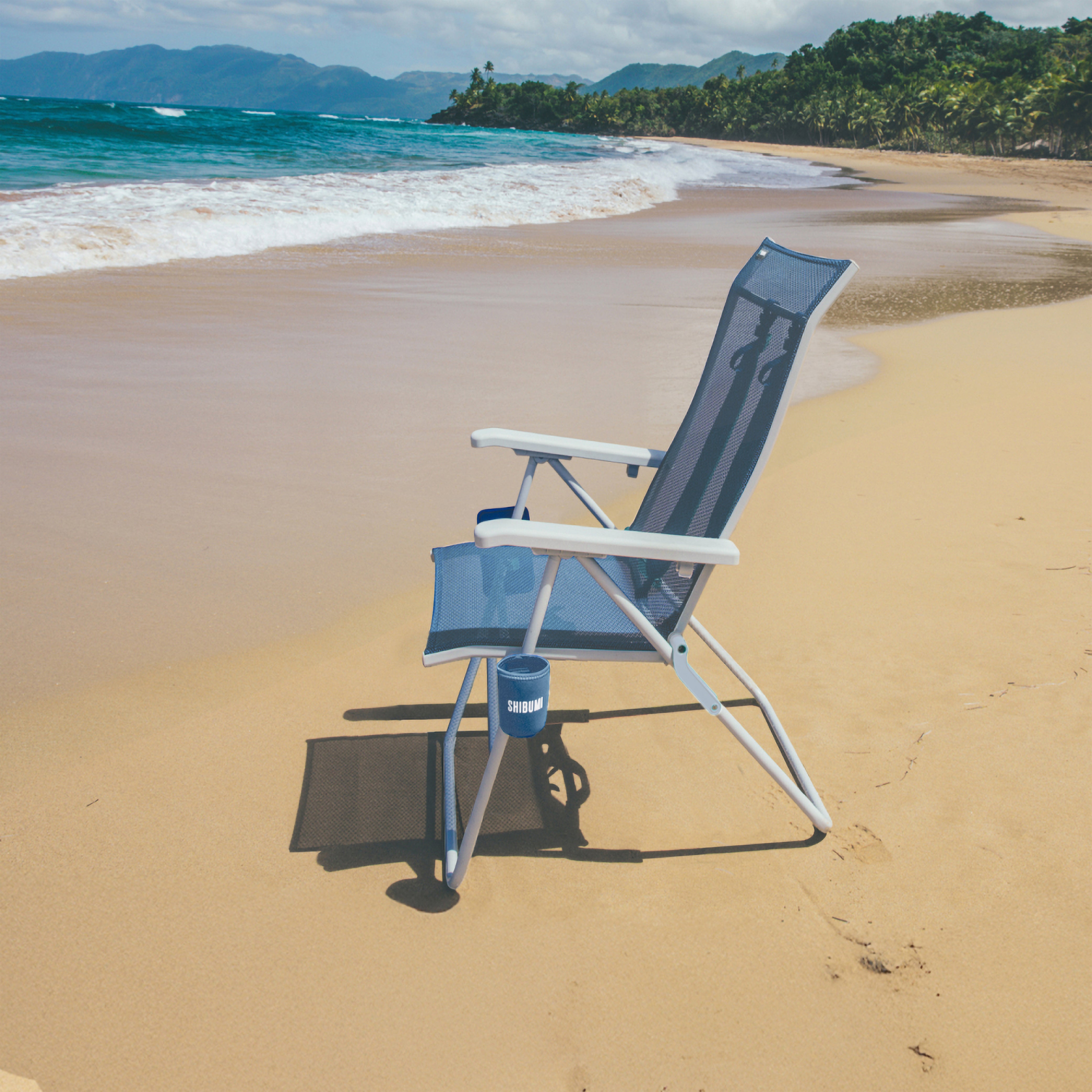
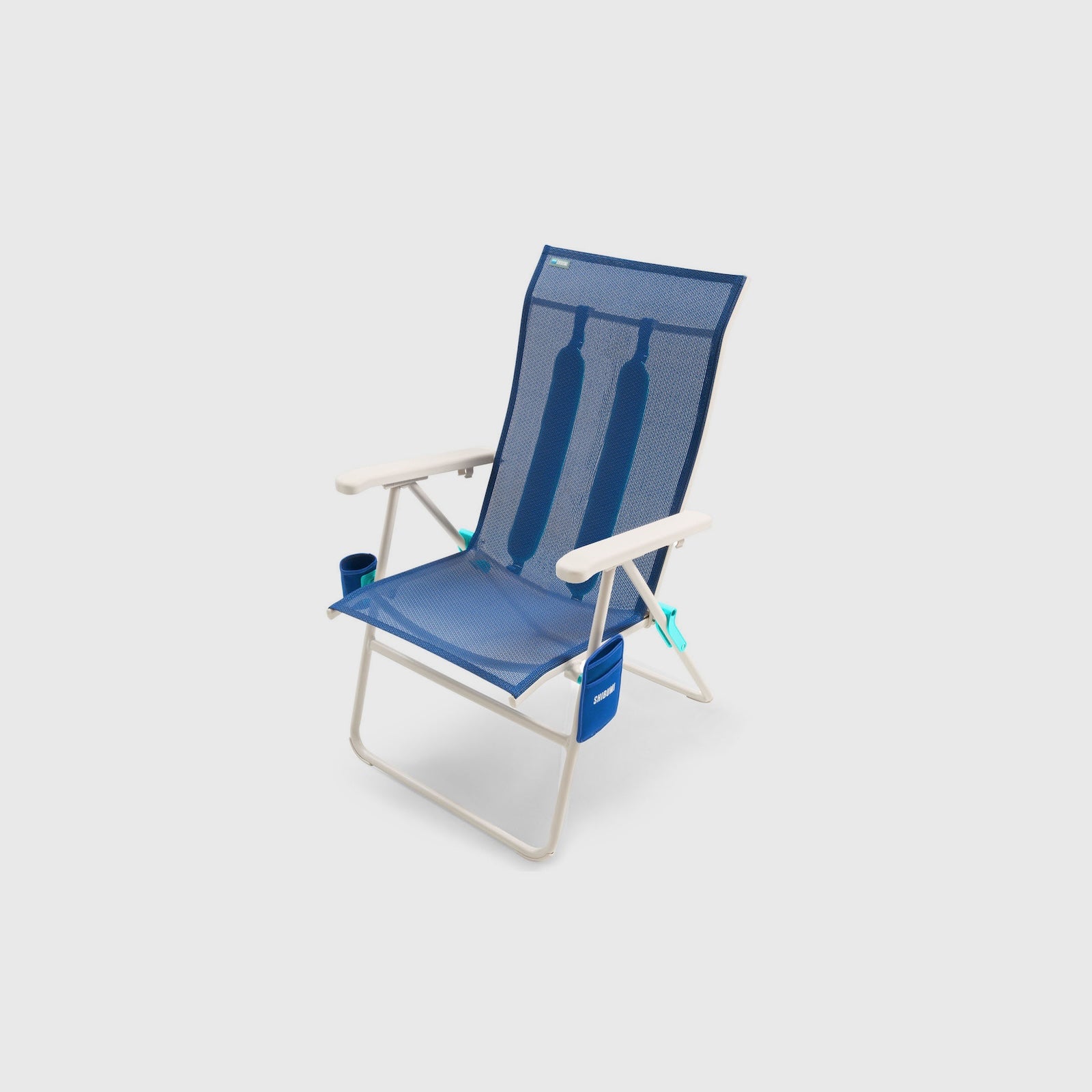
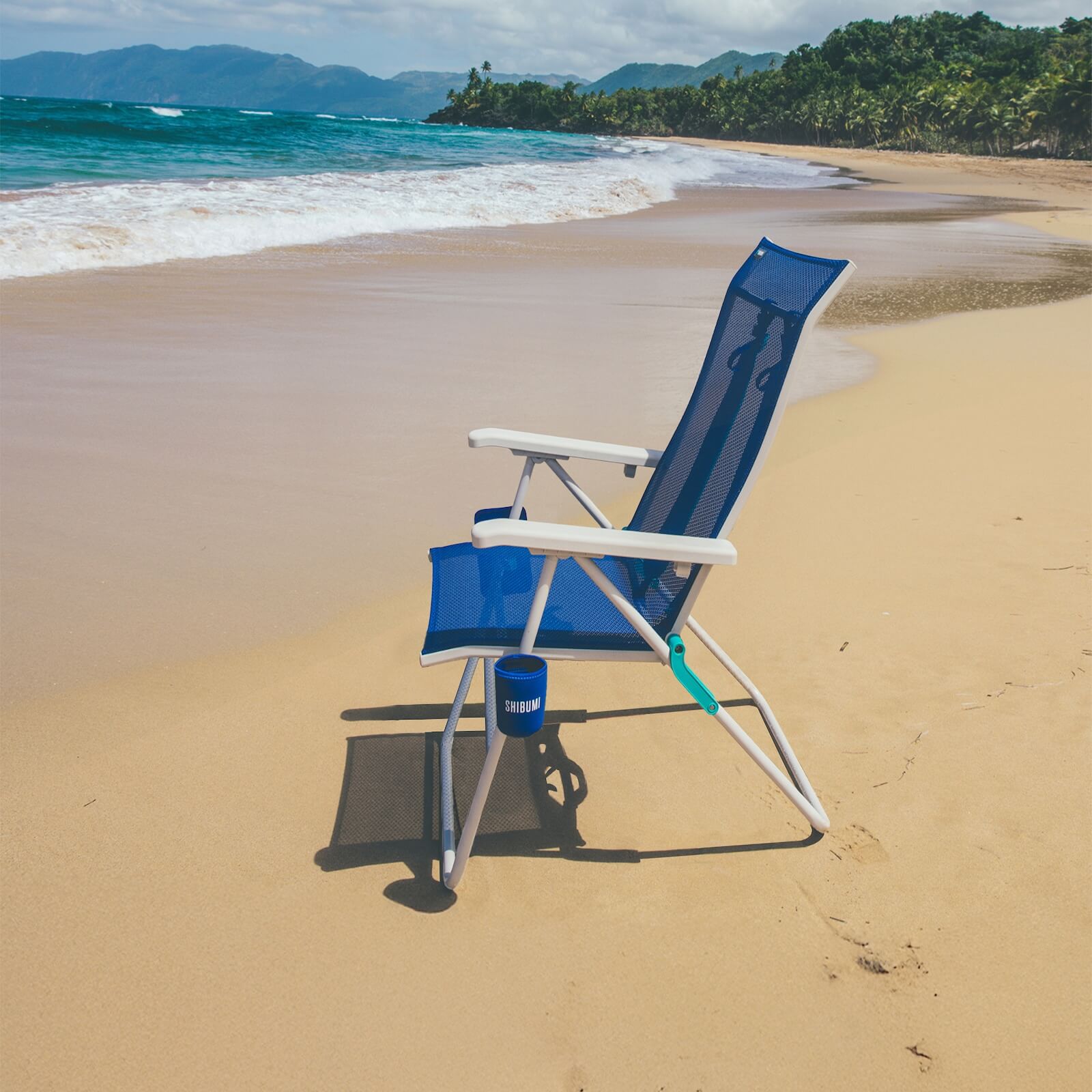
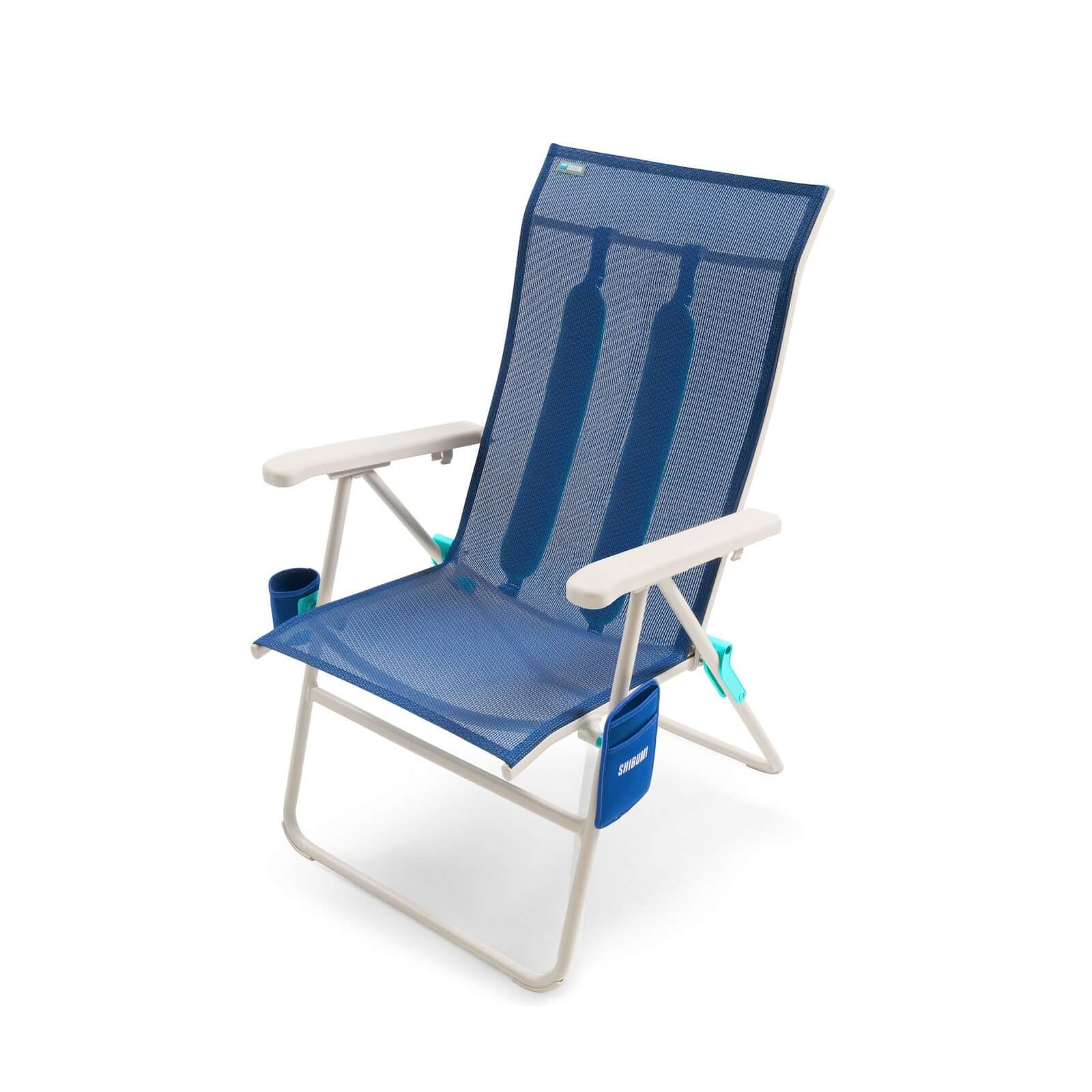
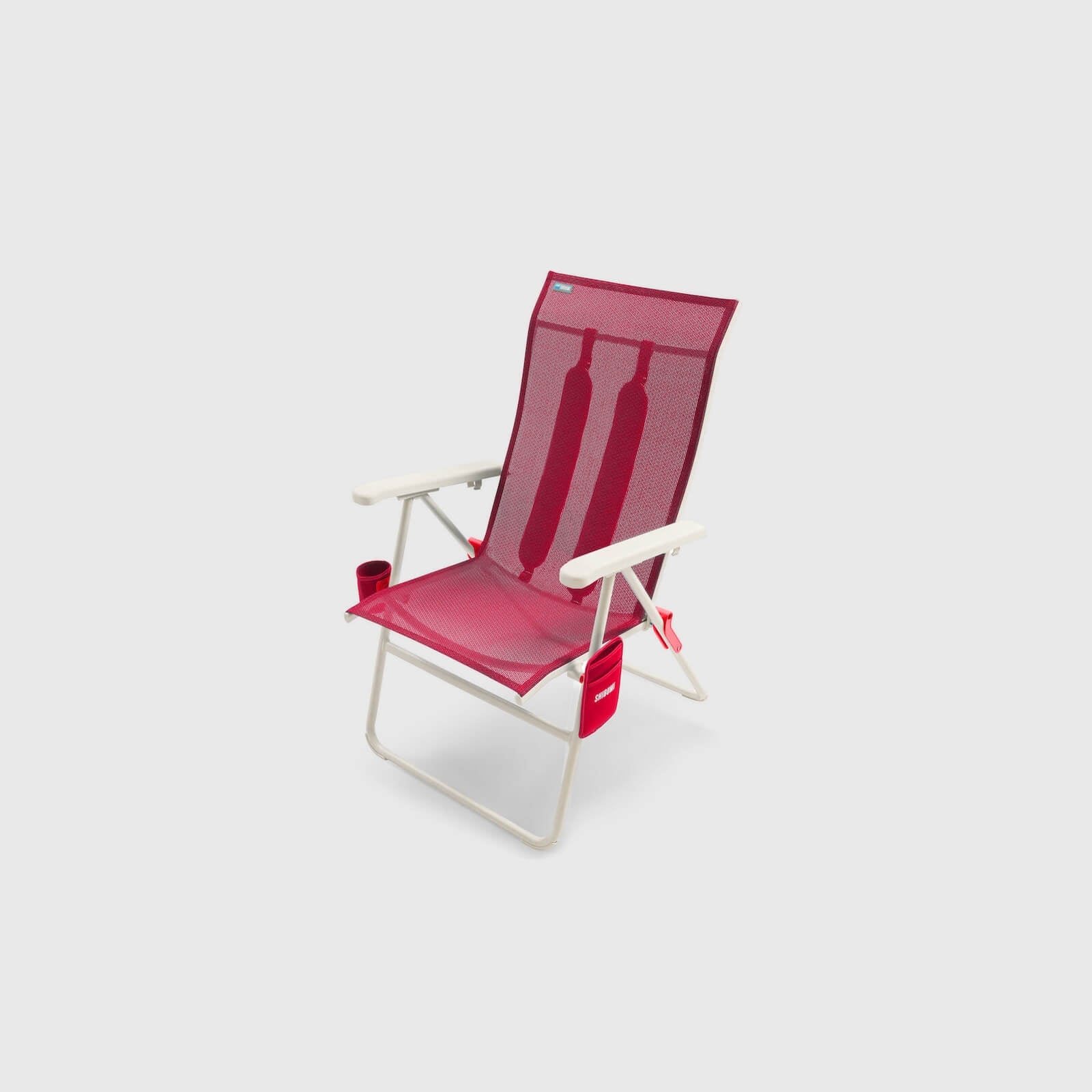
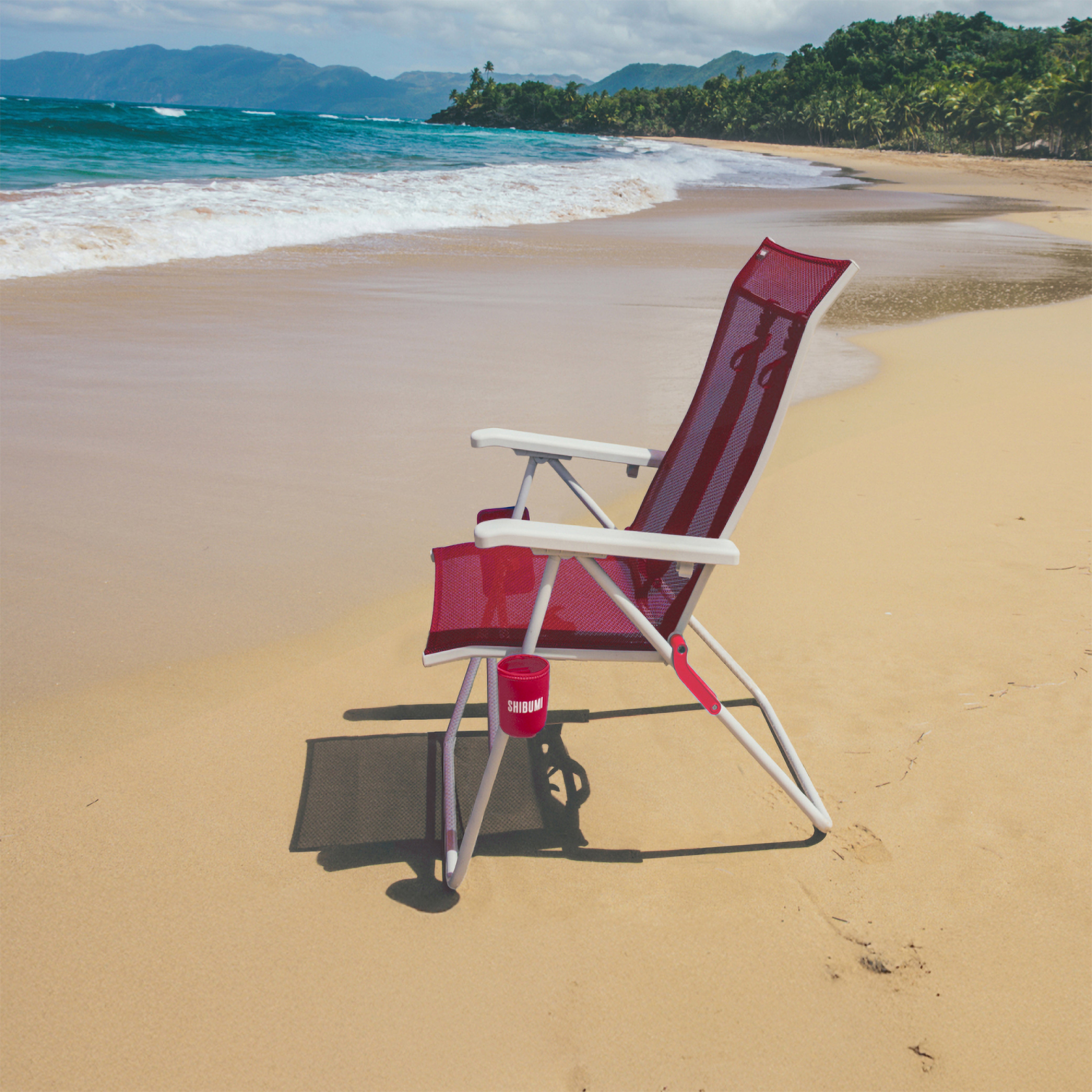
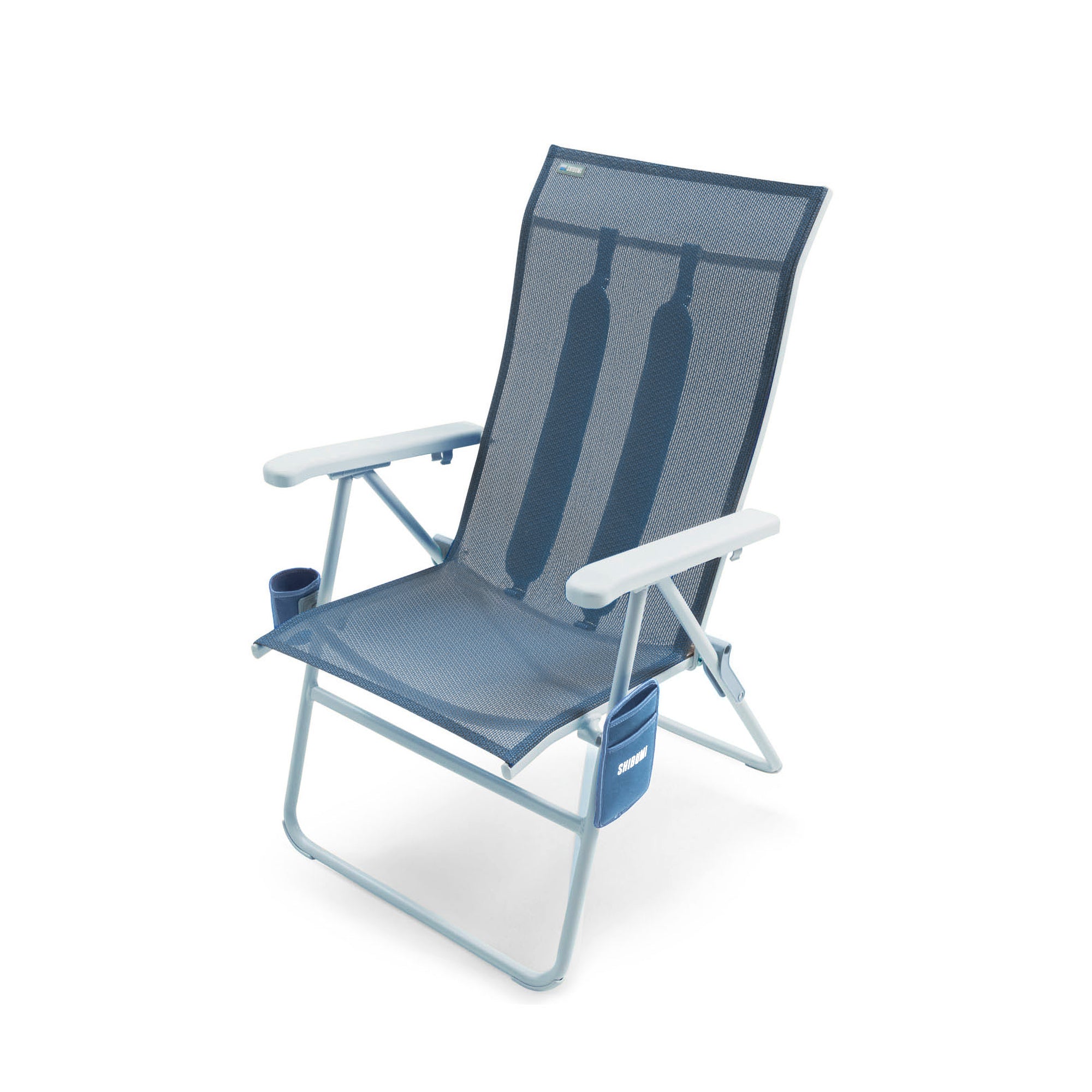
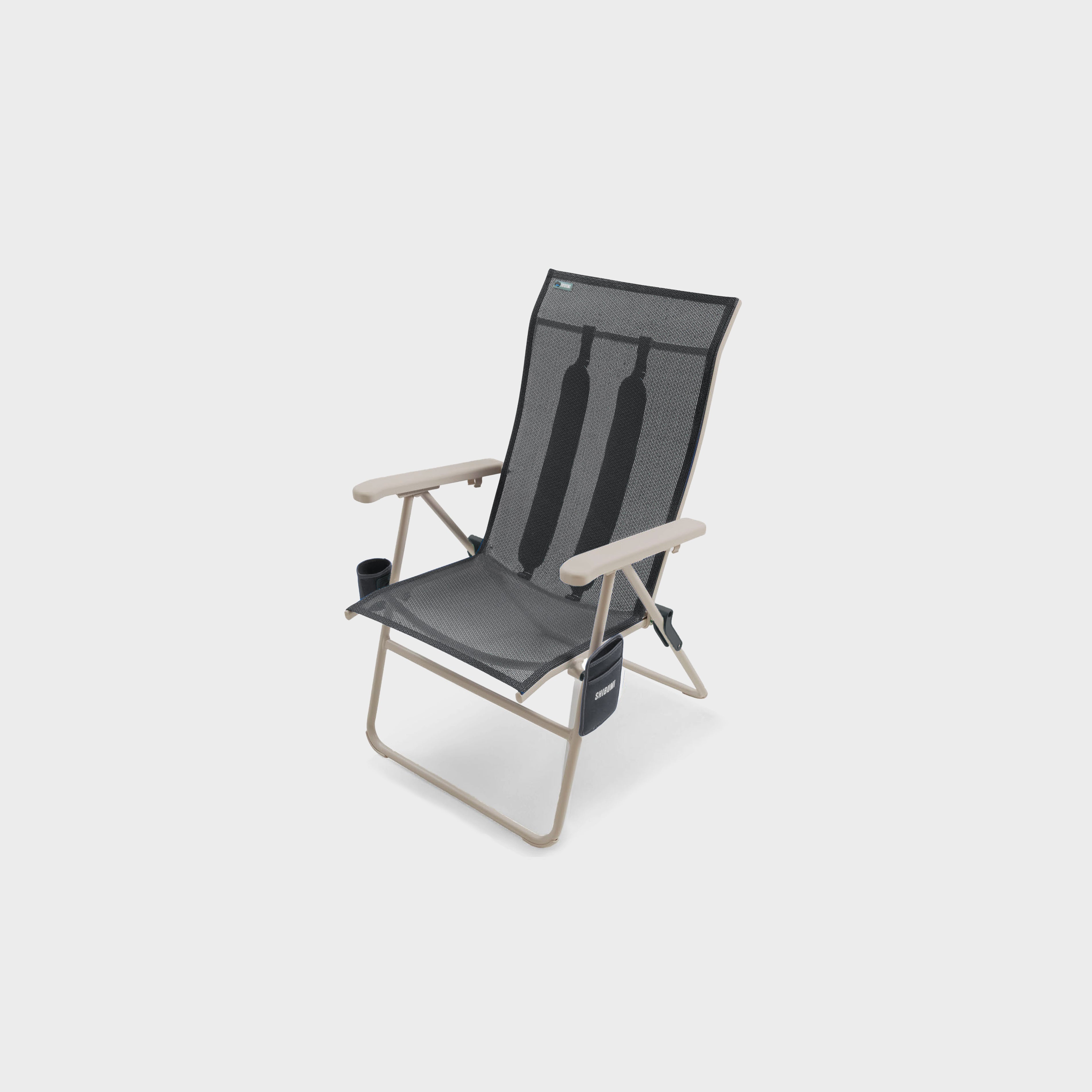
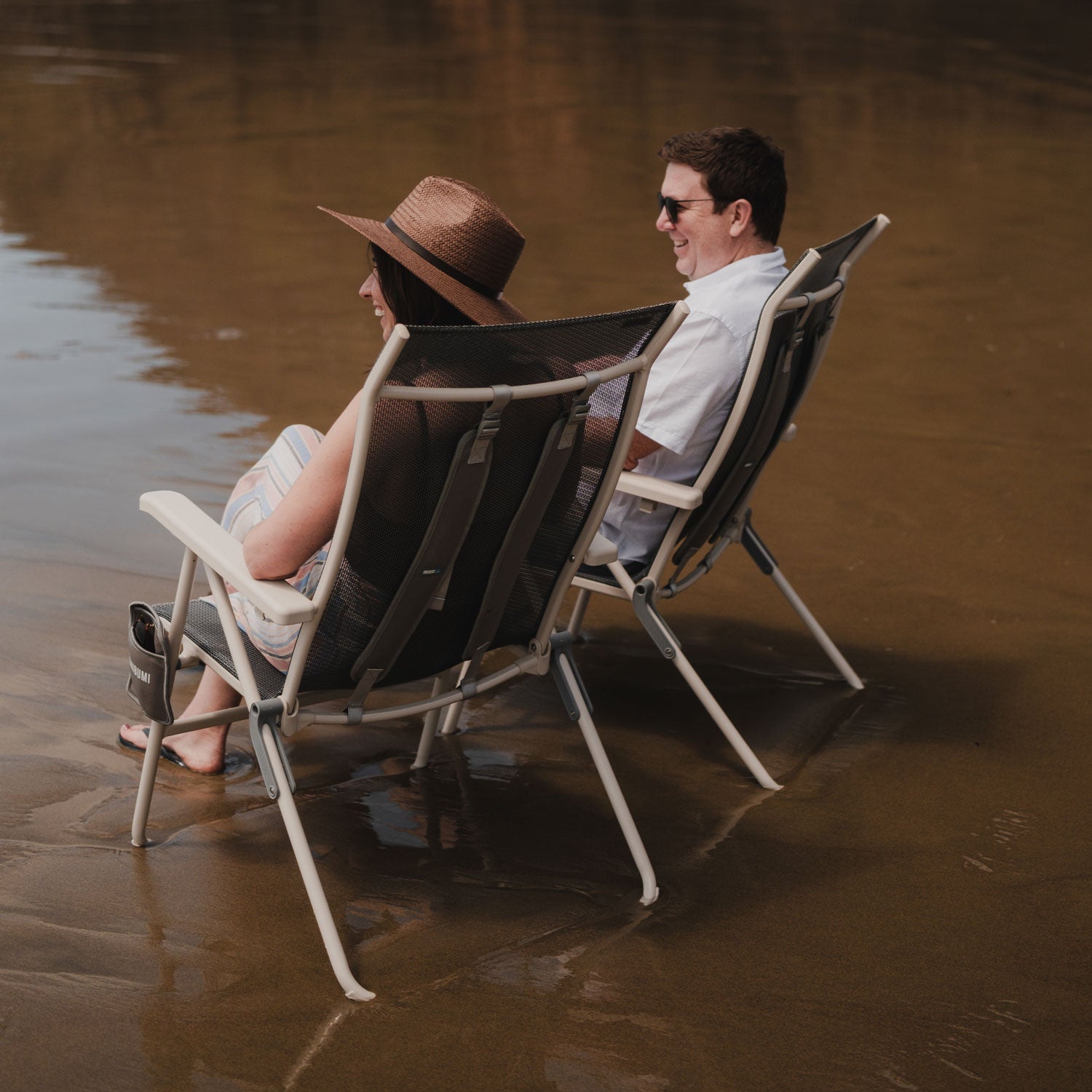
If you know Shibumi, you likely know us for two things: 1. the colorful, wind-powered shade floating above beaches across the country; and 2. the lightest, comfiest chairs on the beach.
So when we introduced the Shibumi Park Vista, one of the first questions we heard was a pretty reasonable one: what’s the difference?
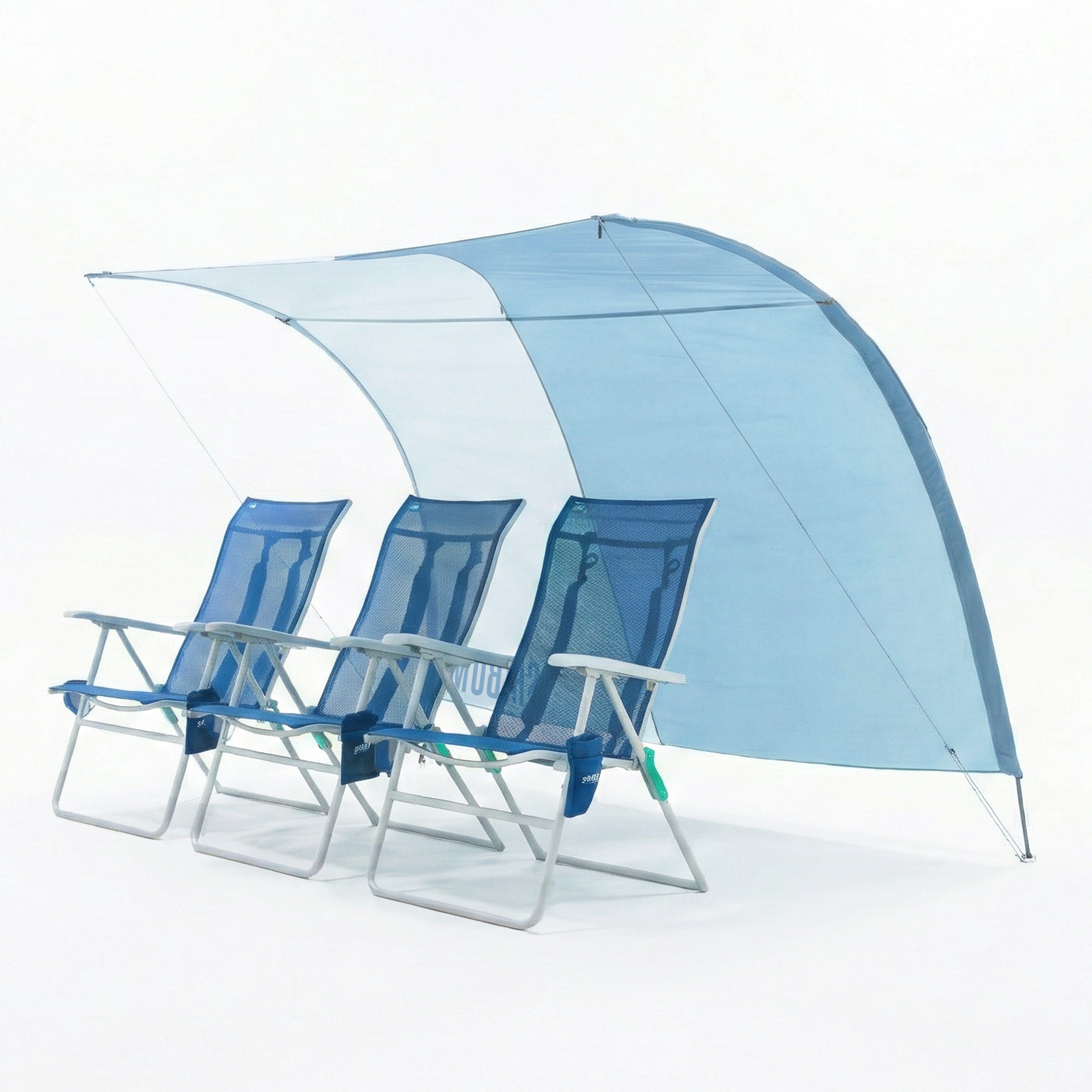
In short, the Classic Shibumi Shade was designed specifically for the beach, while the Park Vista was designed specifically for grassy places like parks, backyards, and sidelines.
But that one difference significantly changes how the two shades work. Different surfaces, different conditions, and different kinds of days outside—all while sharing the same lightweight, portable approach that goes hand in hand with Shibumi.
Here’s how to choose the right one for wherever you’re headed.
Start With What’s Under Your Feet
Where can you use the Shibumi Shade and Park Vista?
This is the easiest way to tell the two apart: Shibumi Shade loves sand. Park Vista loves grass.
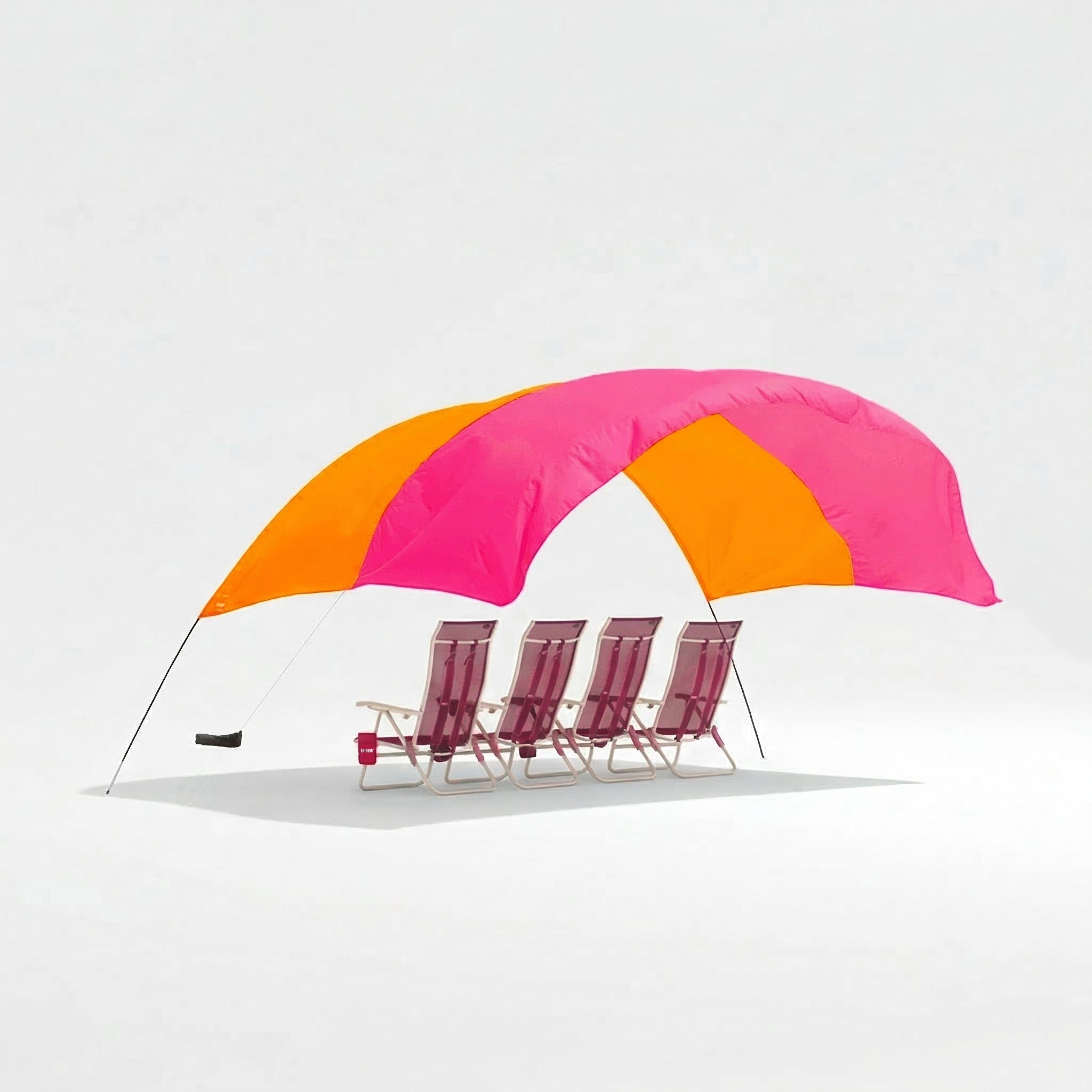
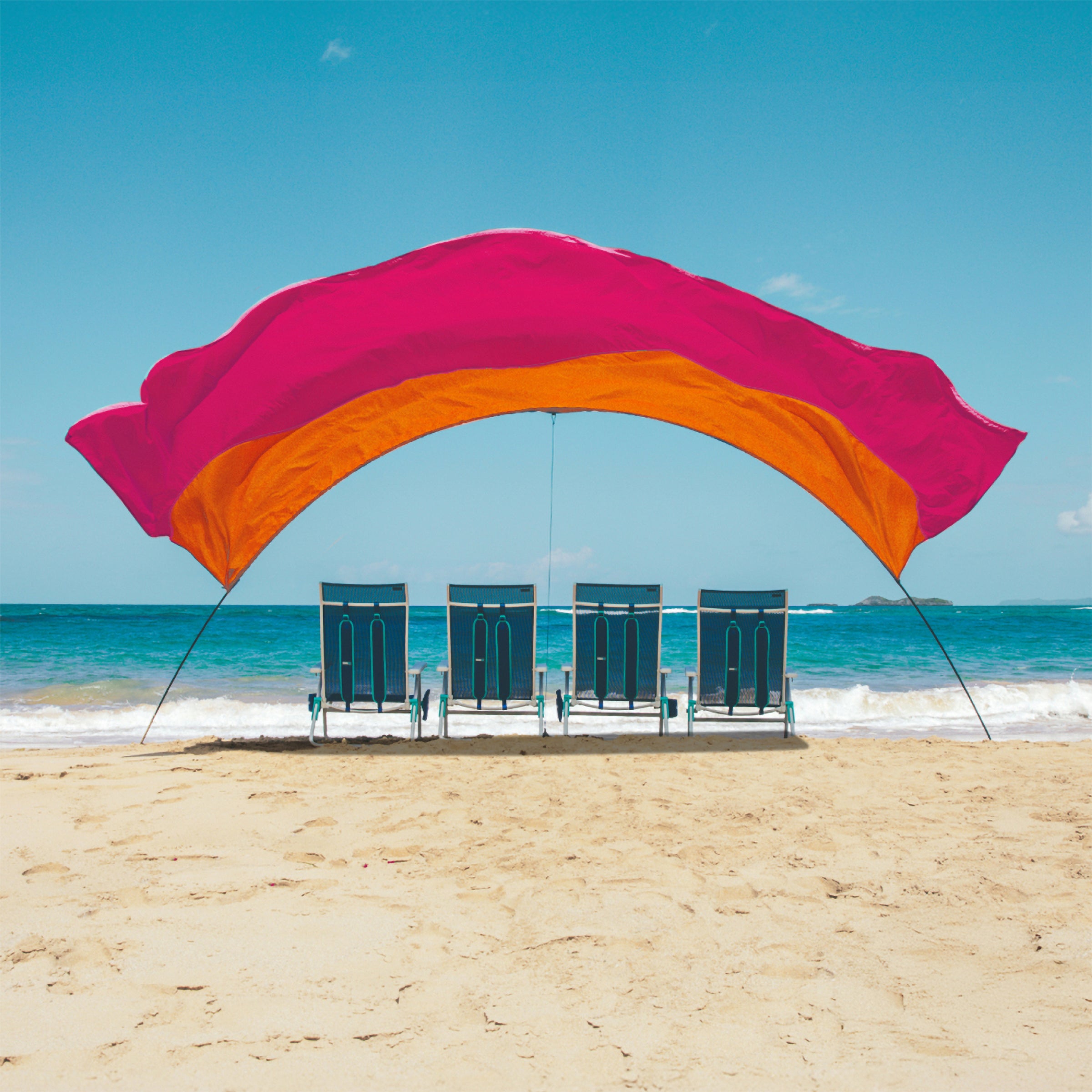
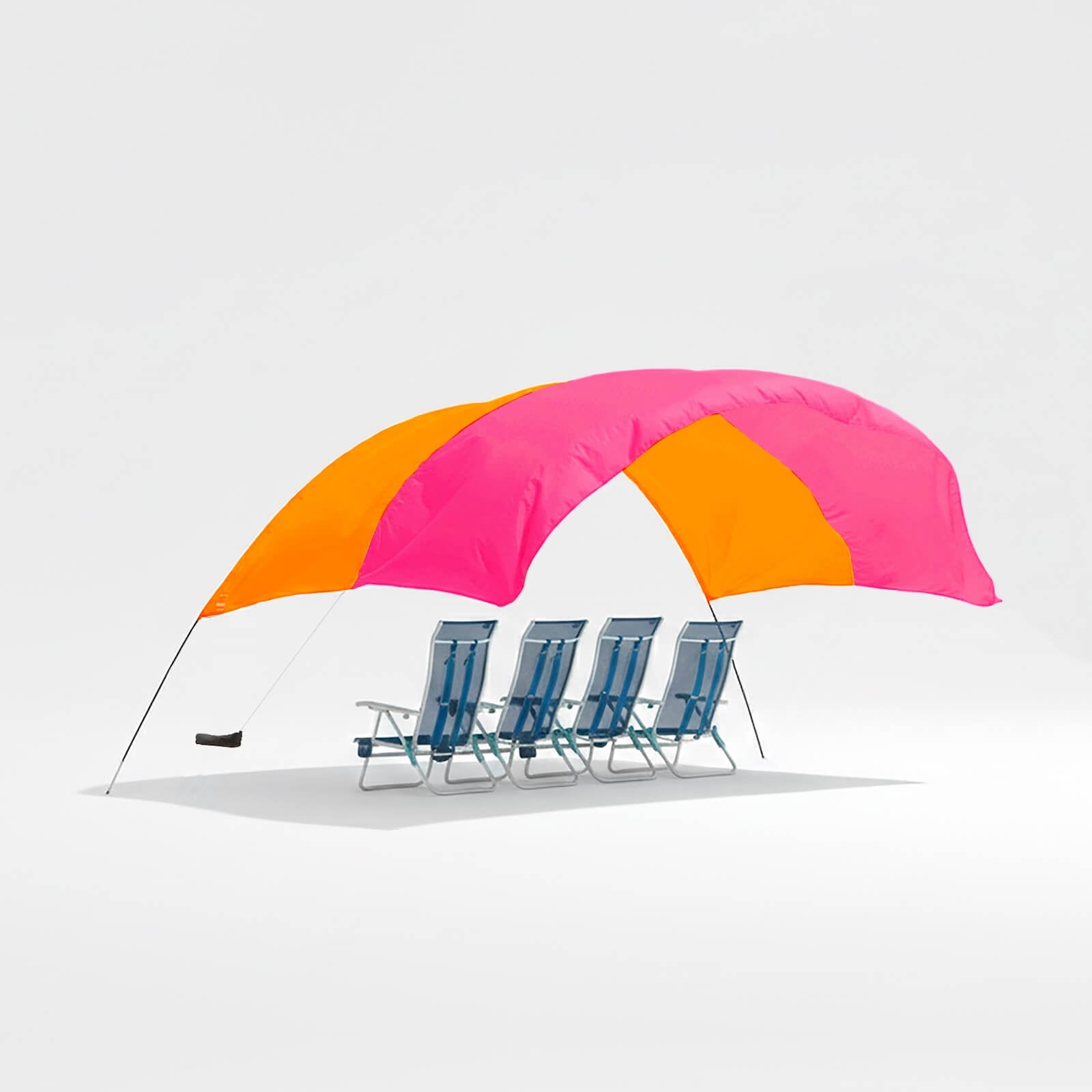
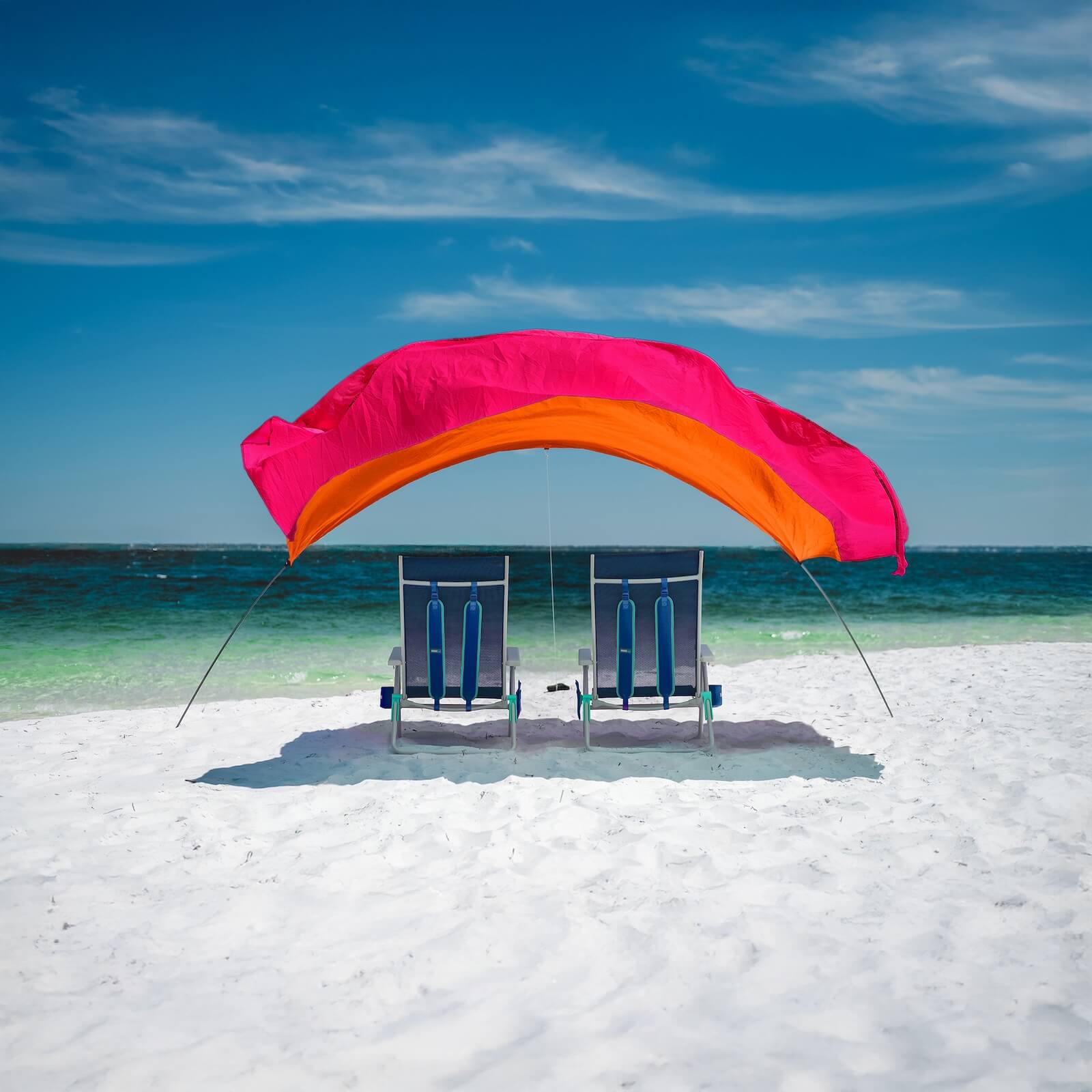
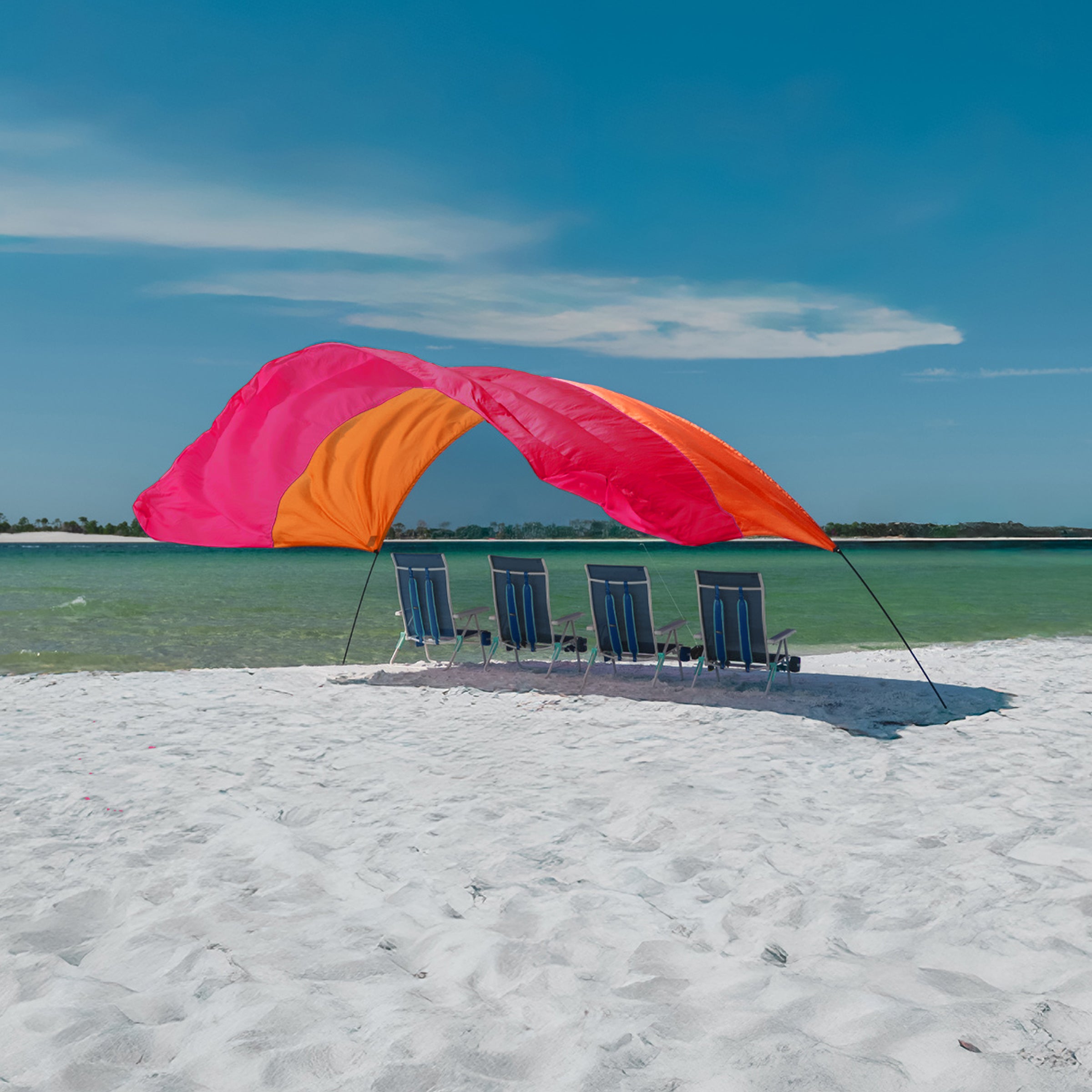
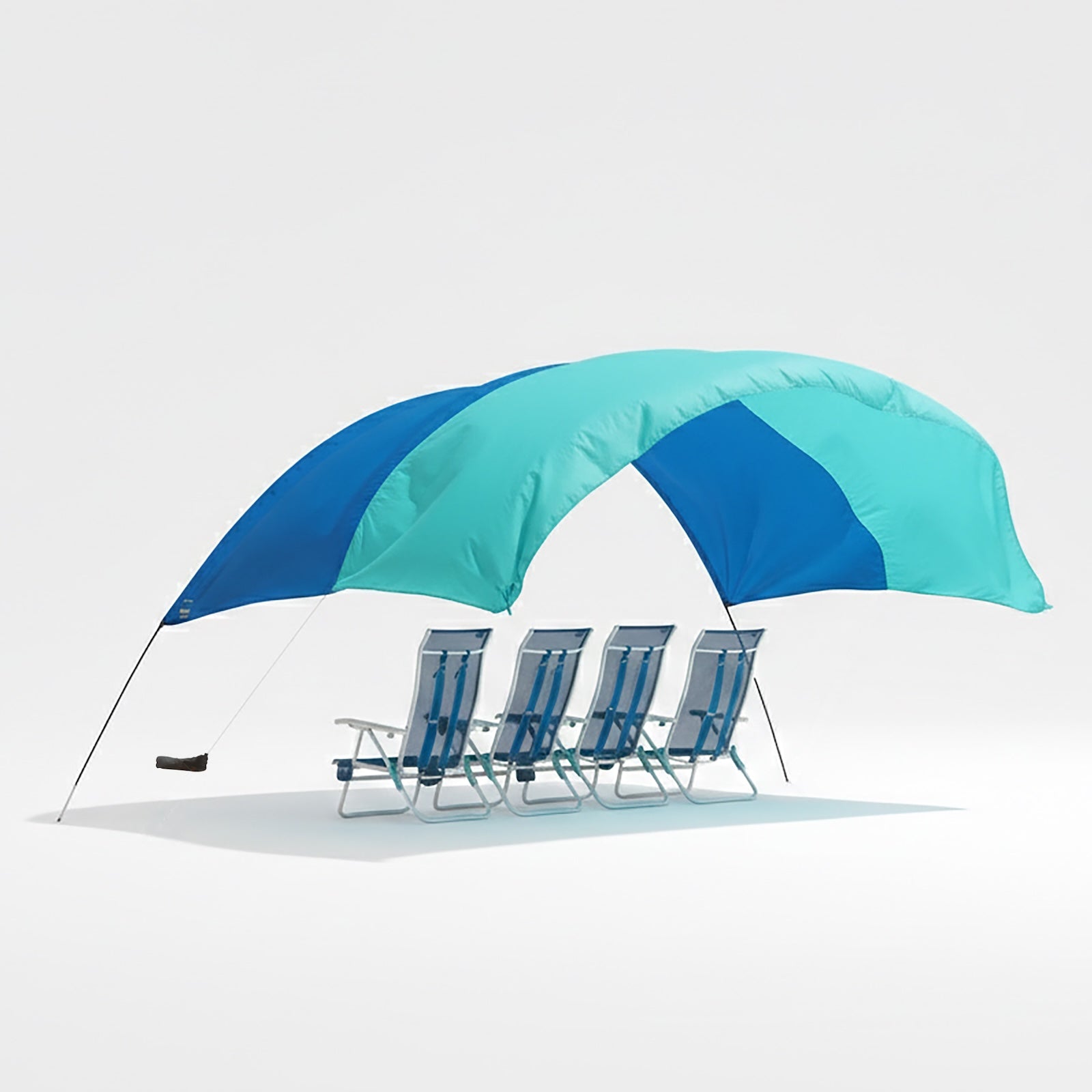
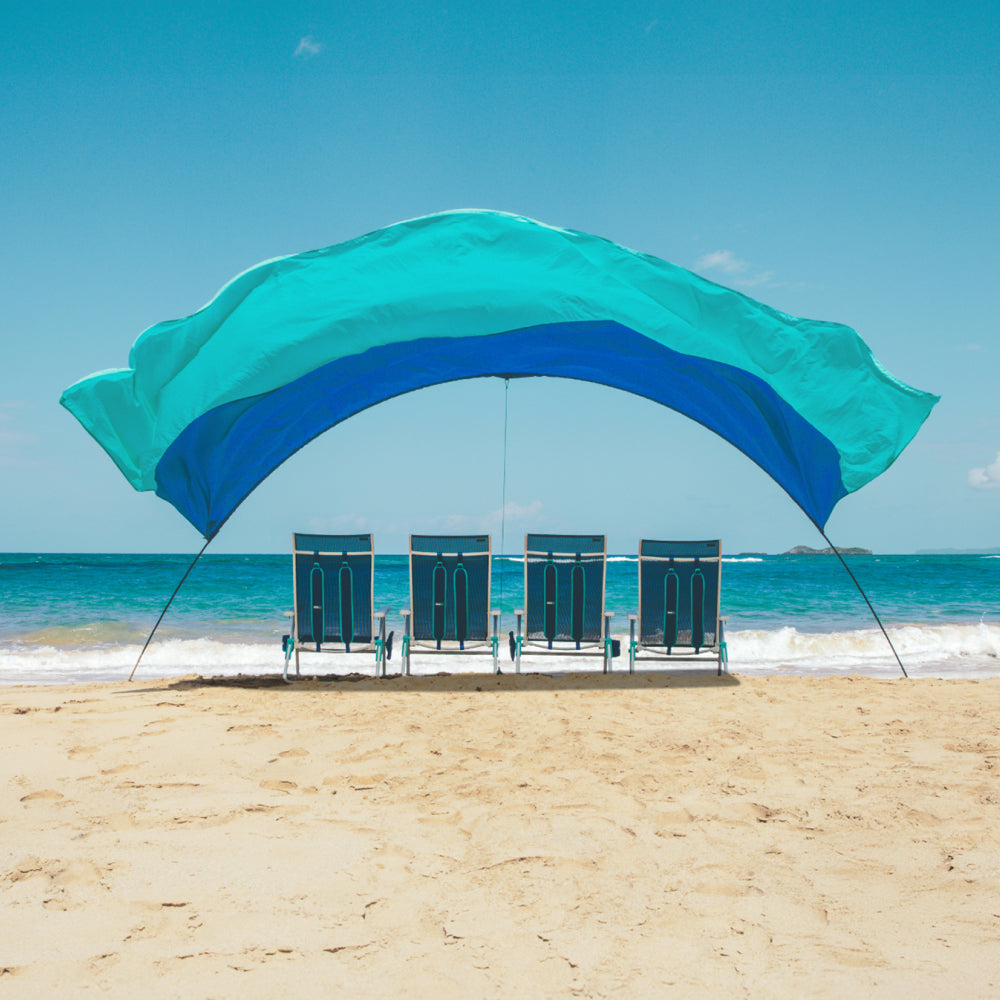
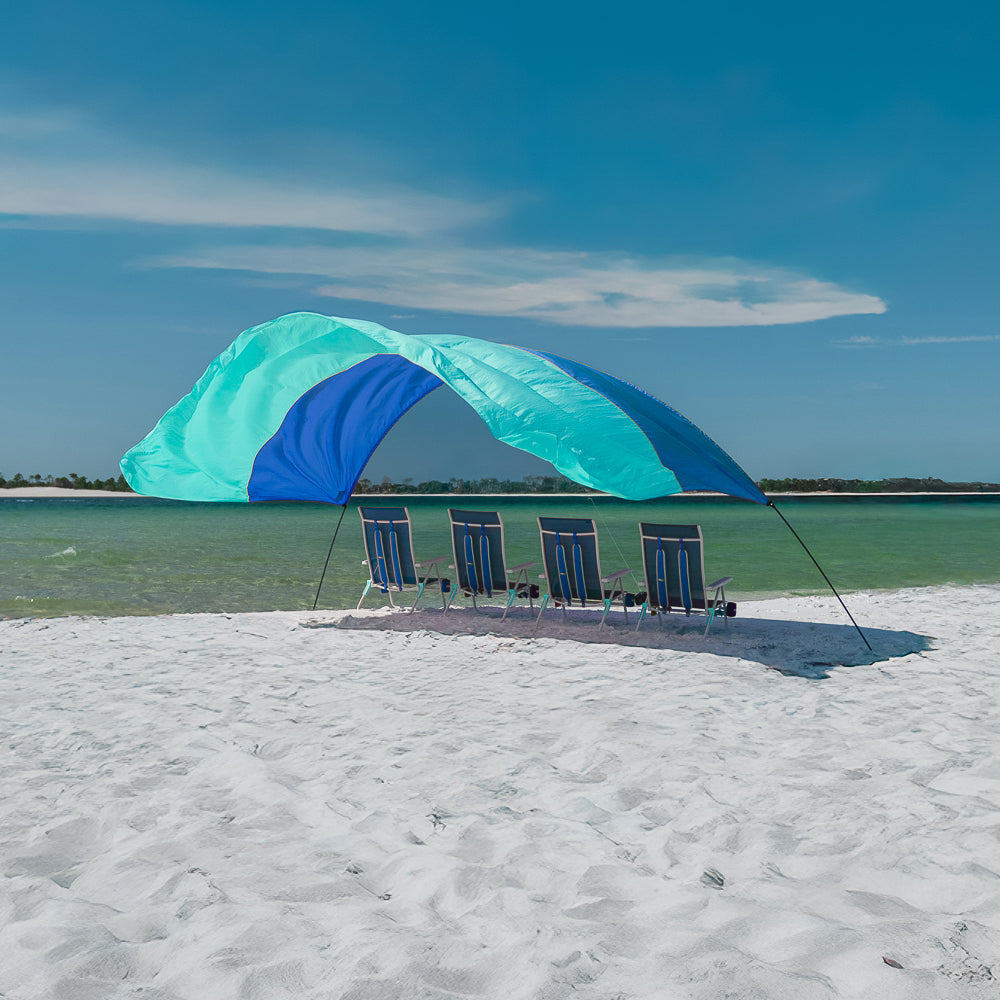
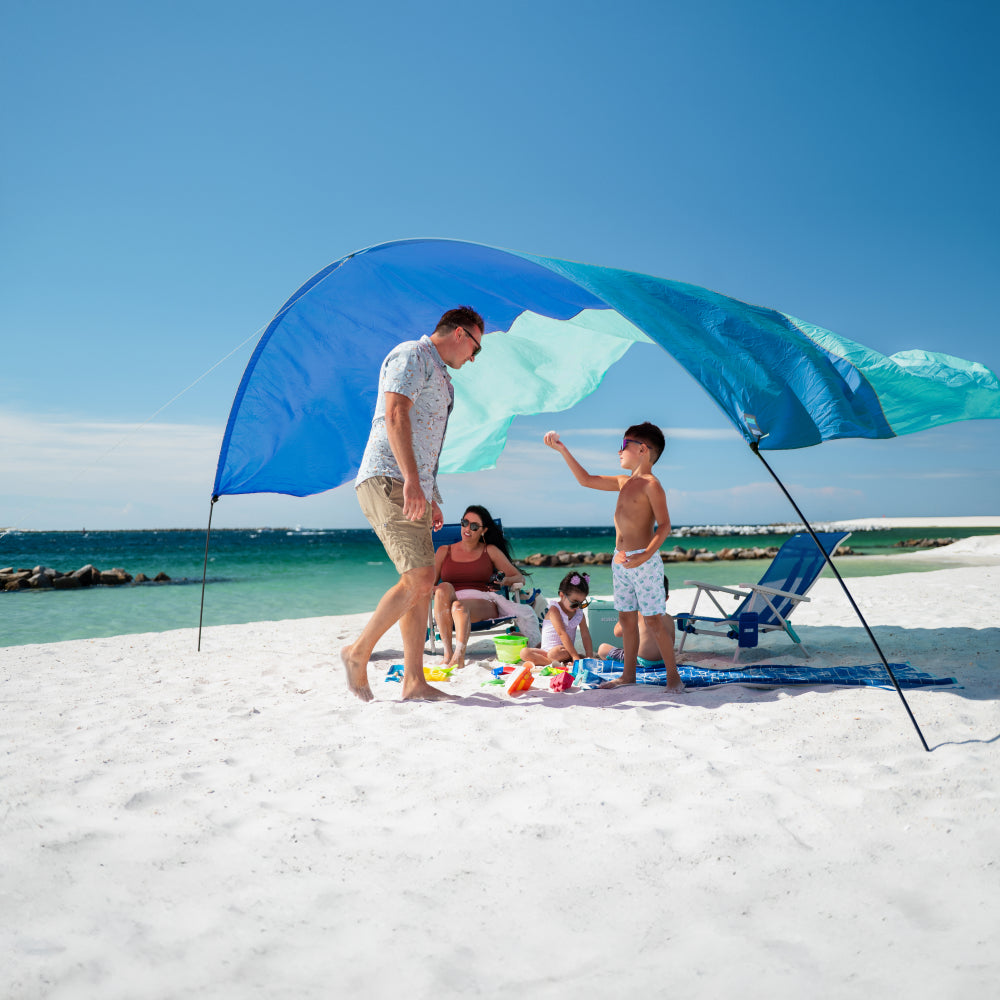
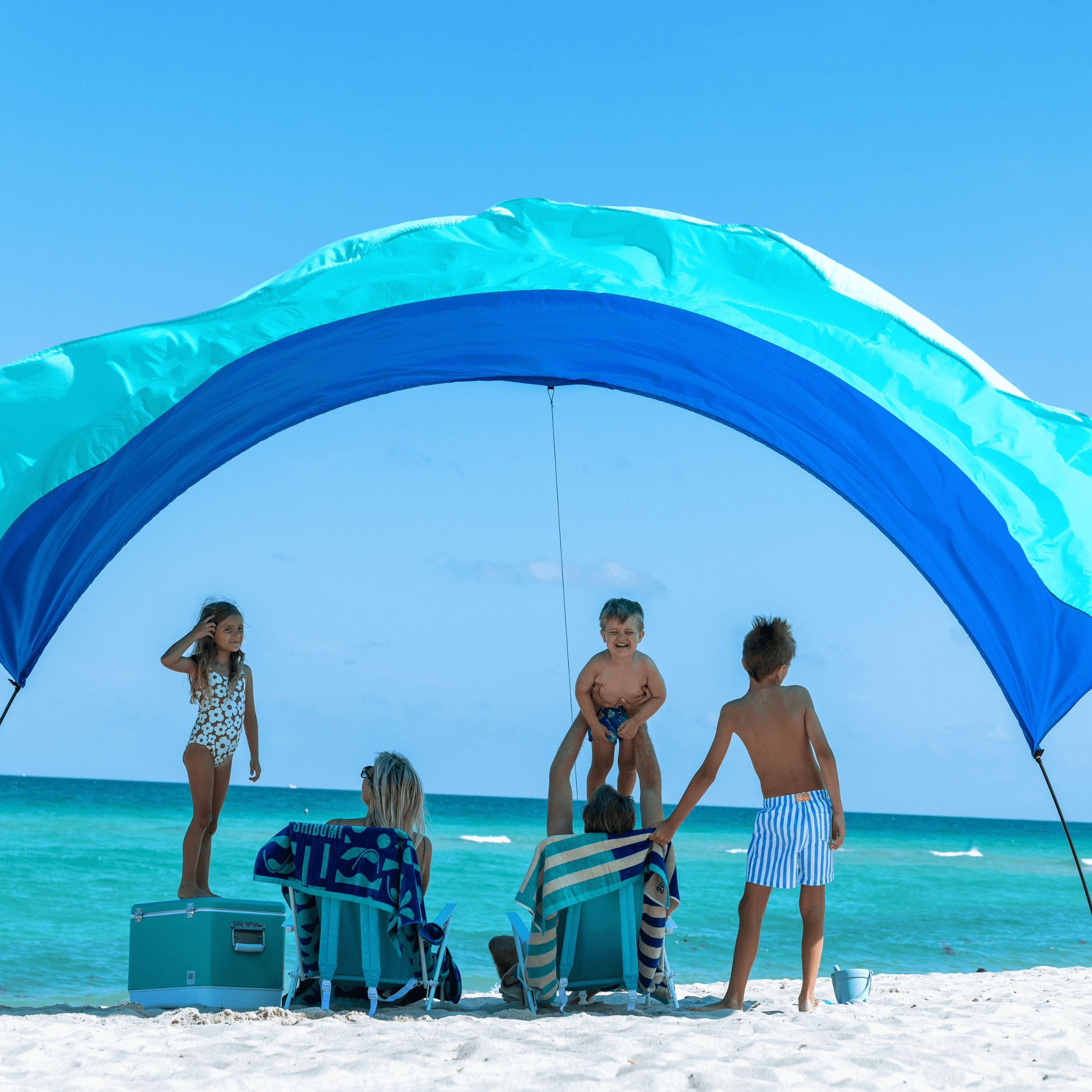
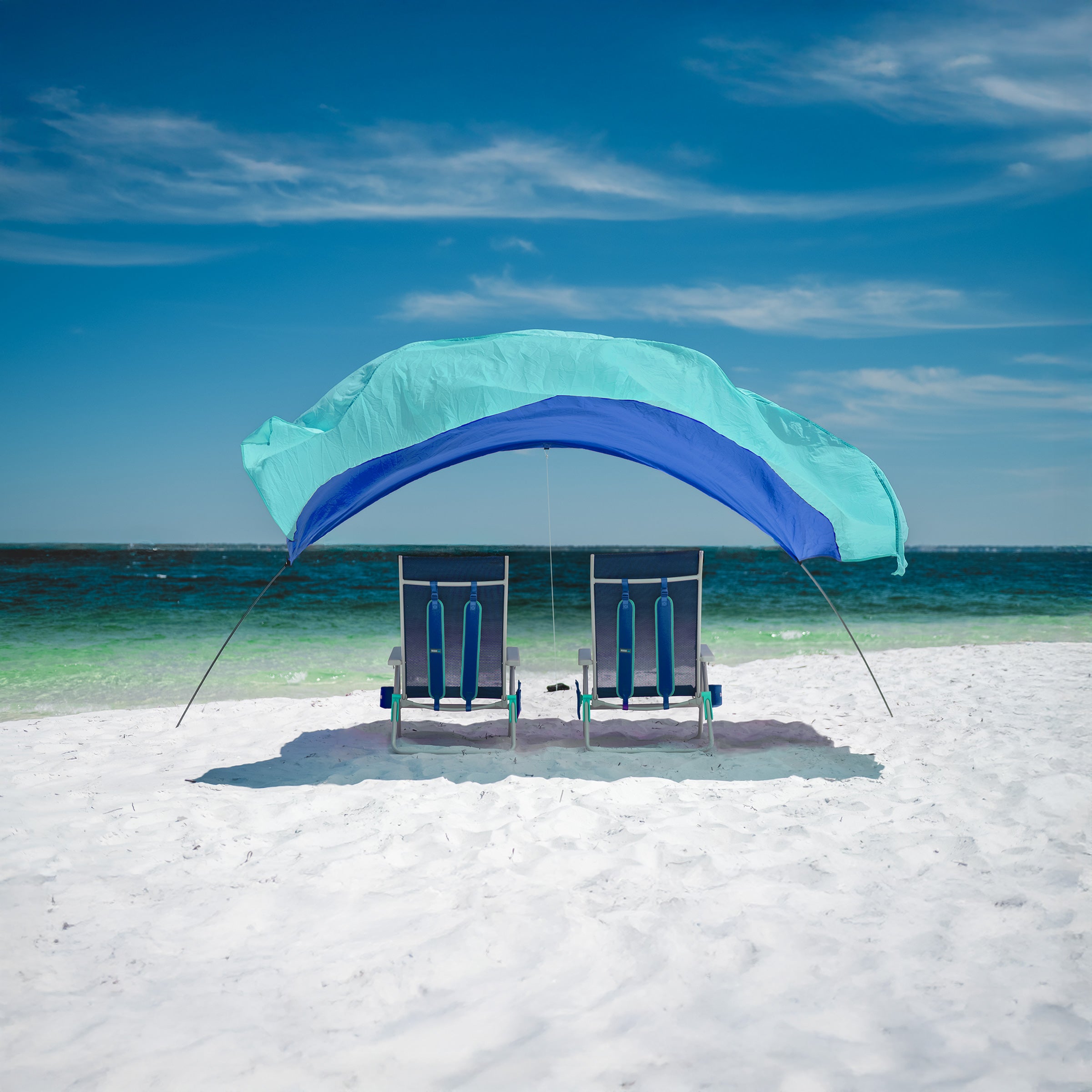
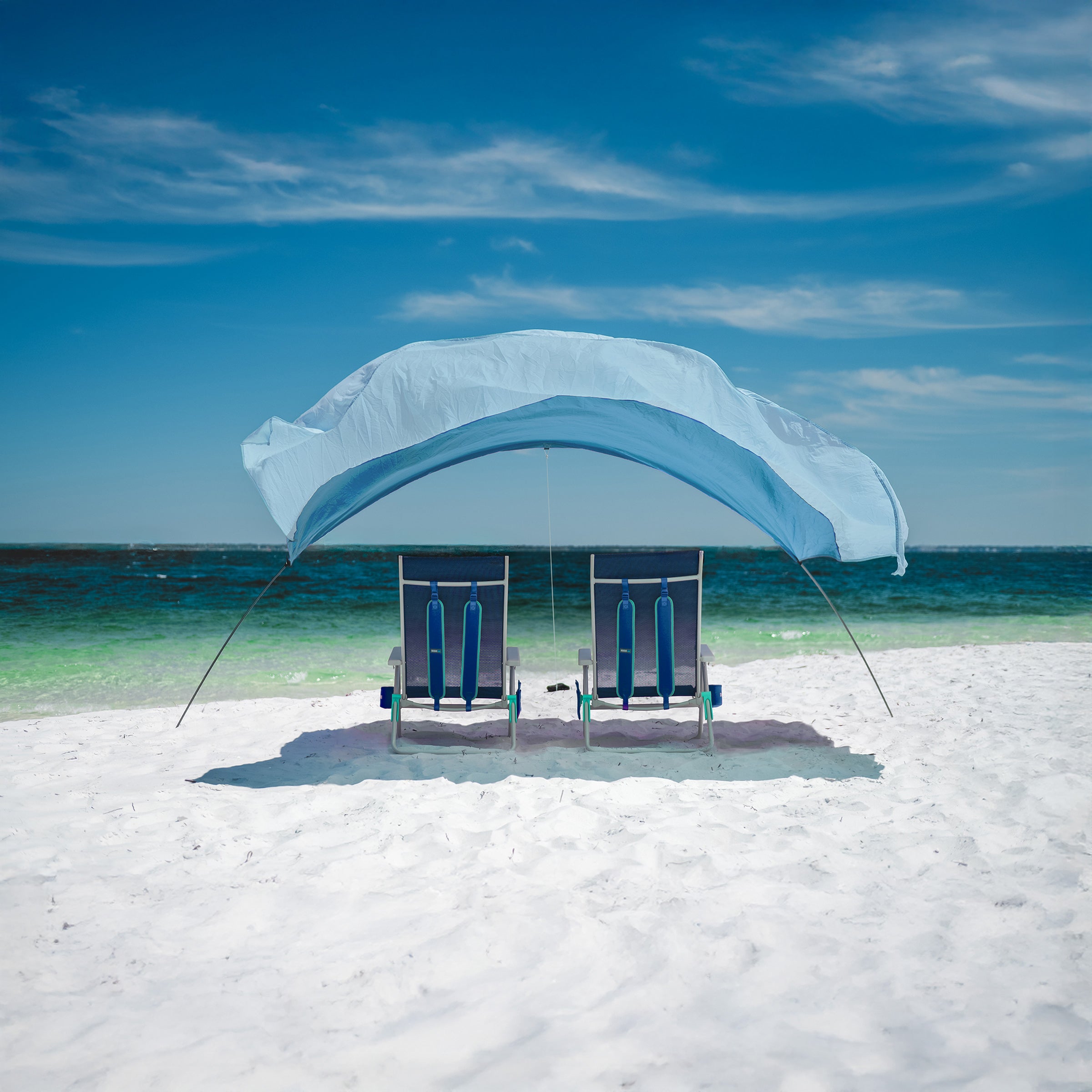
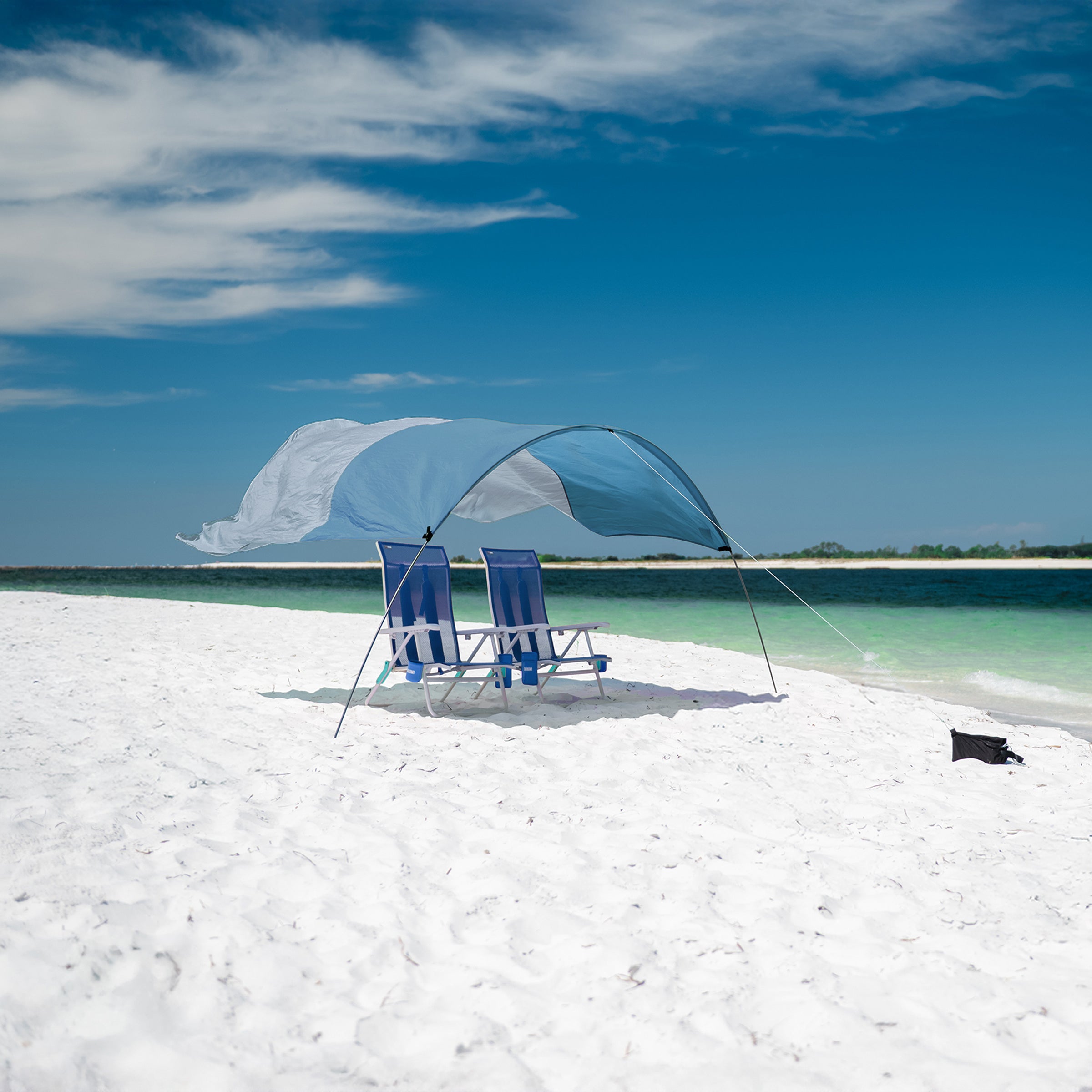
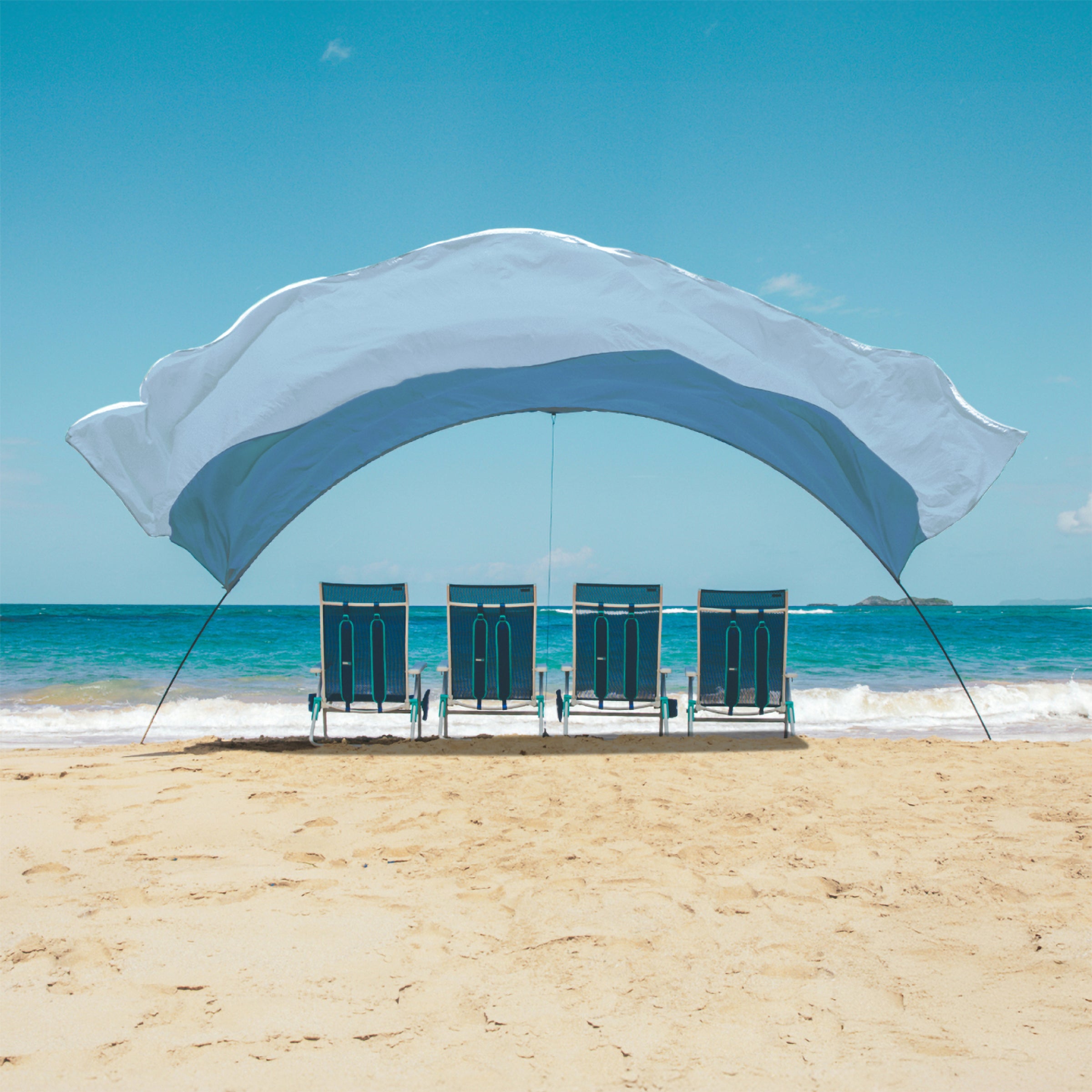
The Classic Shibumi Shade was designed for ocean beaches, where sand plays an important role in the setup and coastal wind powers the canopy overhead. It’s the shade you pack for a week at the coast, a Saturday on your favorite beach, or any day that involves sand between your toes.
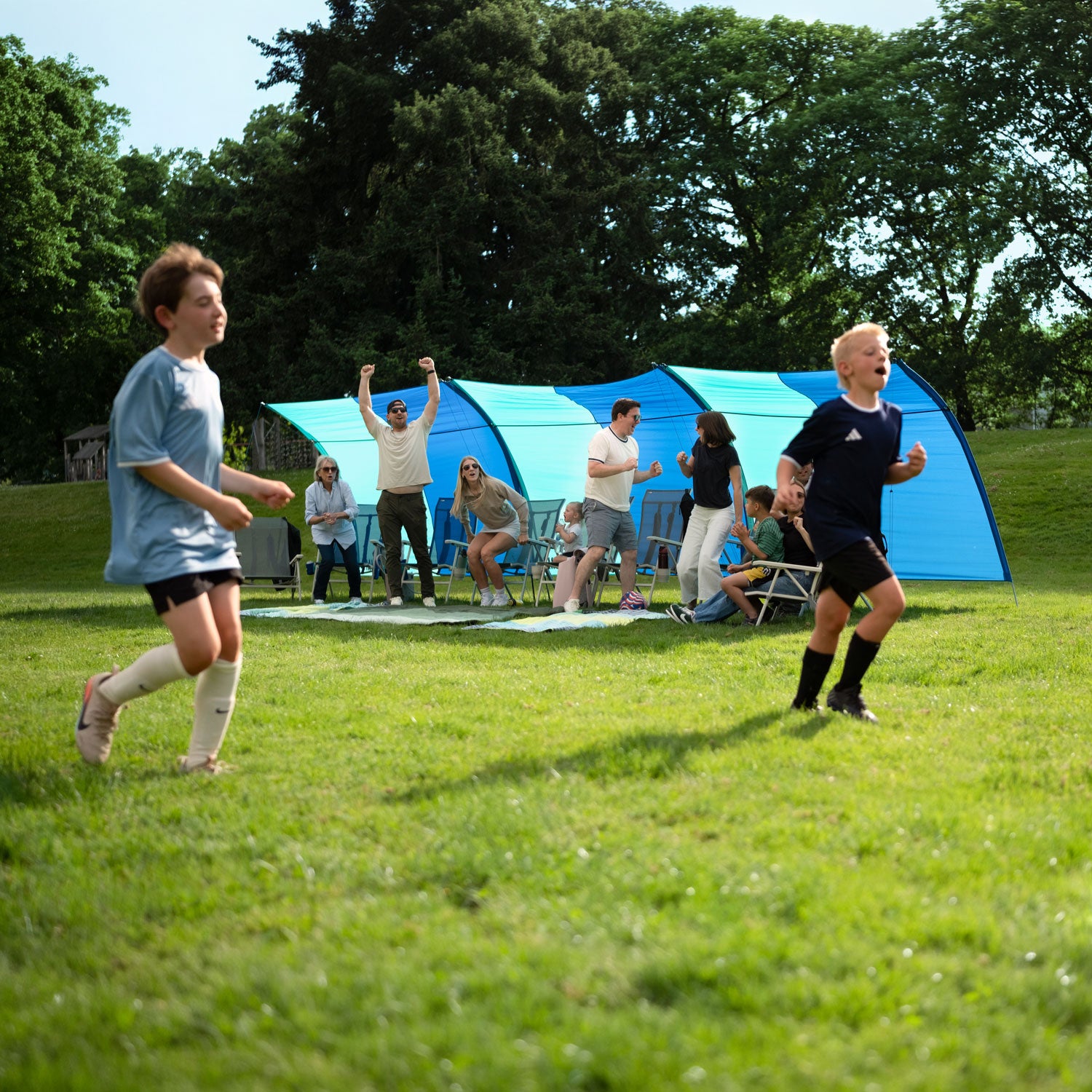
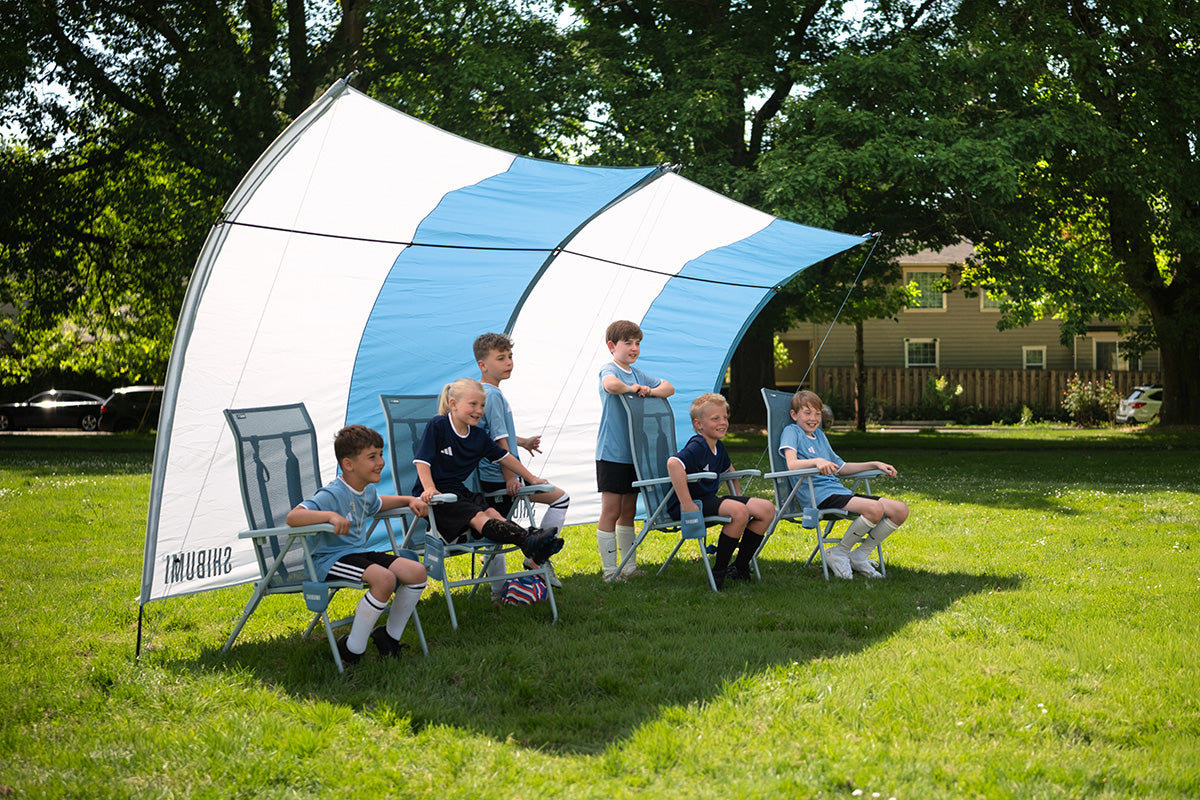
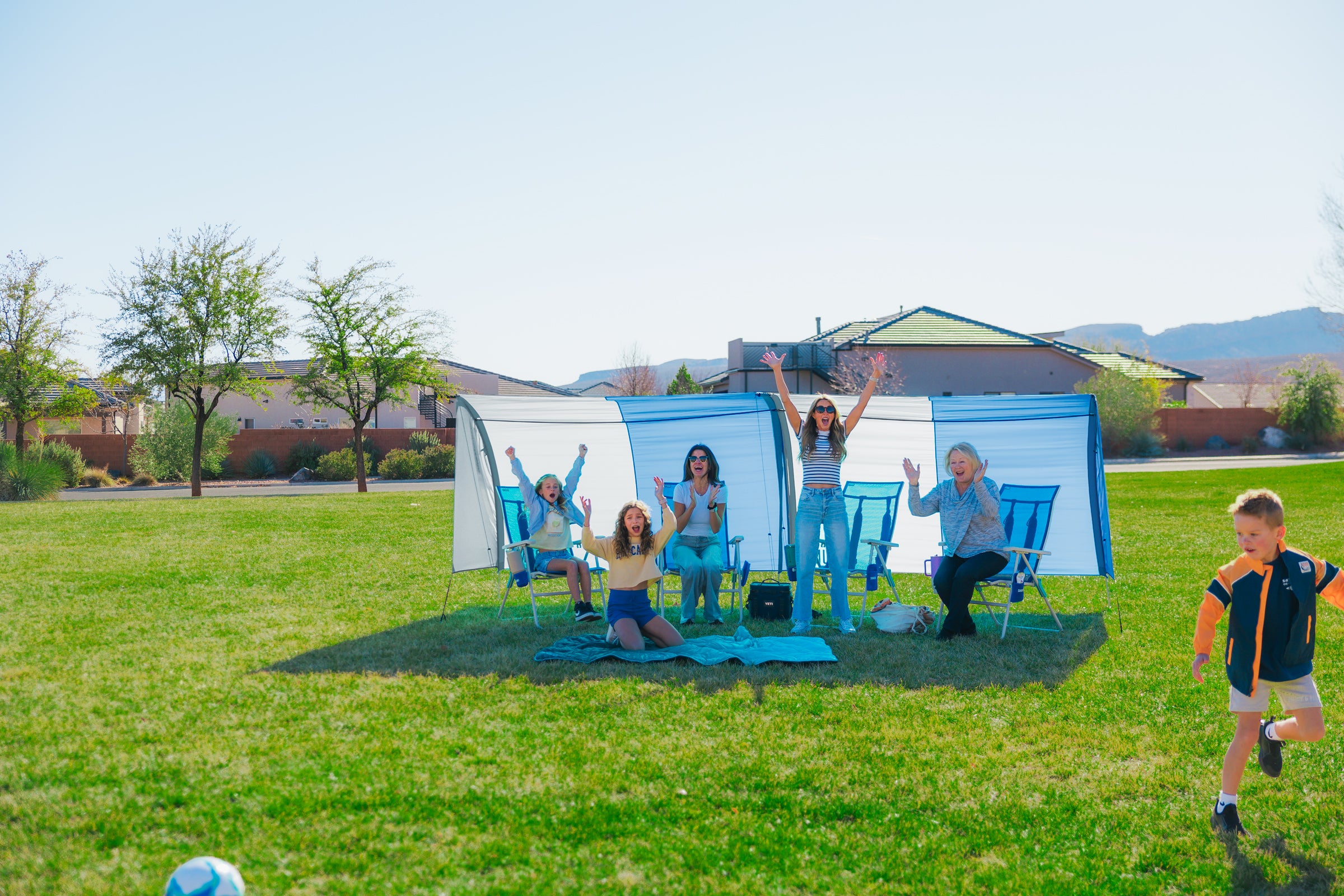
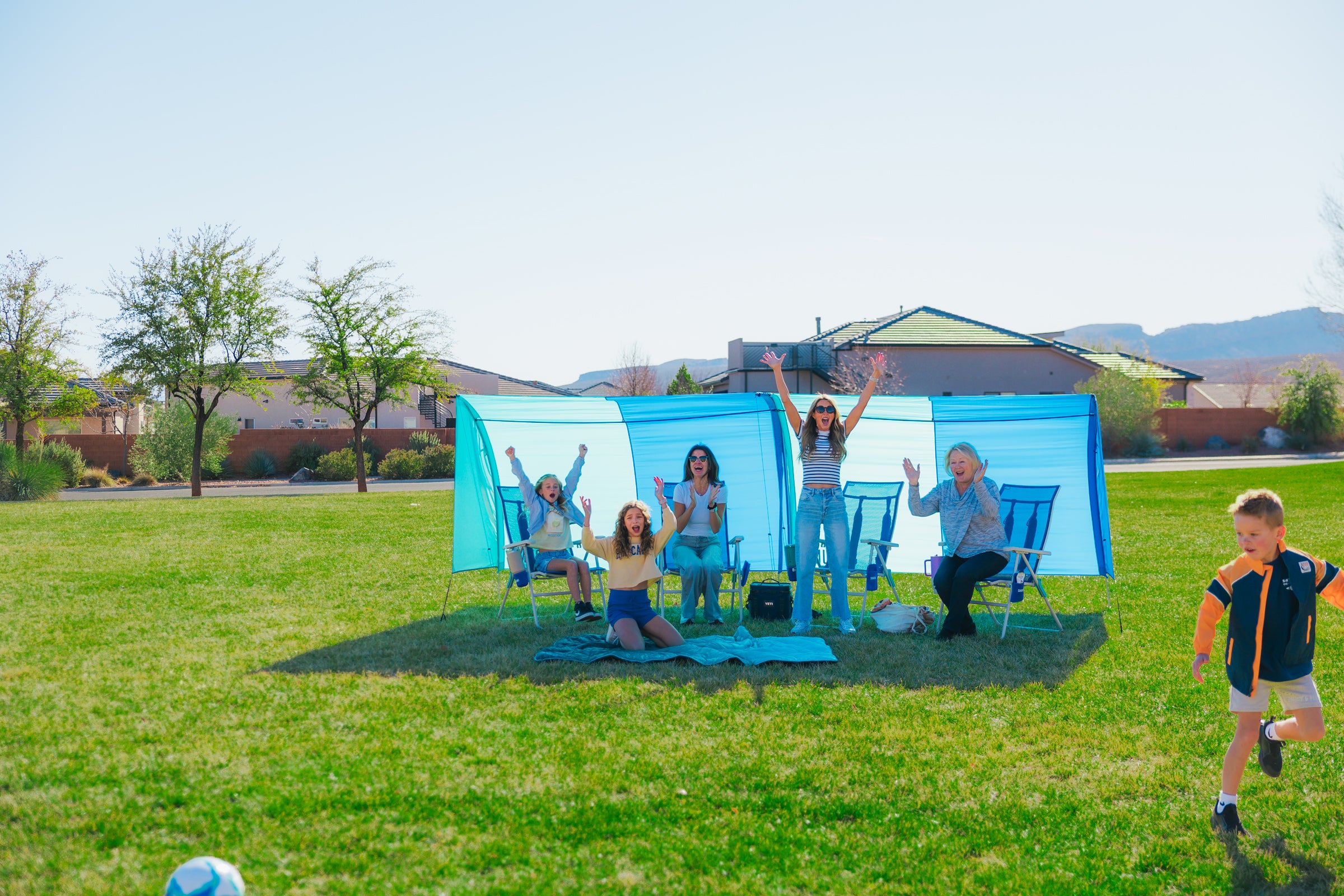
Park Vista starts where the beach ends. It was designed for soft, grassy surfaces, where stakes secure the shade to the ground. Think soccer sidelines, neighborhood parks, backyard afternoons, picnics, lakesides, and all the other places you spend time outside that don’t come with an ocean view.
Park Vista isn’t intended for ocean beaches, concrete, or artificial turf, just as the Classic isn’t designed to be your backyard shade. Starting with the surface makes choosing between them surprisingly simple.
One Works With the Wind. The Other Adjusts With the Sun.
How do the two Shibumi shades work?
The Classic Shibumi Shade looks unlike most beach shades because it works unlike most beach shades.
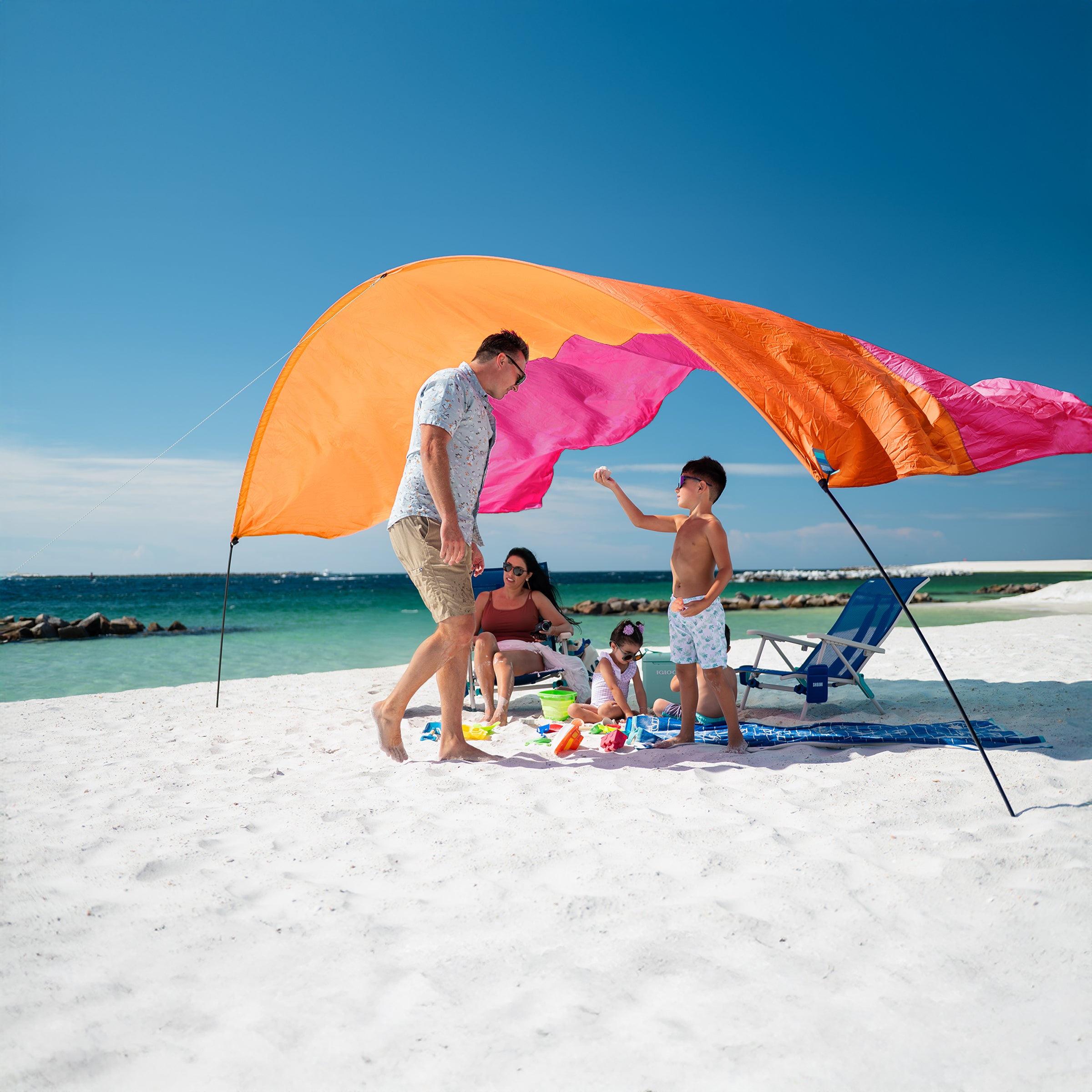
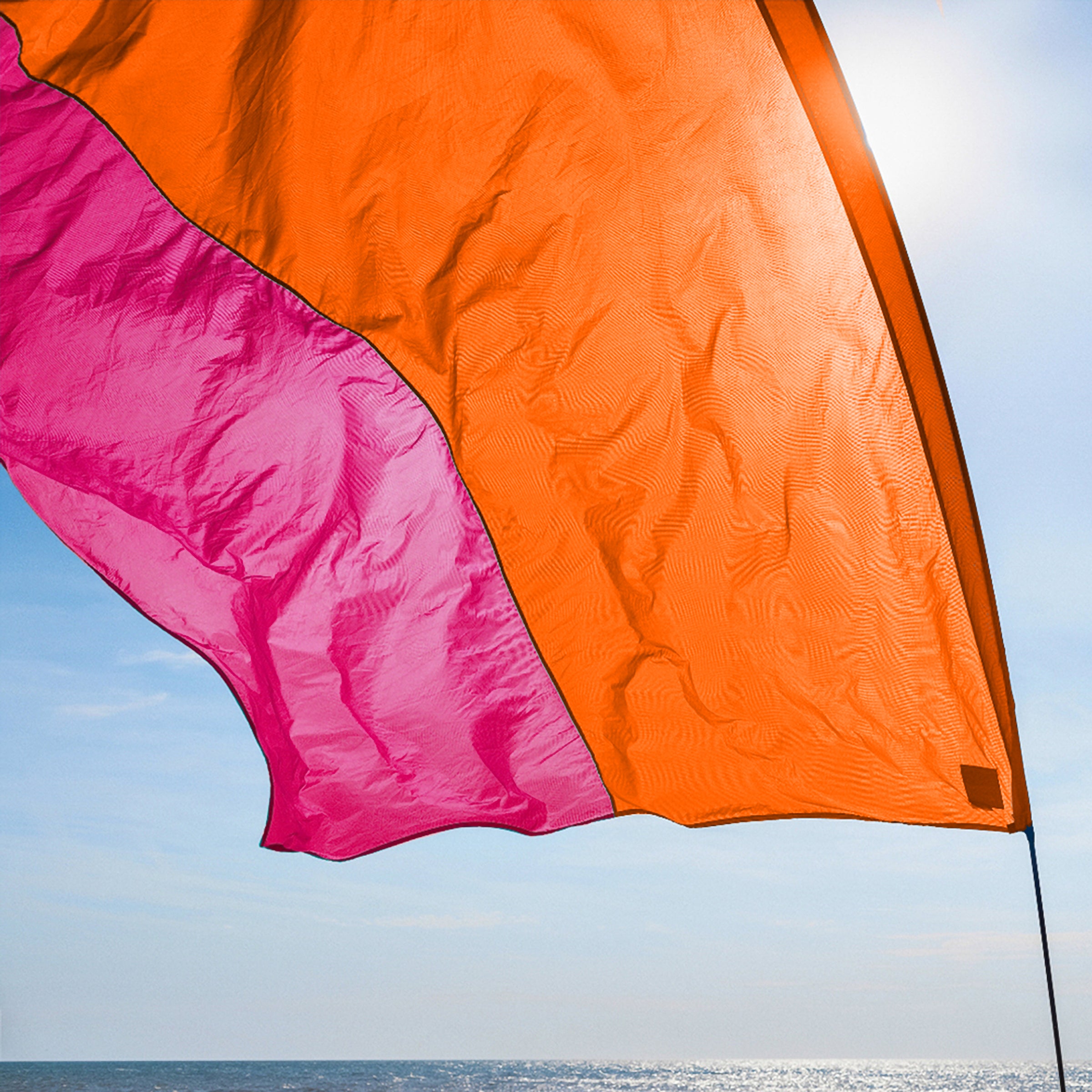
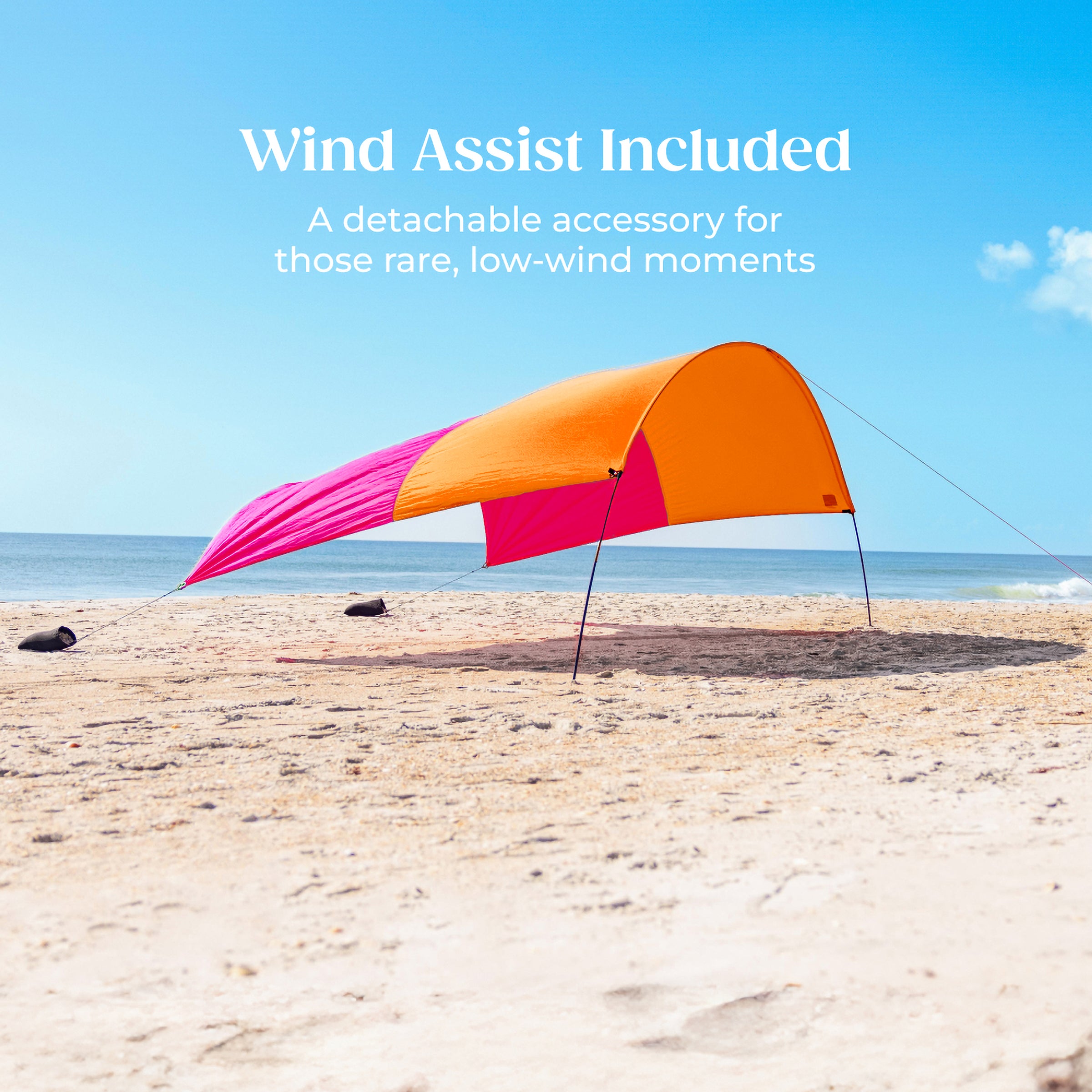
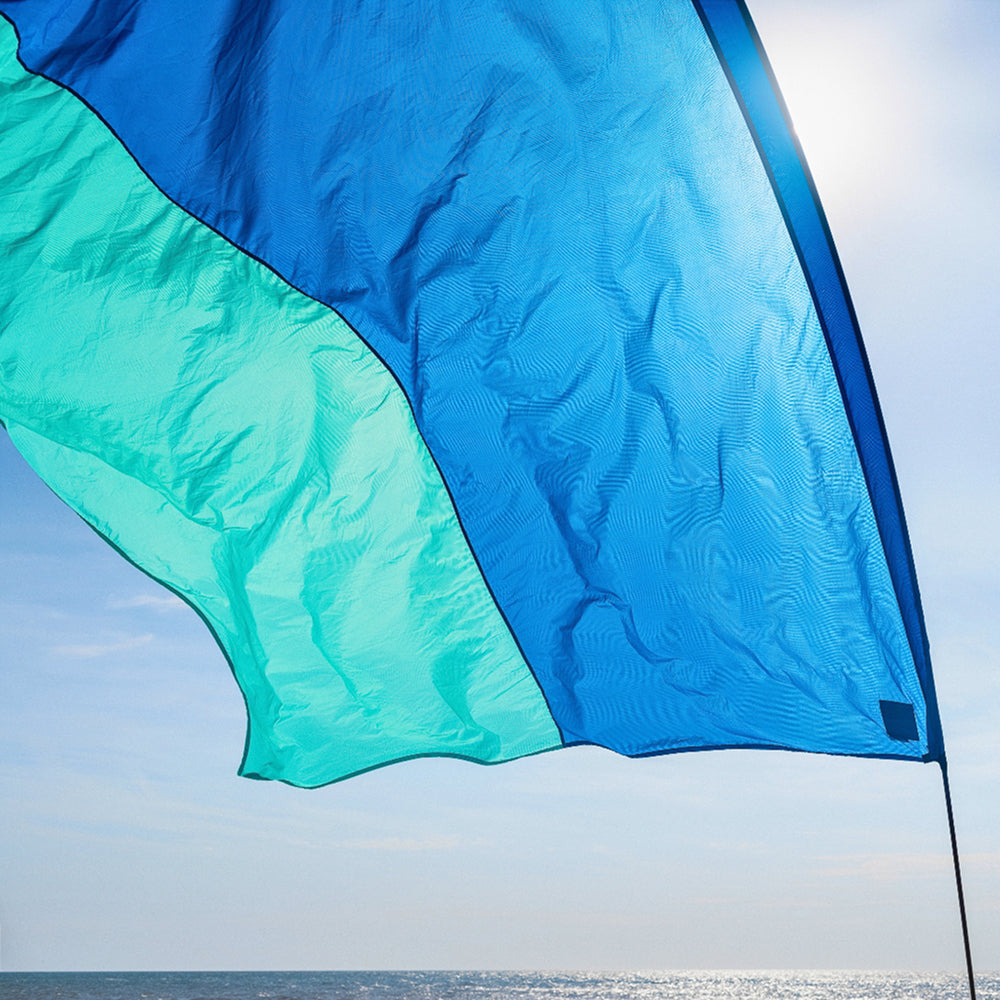
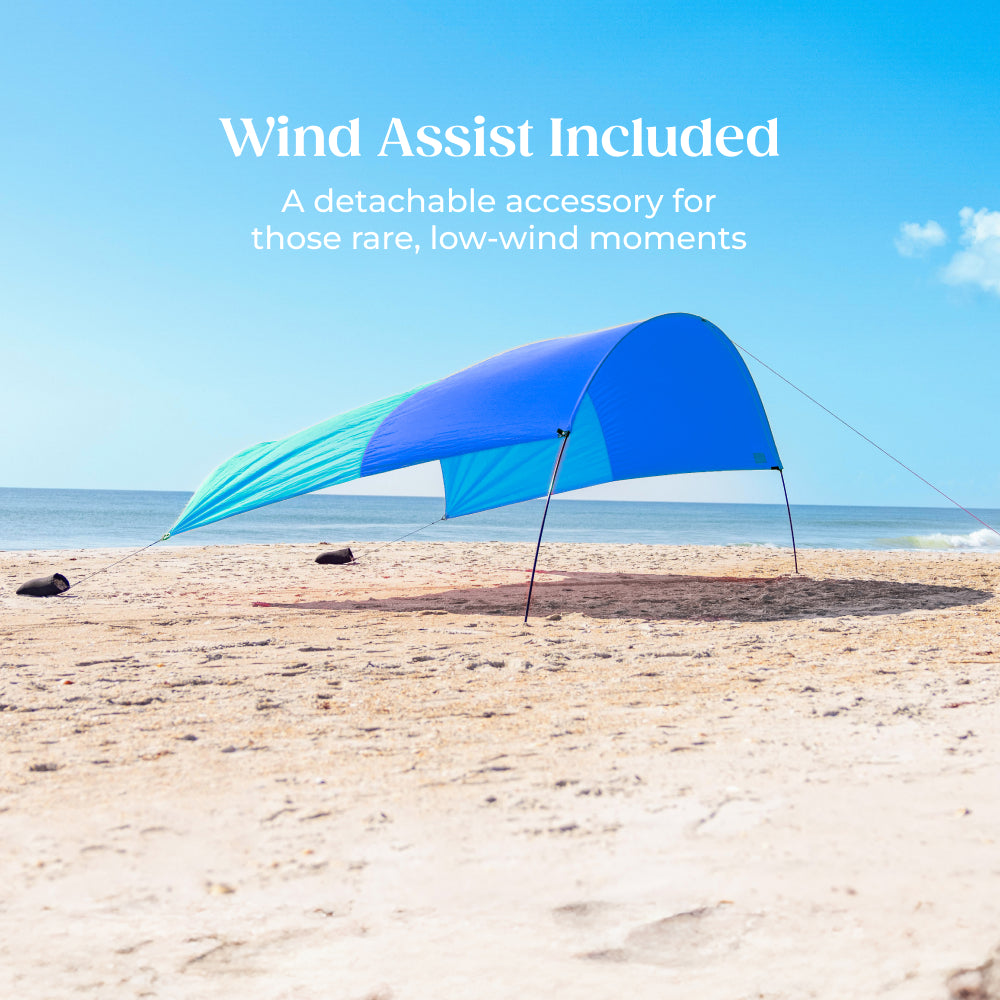
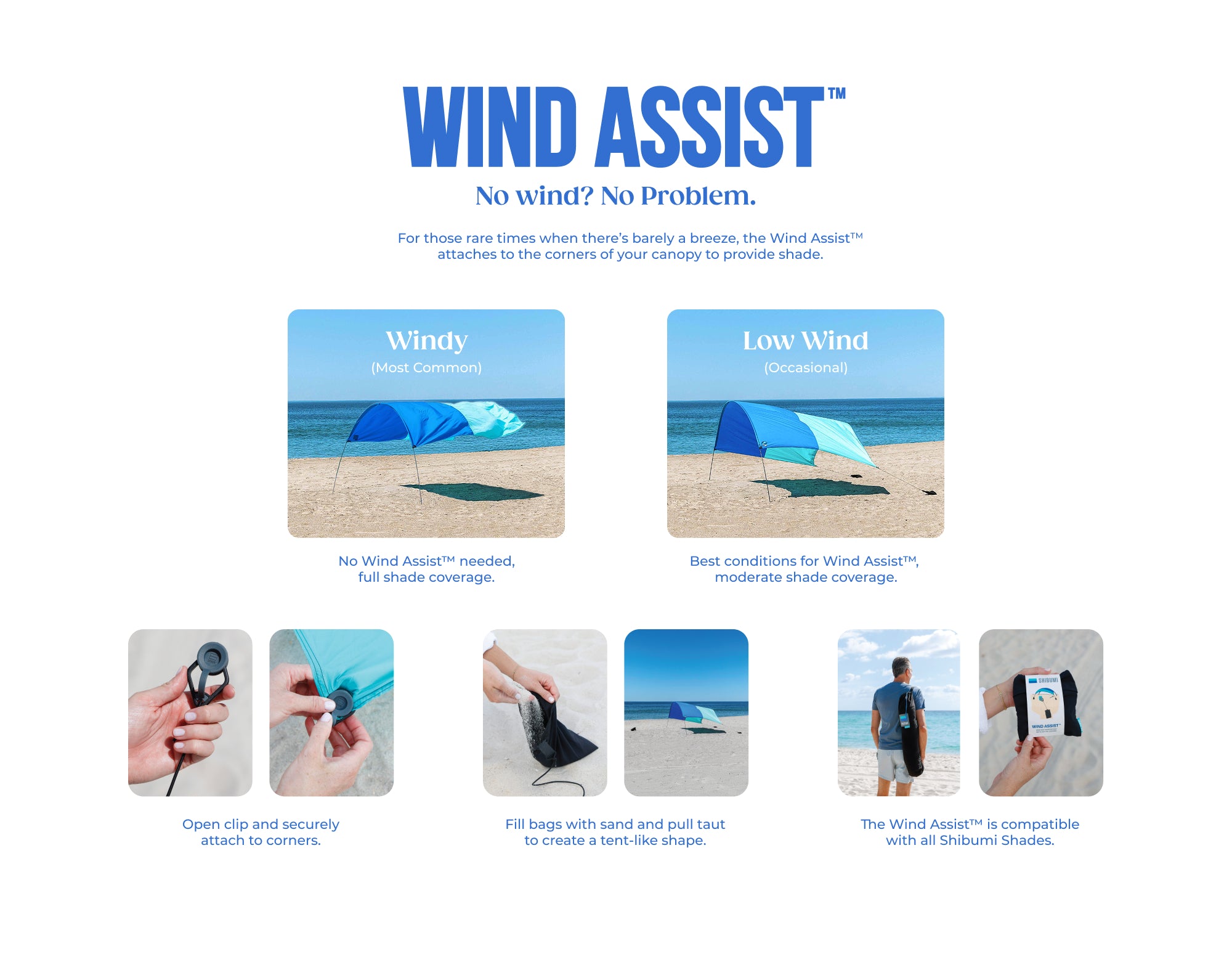
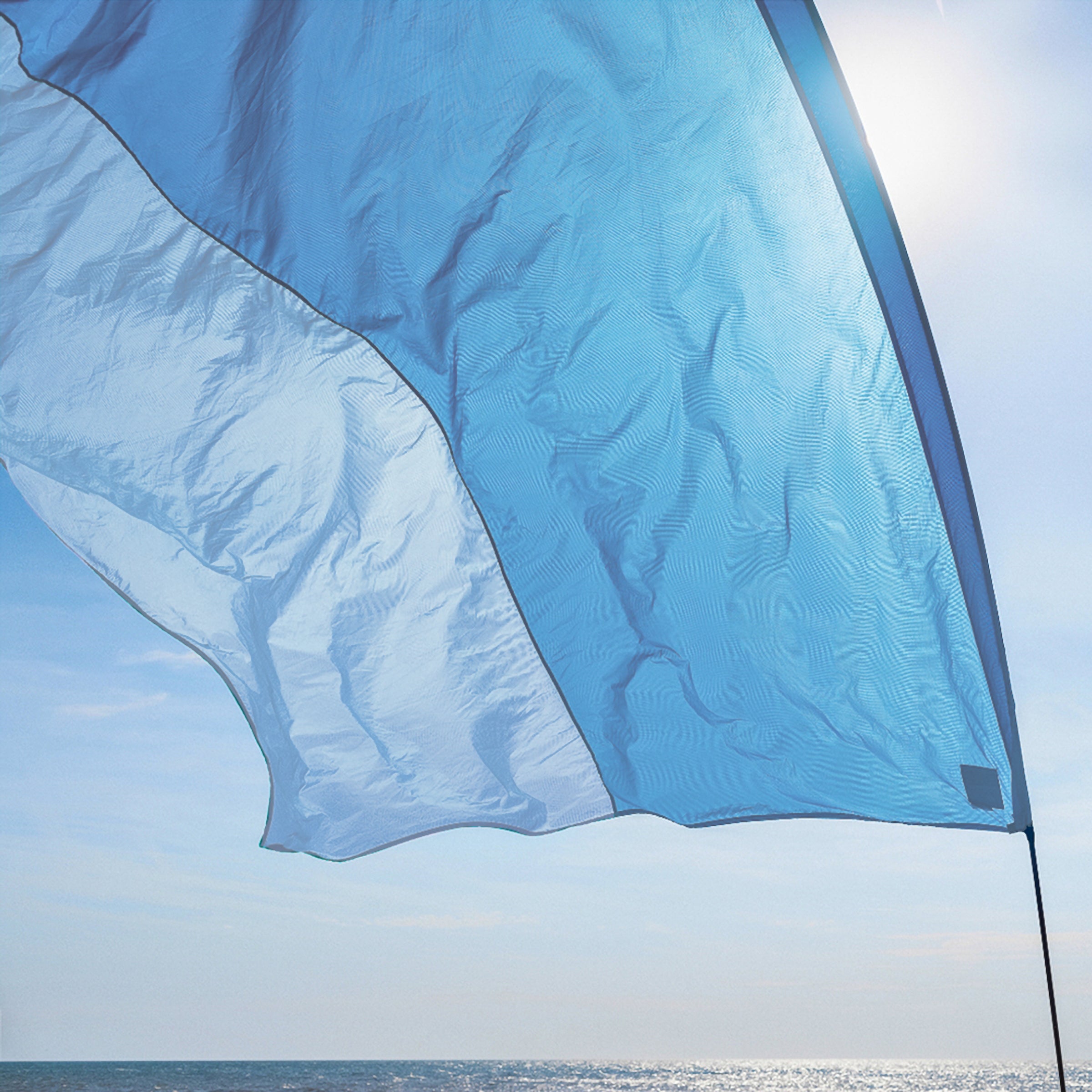
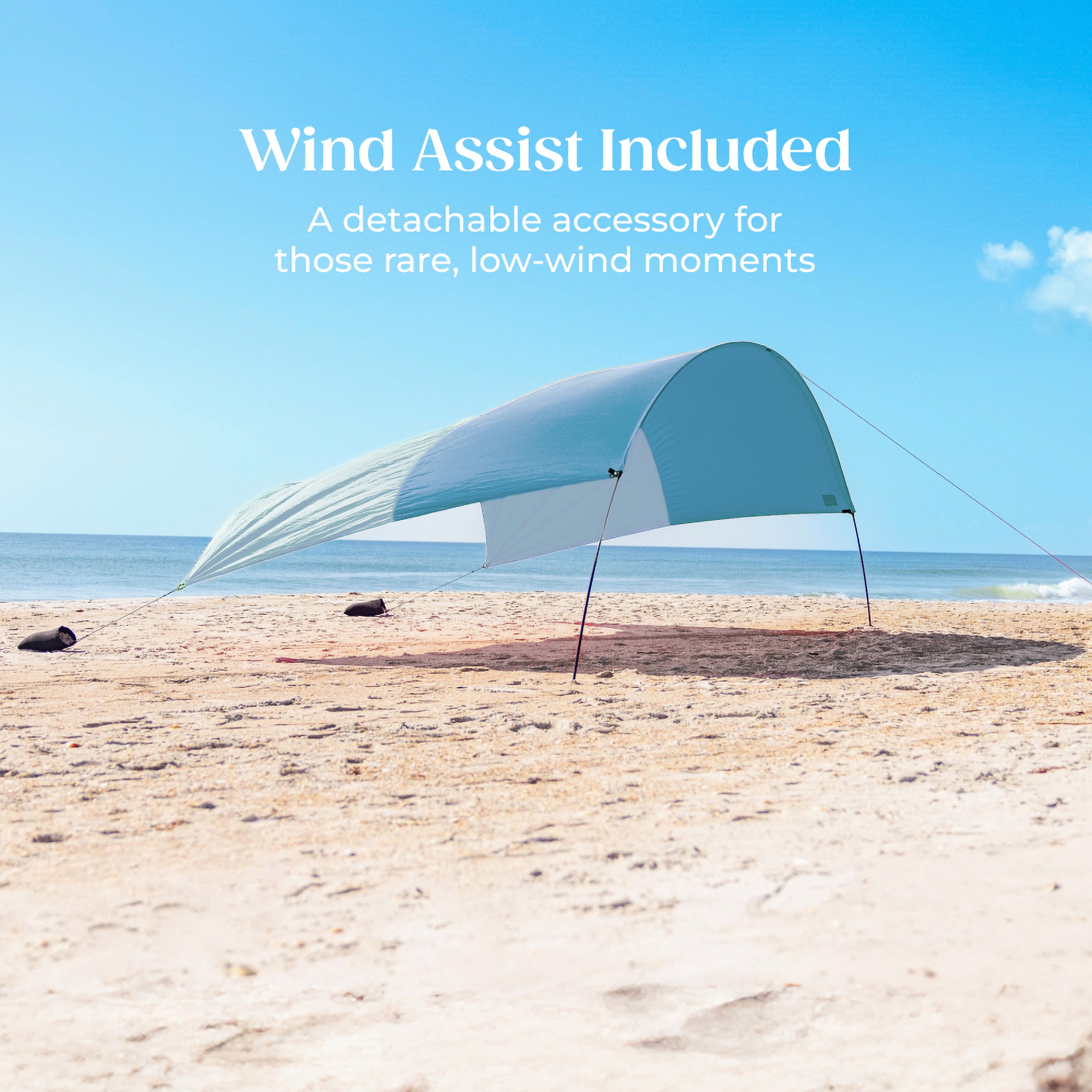
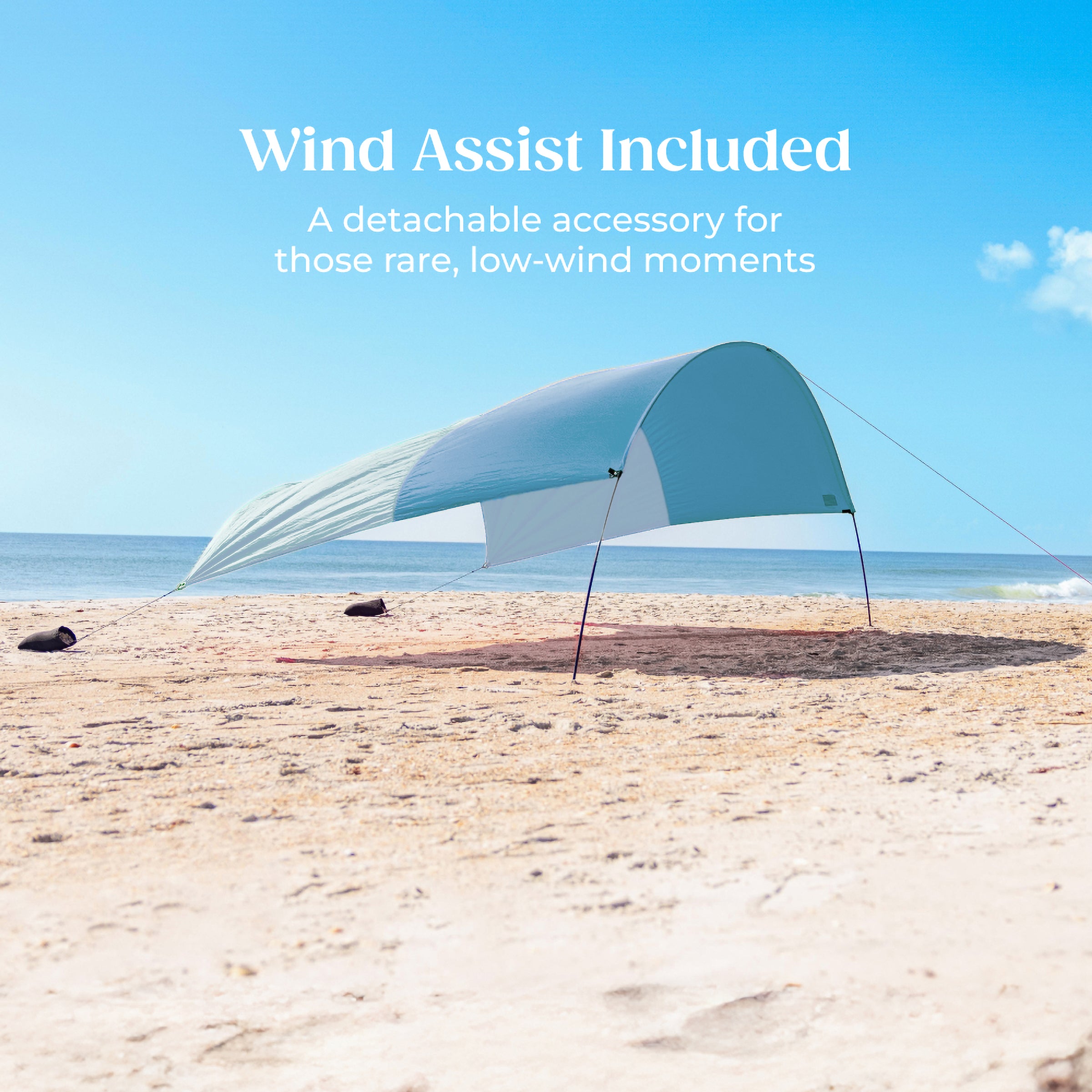
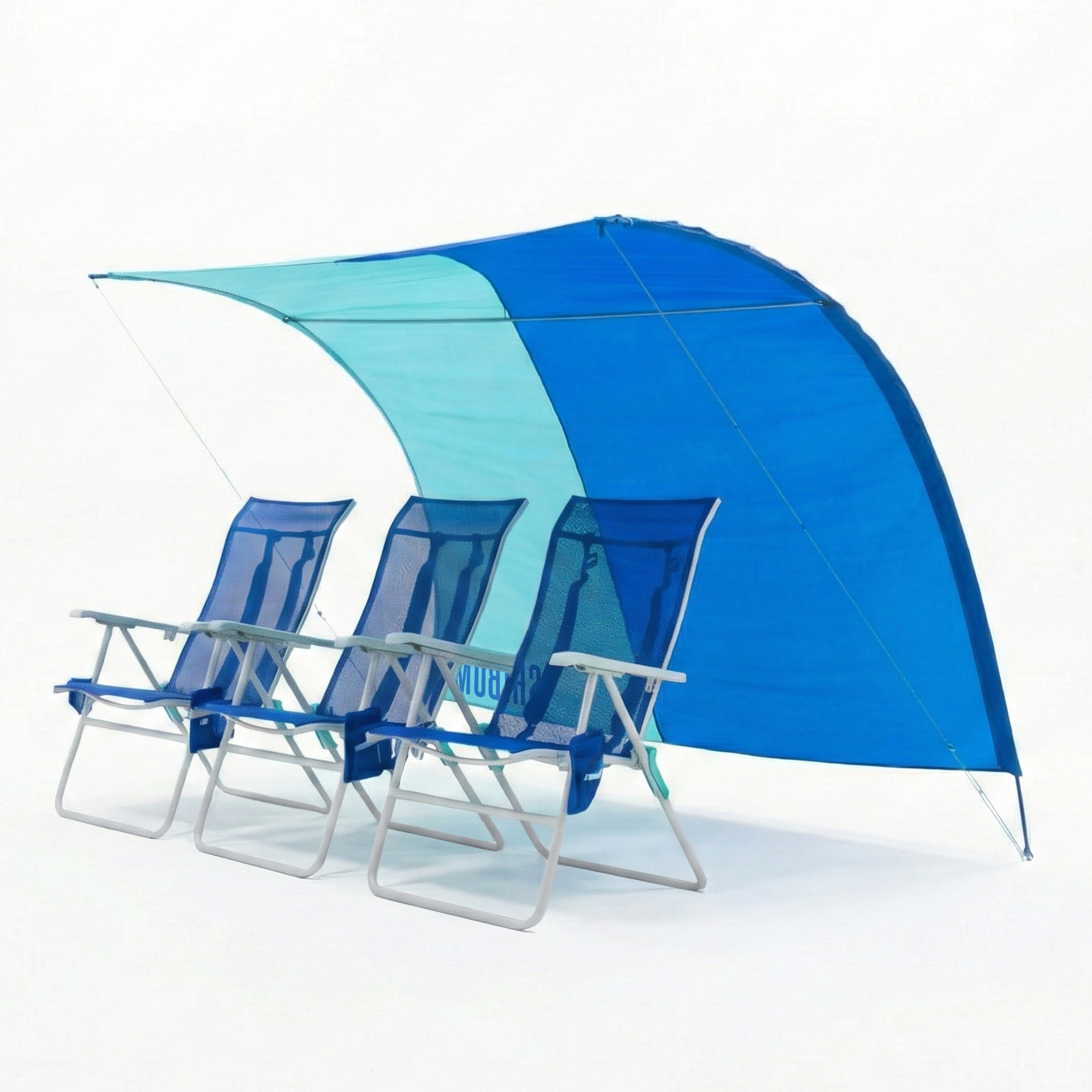
Rather than fighting the coastal breeze with a heavy frame, the Shibumi Shade uses it. Wind fills the canopy and floats it overhead to create shade below. If the wind changes direction, you can quickly reposition the Shade, and when the breeze takes a break, the included Wind Assist™ creates an alternate tent-like setup for calmer conditions.
Park Vista solves a different problem.
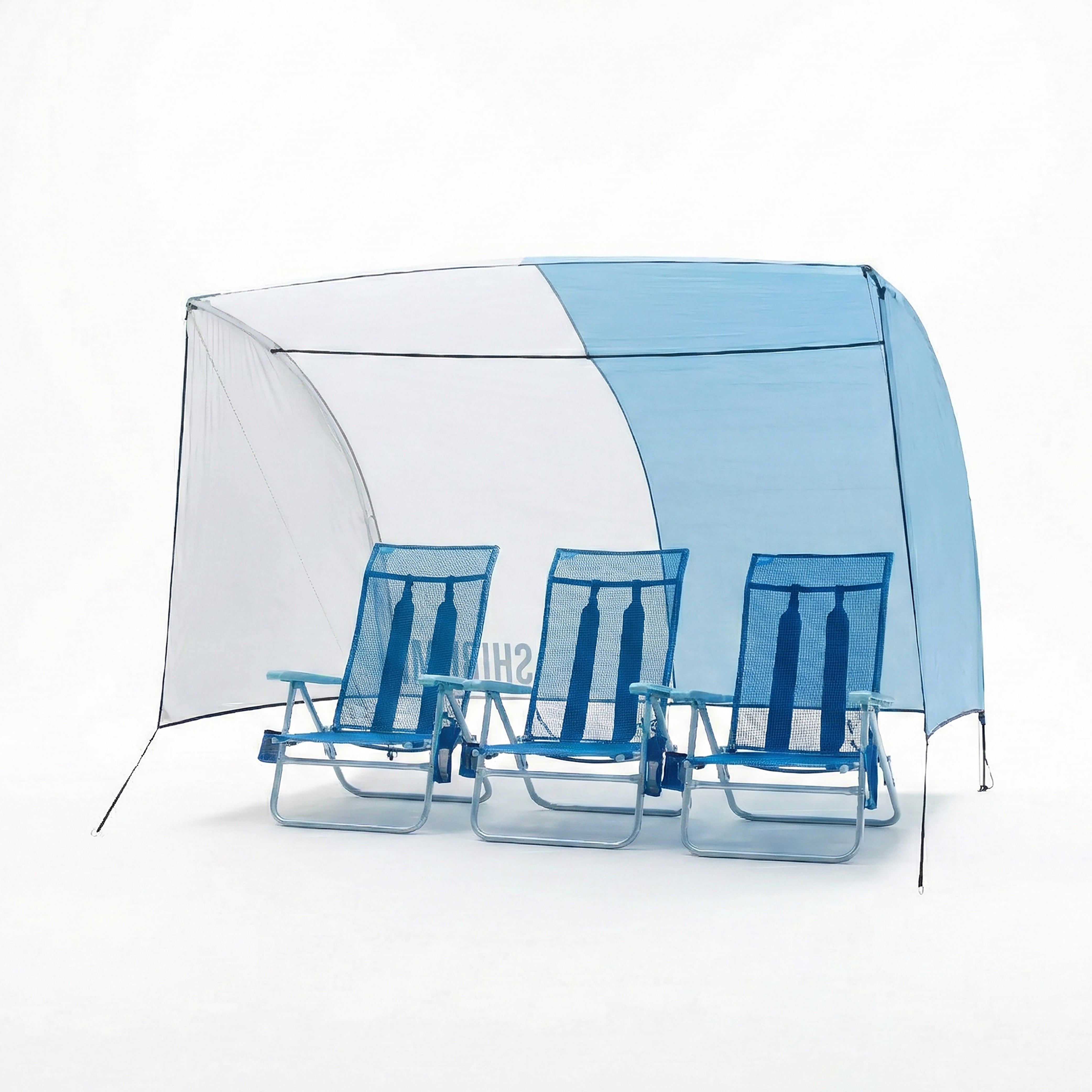
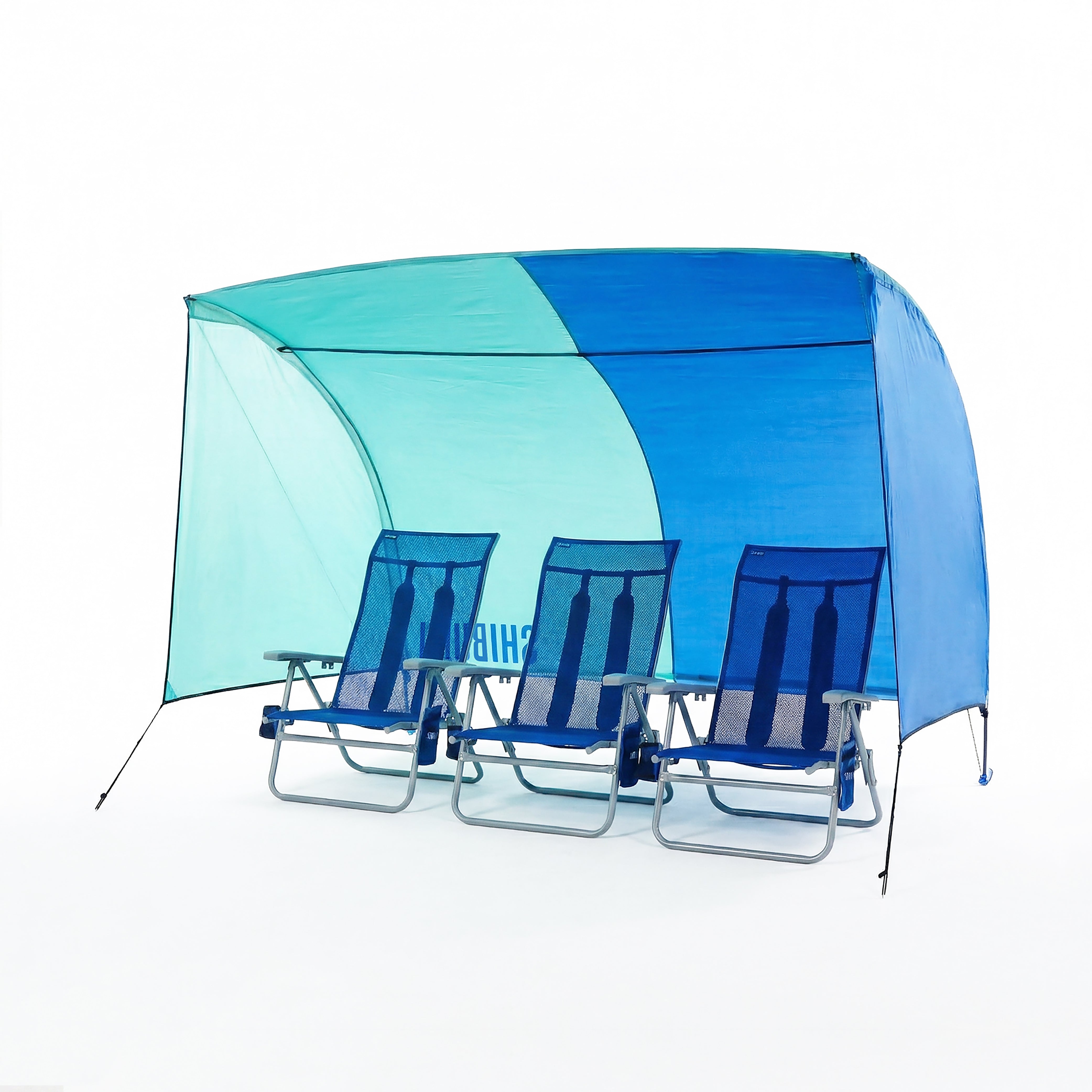
At the park or in the backyard, you’re not necessarily working with the consistent coastal breeze that makes the Classic possible. Instead, Park Vista creates a grounded shade structure that can adapt as the sun moves throughout the day. Its adjustable curve lets you change the angle of coverage, while removable side mesh panels offer additional protection when you need it.
Two environments called for two different designs.
Think About Who’s Coming With You
How many people fit under each Shibumi shade?
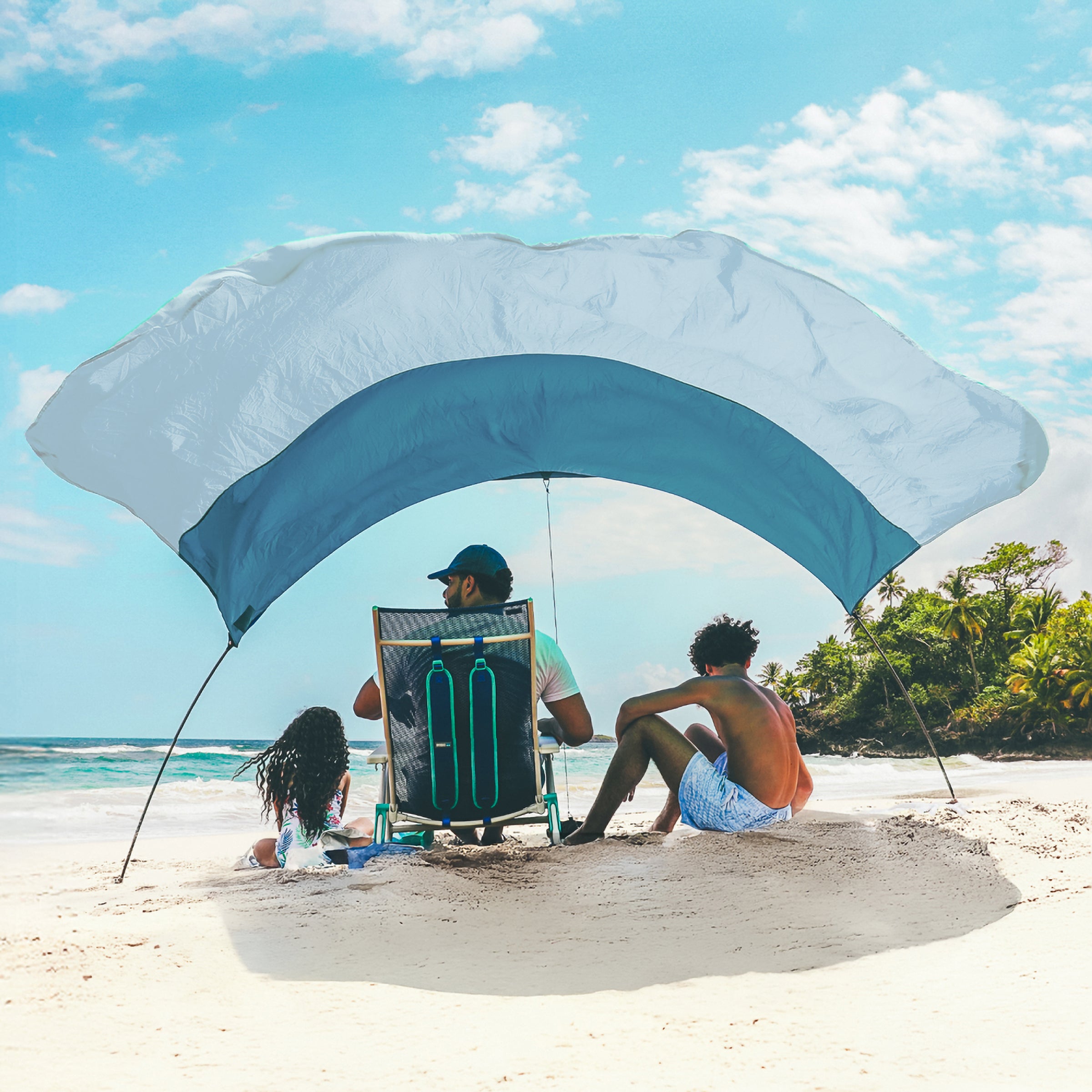
The best beach days have one rule: the more the merrier! Someone brings a friend, another family joins, the kids migrate back from the water, and suddenly everyone has found their way under the Shibumi.
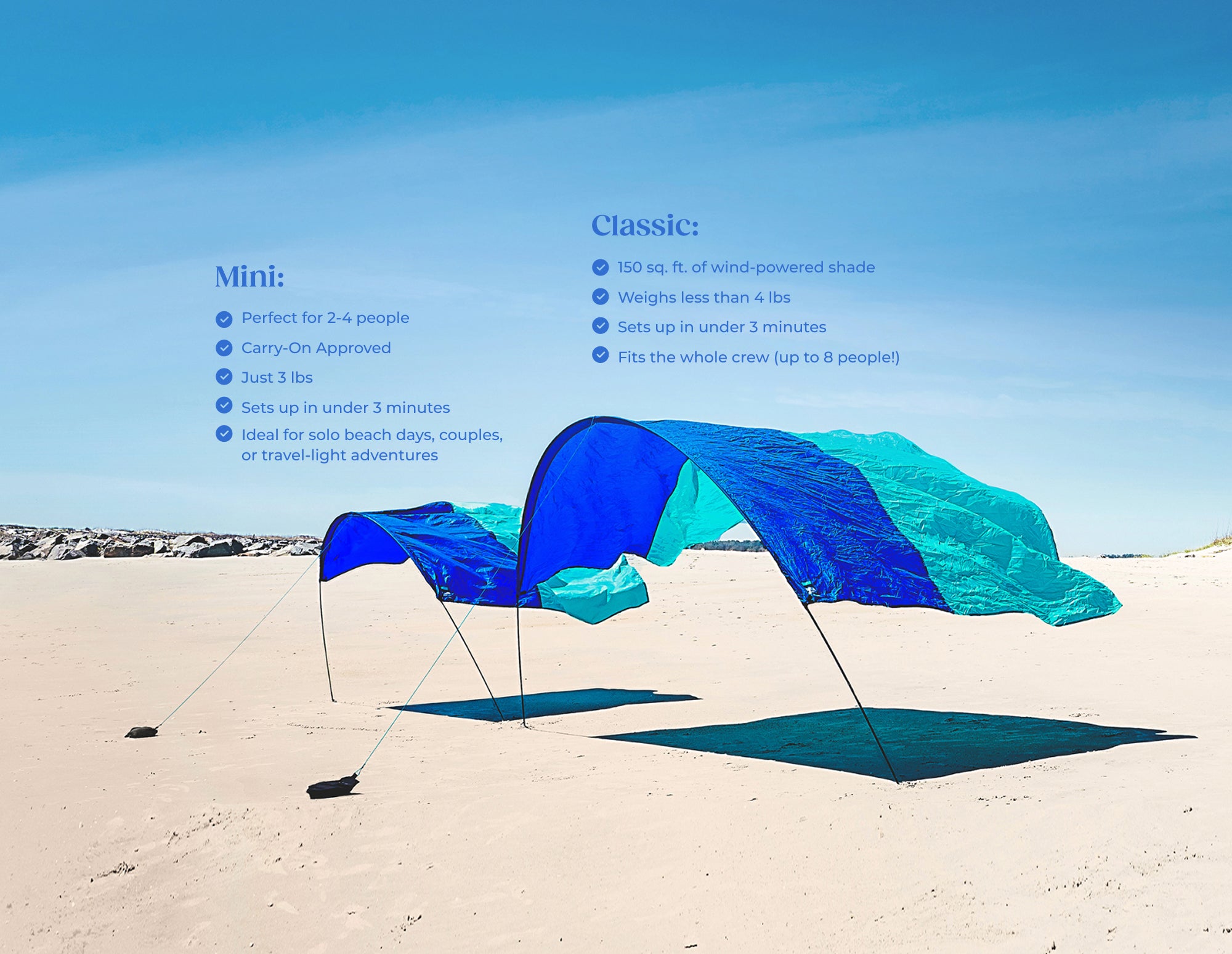
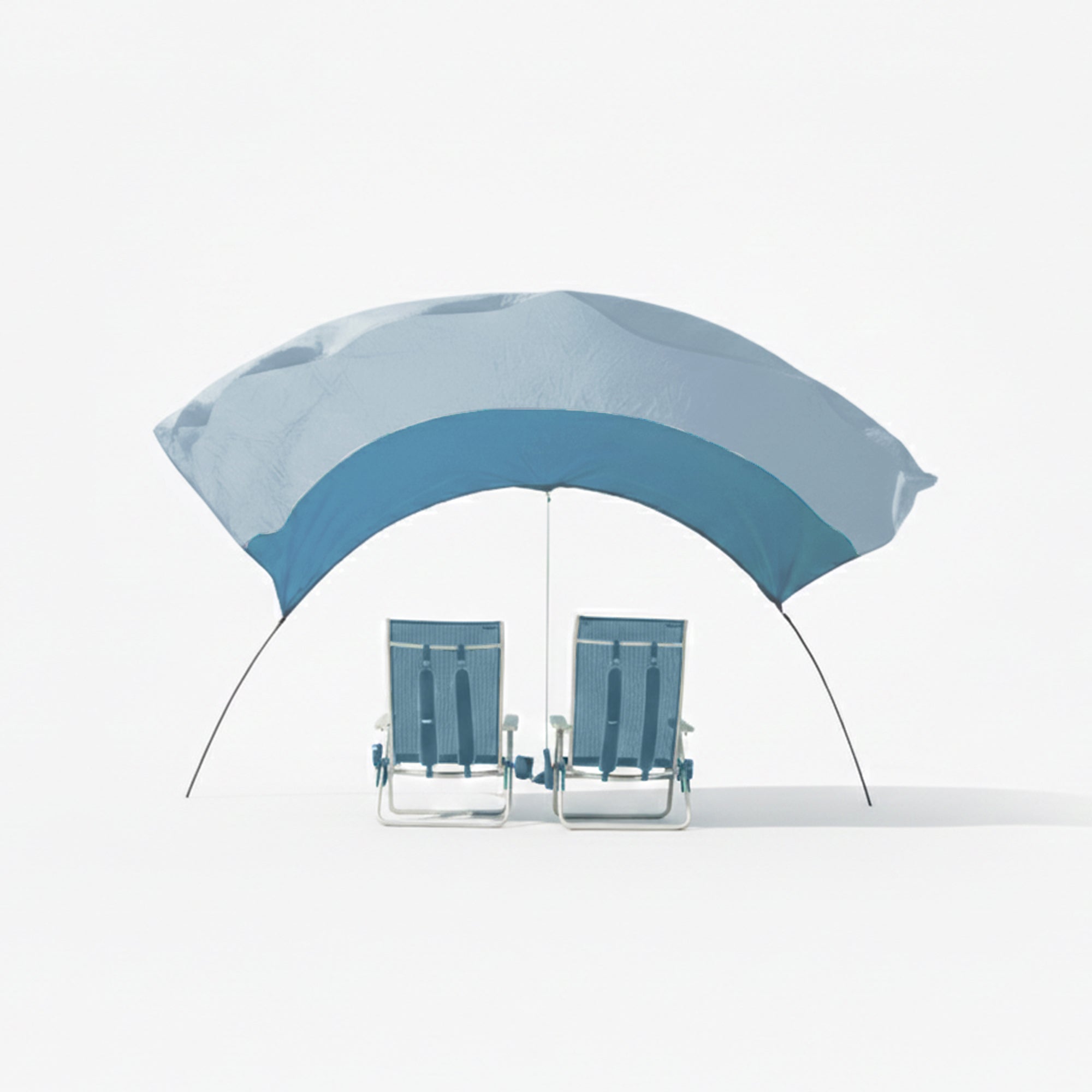
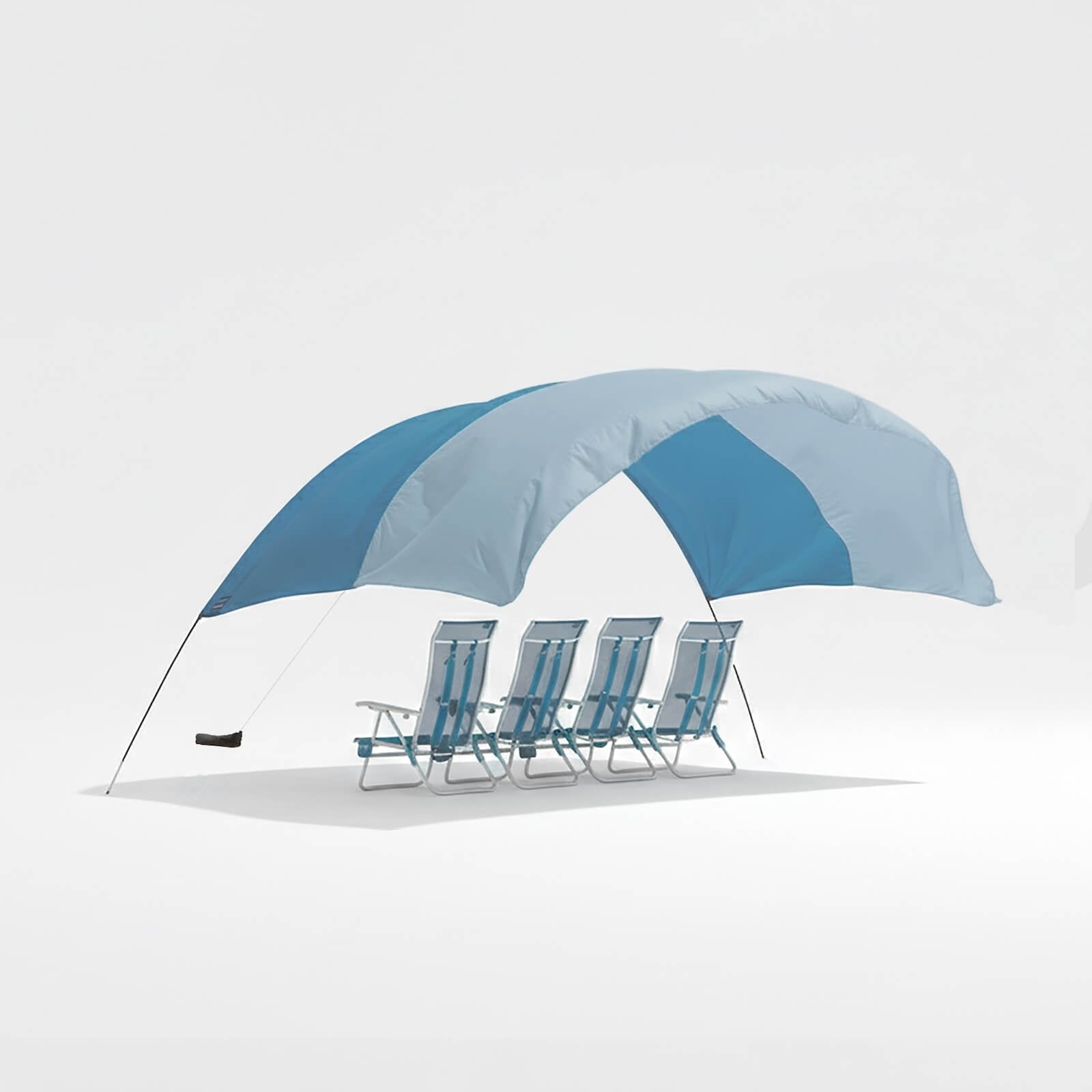
The Classic Shibumi Shade was designed with those days in mind, providing shade for up to eight people.
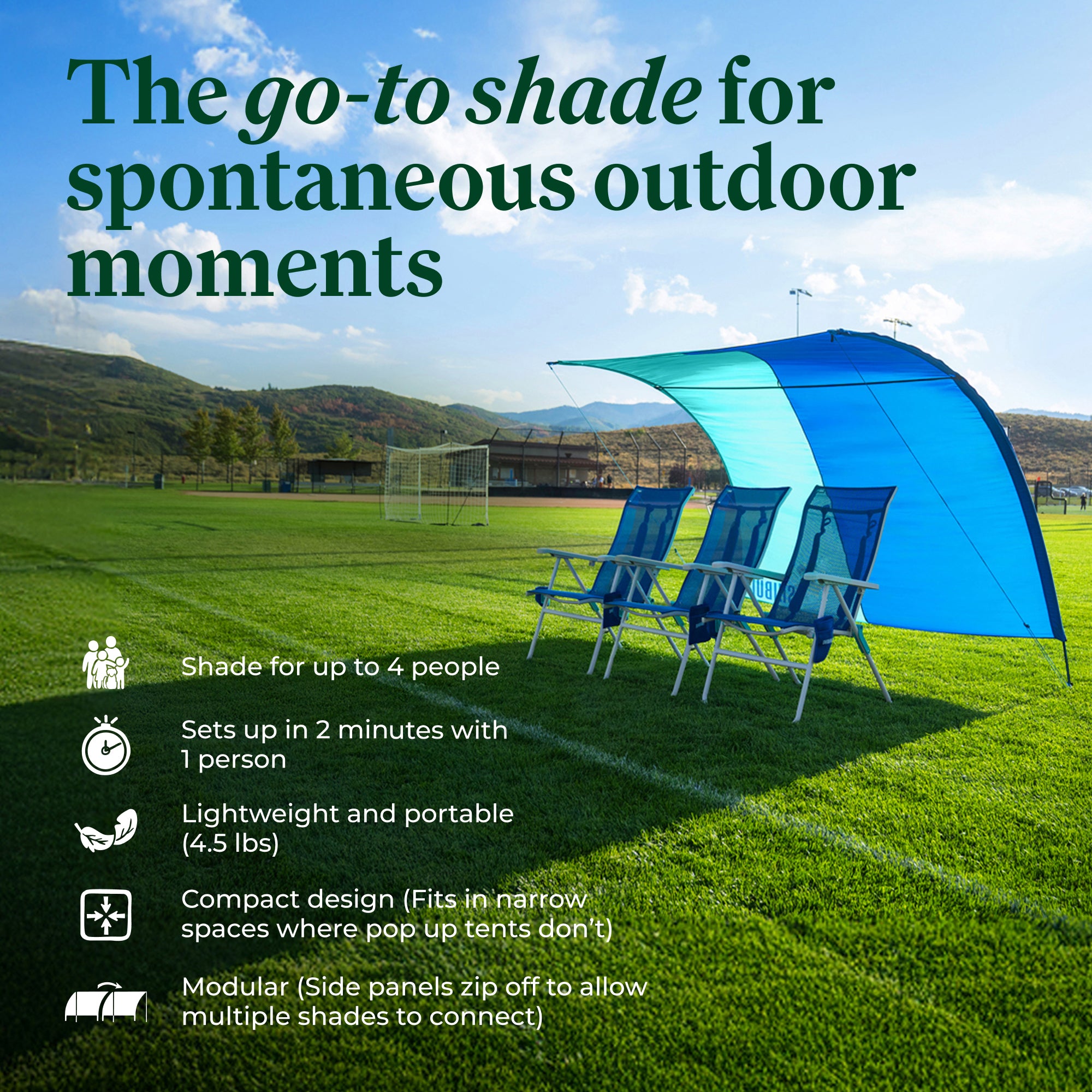
Park Vista creates a more compact gathering place for two to four people. That makes it especially well suited for a couple of Shibumi Chairs on the sidelines, a family picnic, a backyard reading spot, or a shaded home base while the kids run around the park.
Different Designs, Same Lightweight Philosophy
For products that work so differently, the Shibumi Shade and Park Vista have quite a bit in common.
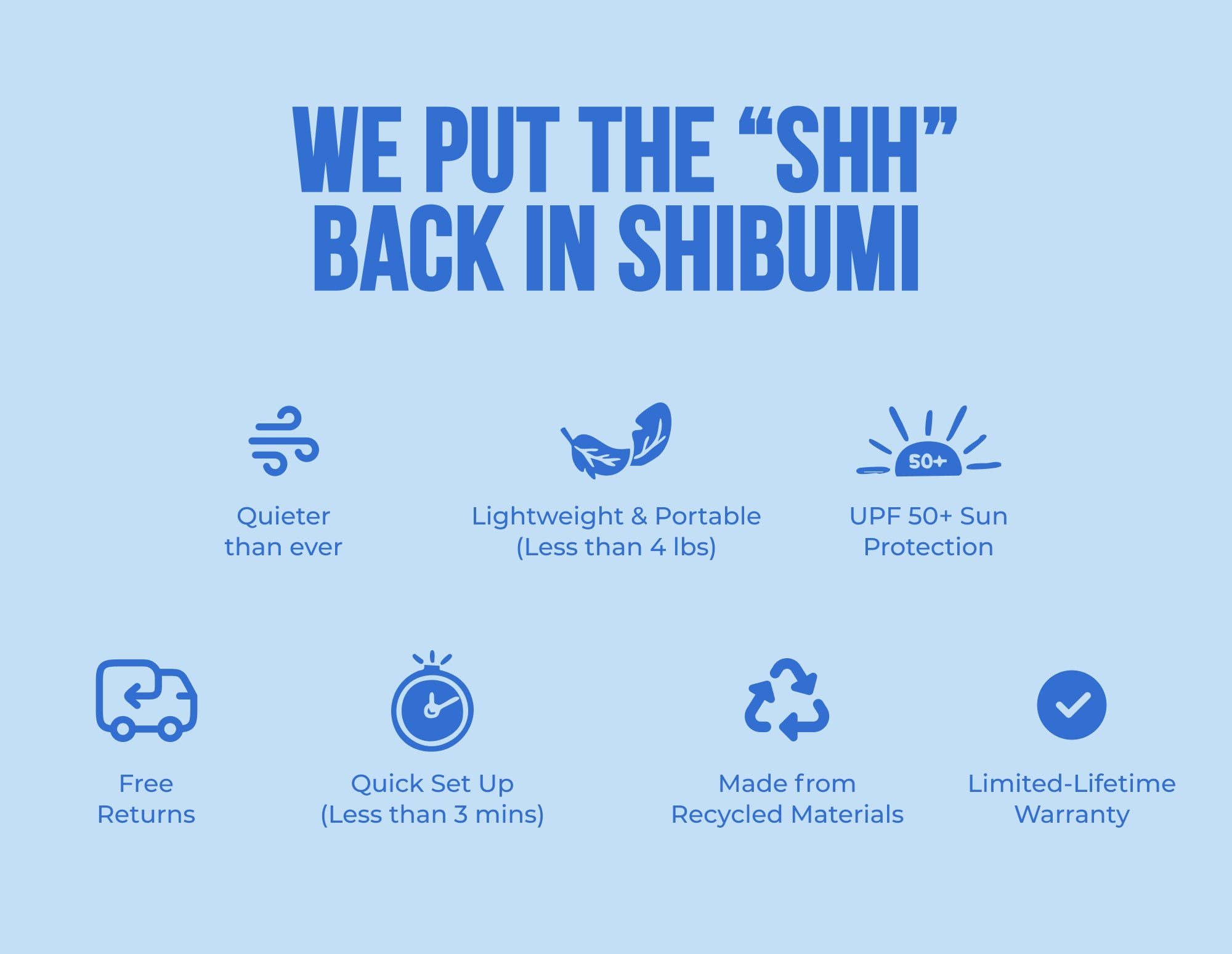
- Both provide UPF 50+ sun protection.
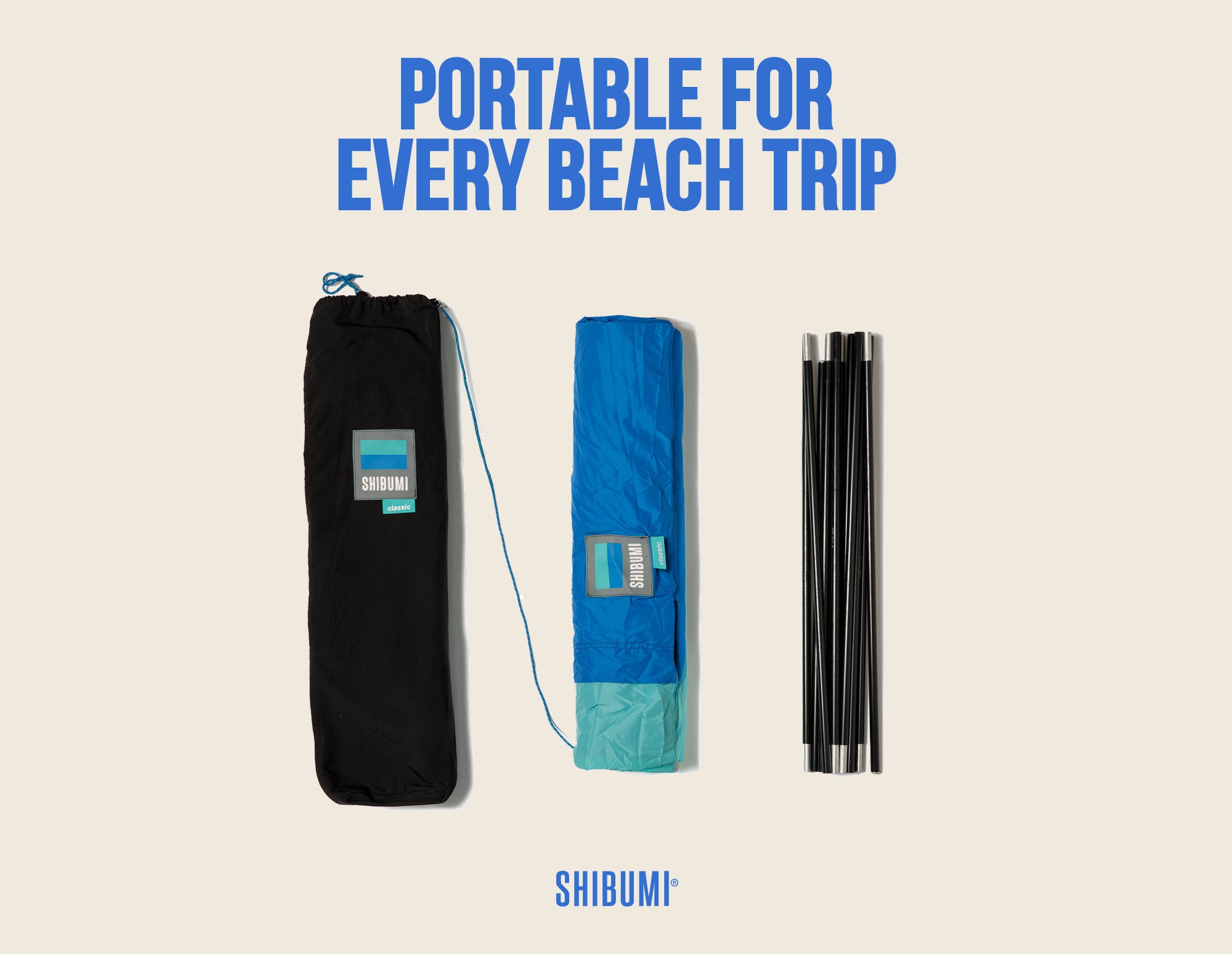
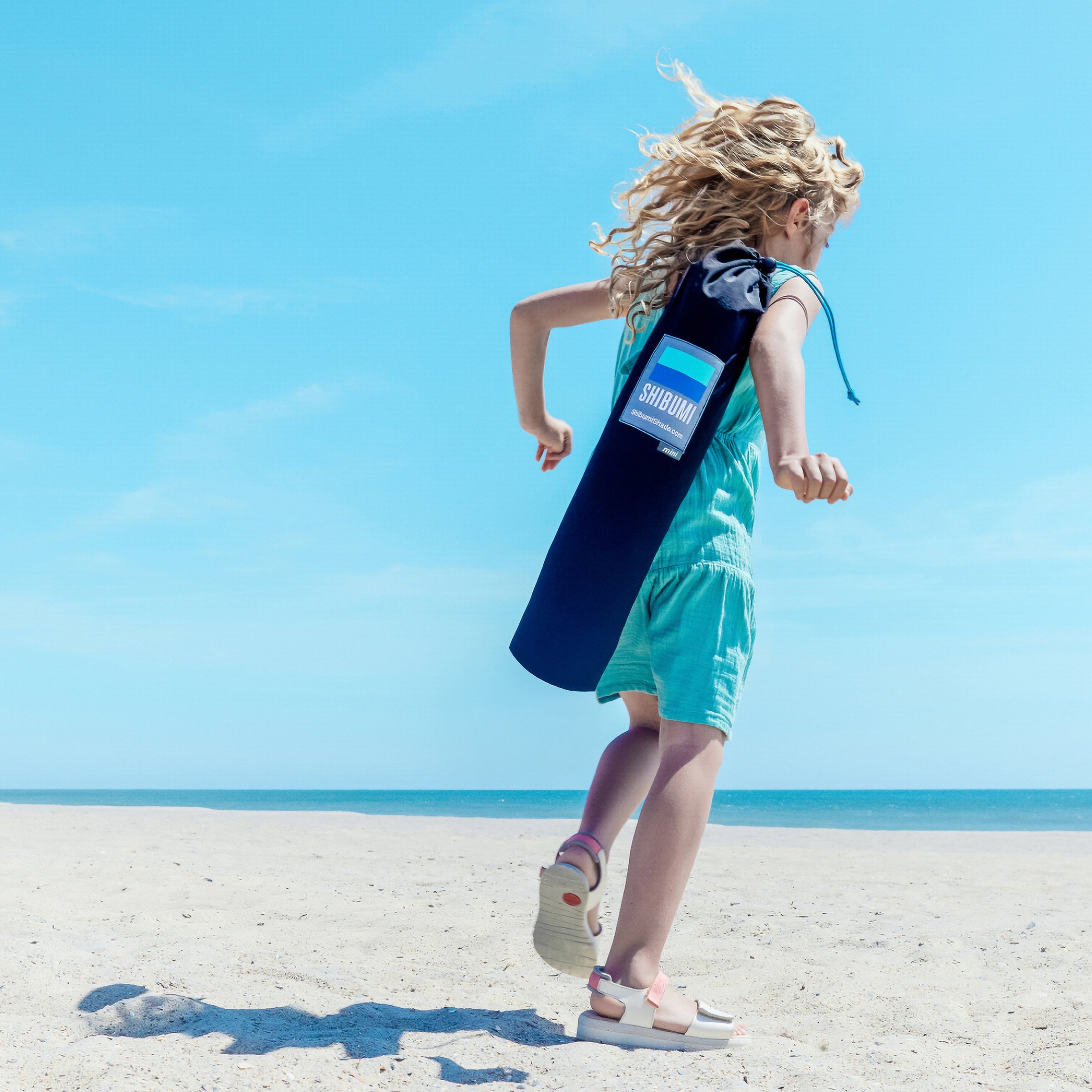
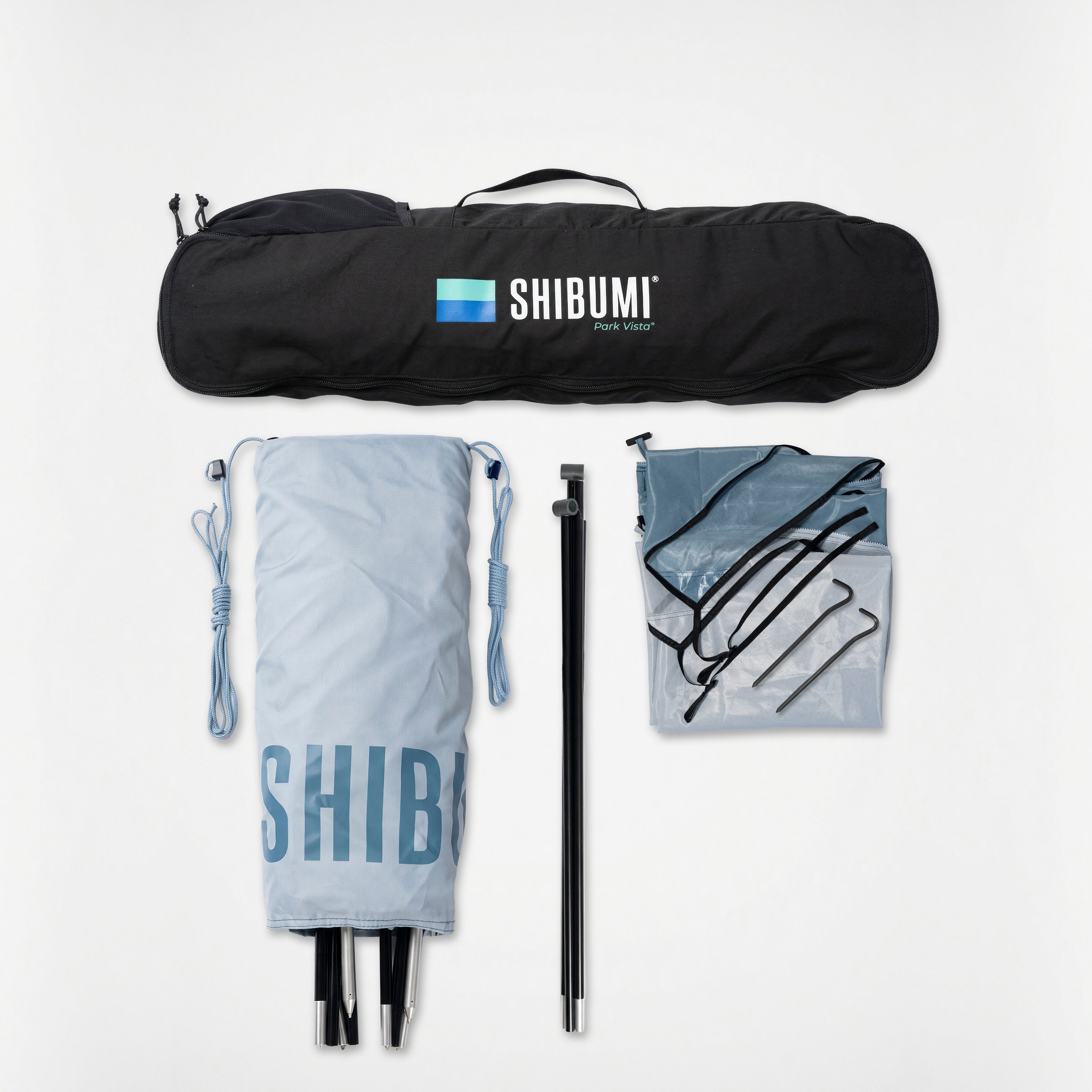
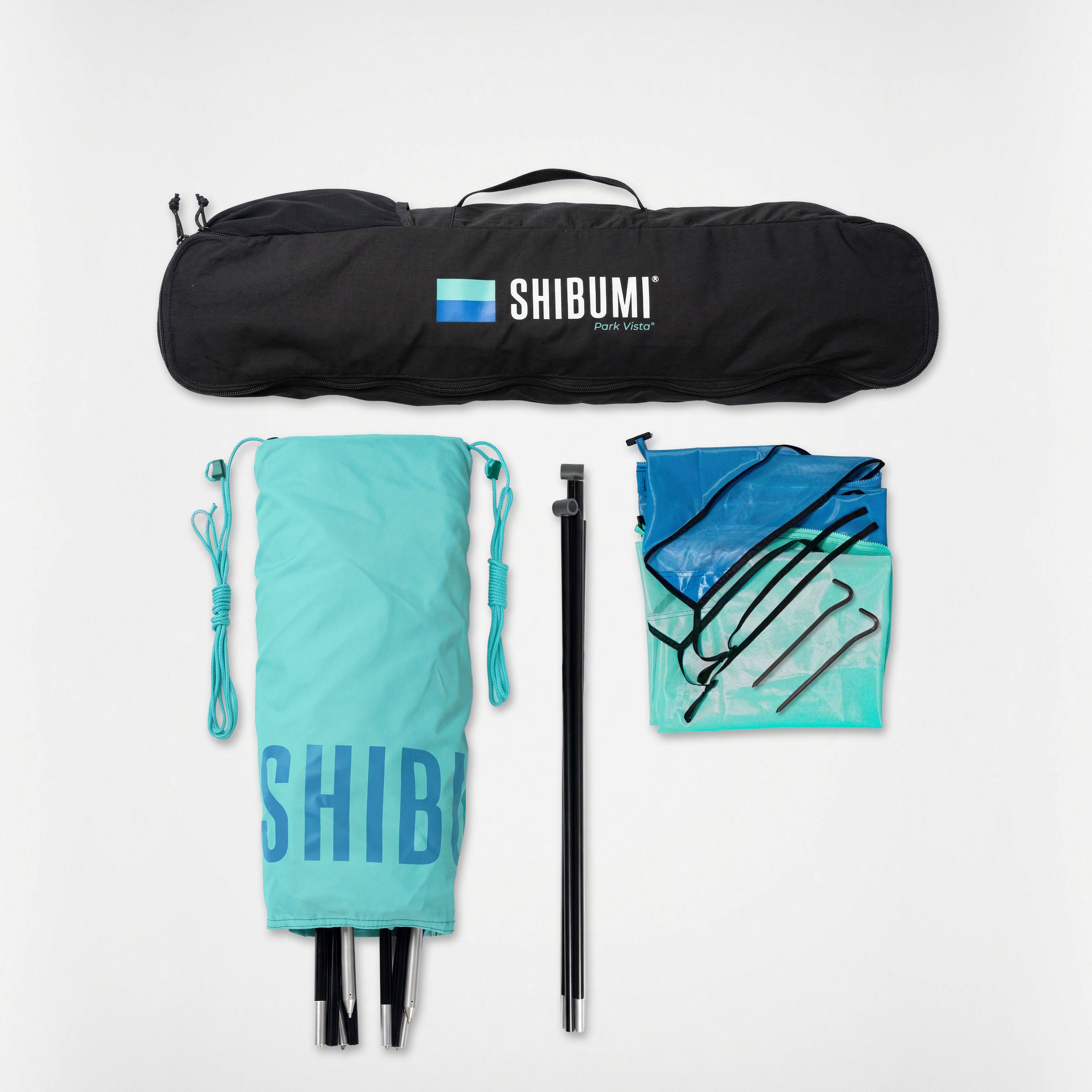
- Both pack down for easy transport.
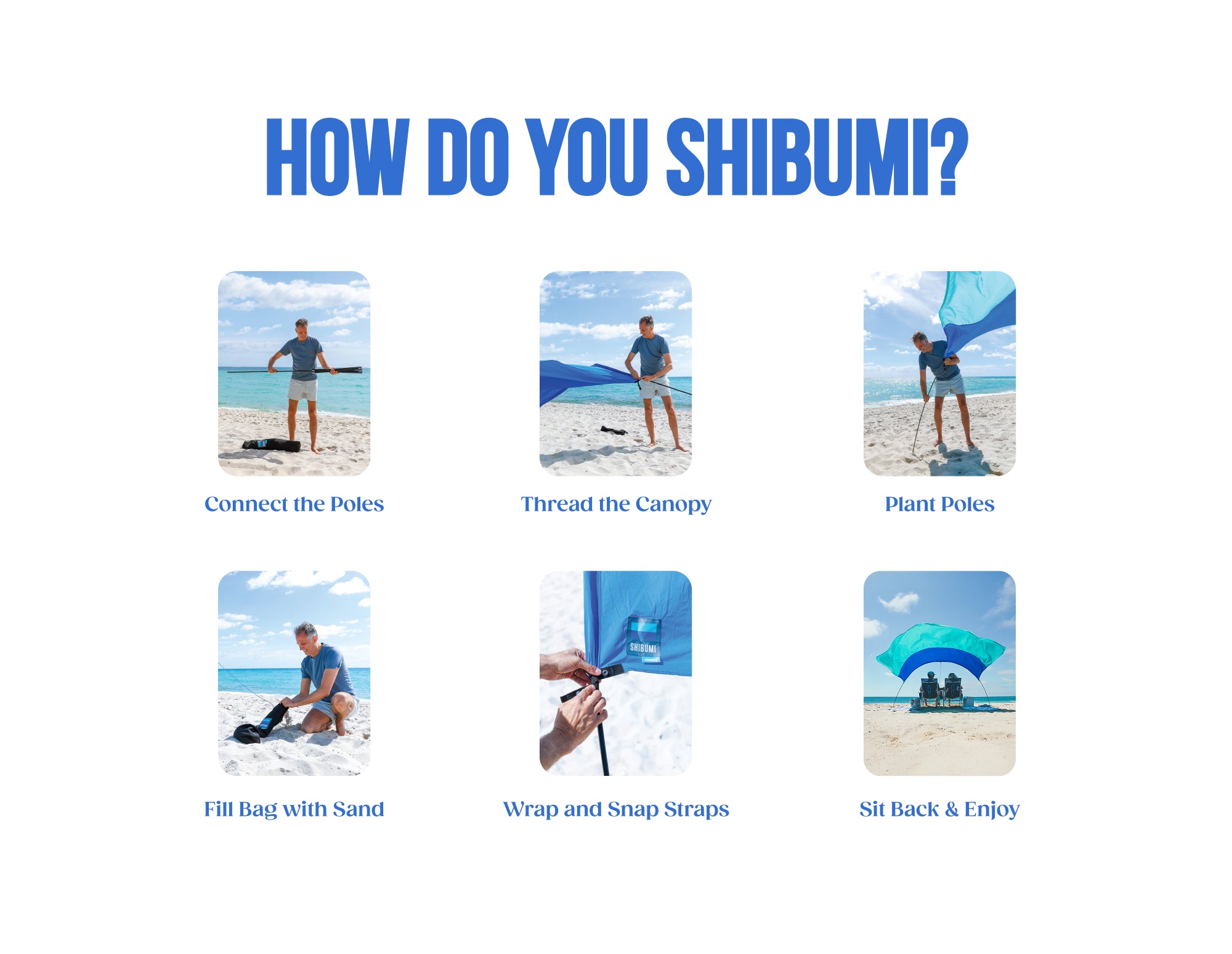
- Both are designed so one person can handle setup.
And, perhaps most importantly, neither requires you to dedicate half the trunk, or all your energy, to bringing good shade along.
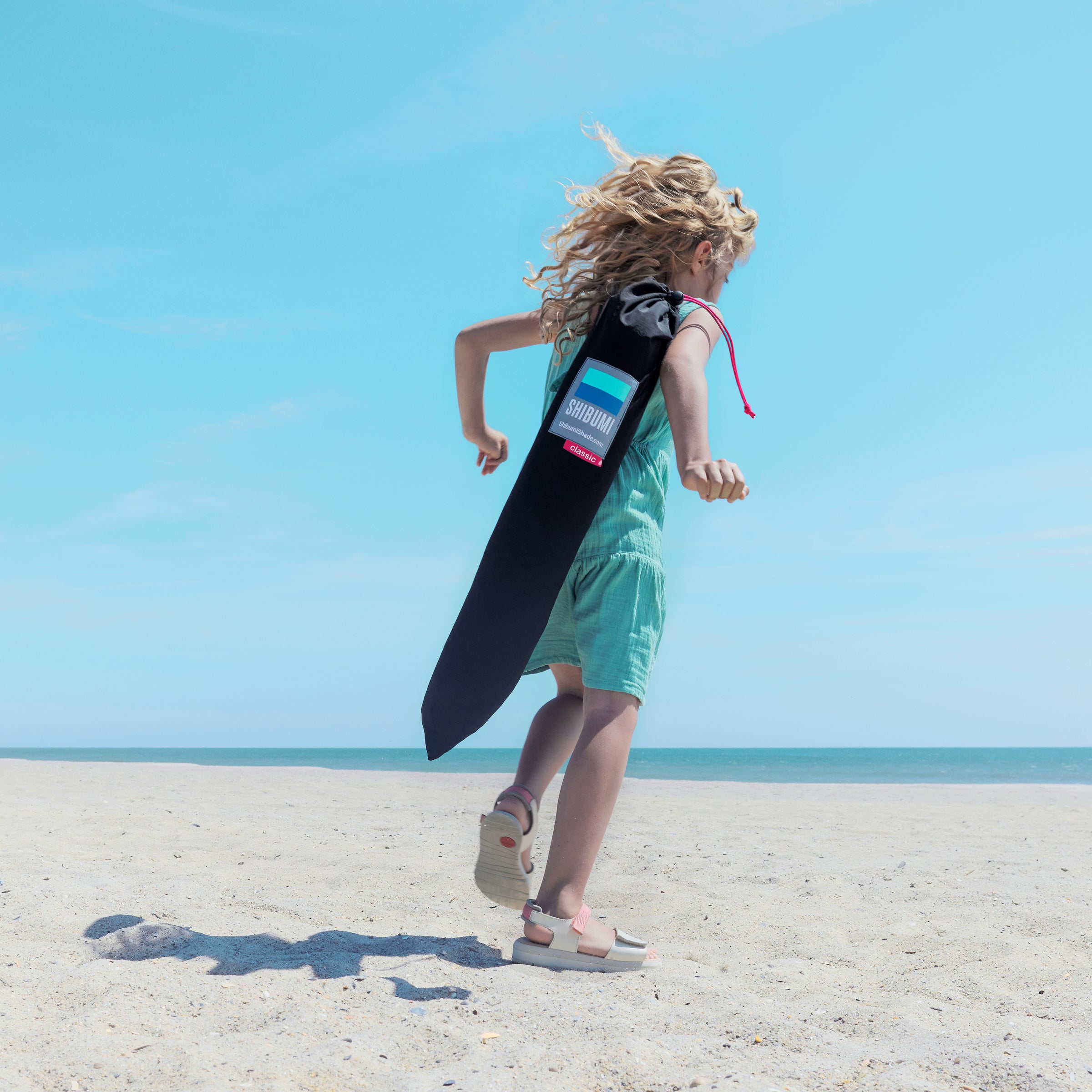
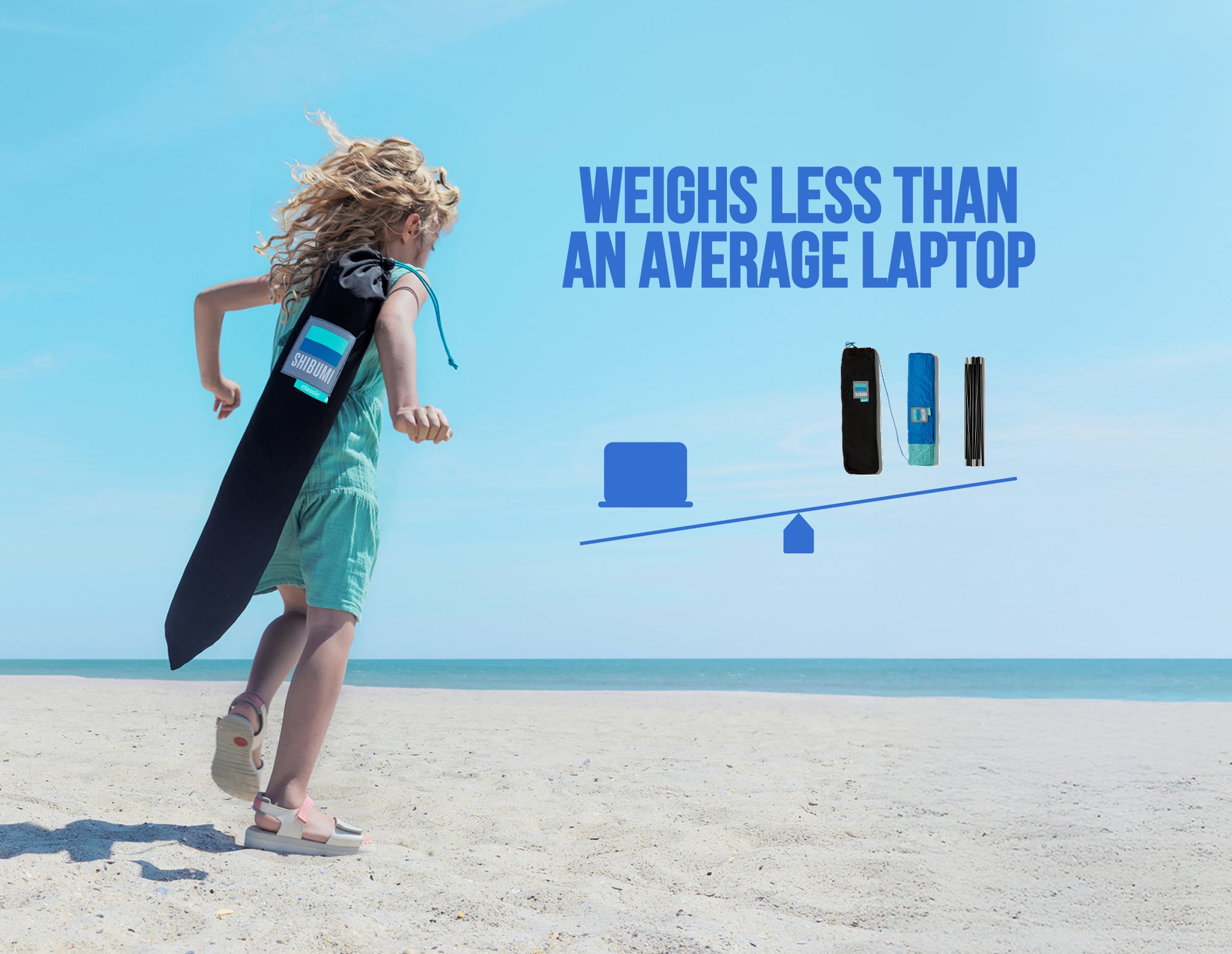
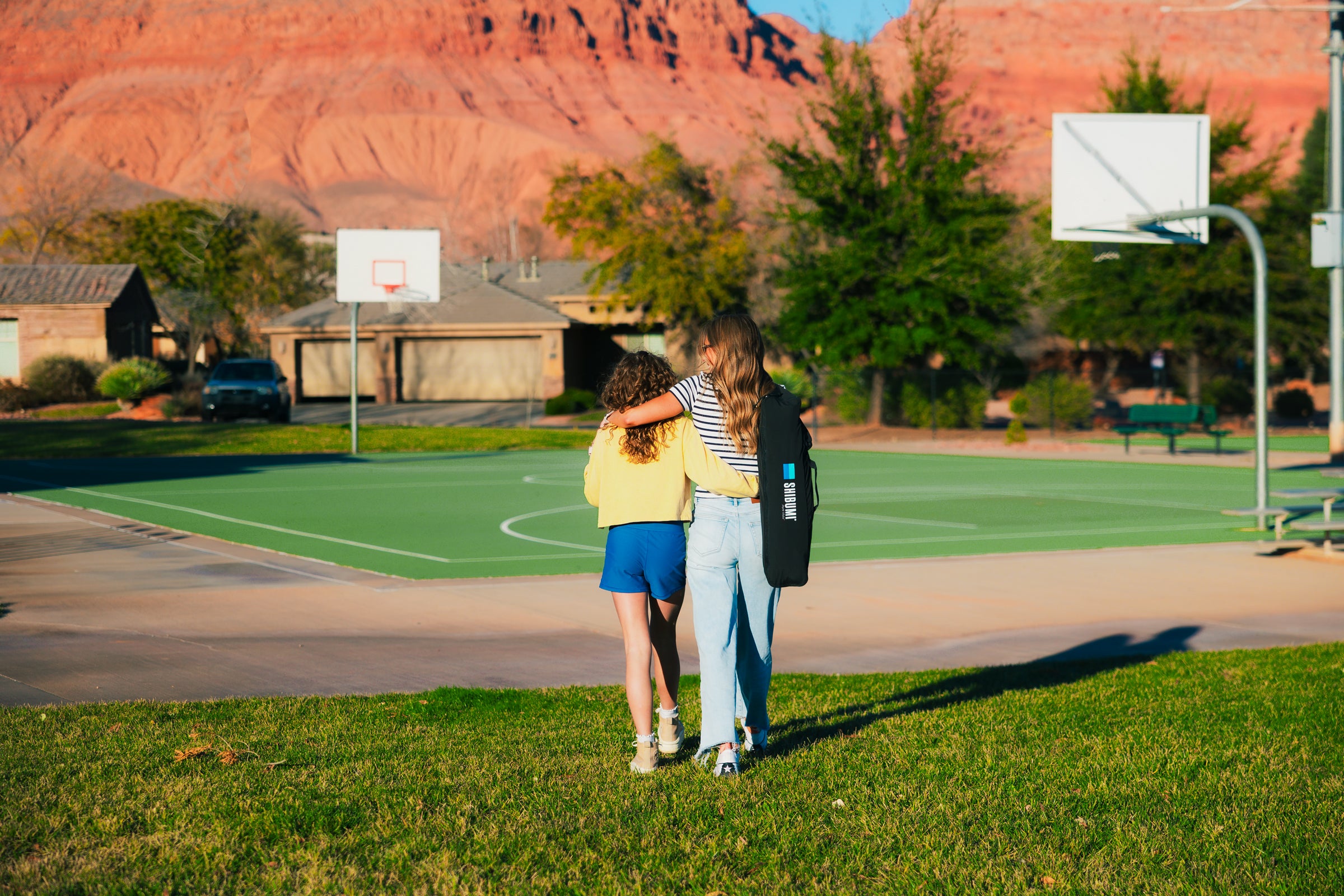
The Classic weighs around four pounds, while Park Vista weighs around five. That matters because shade is rarely the only thing you’re carrying. At the beach, there are chairs, towels, toys, and coolers making the walk across the sand with you. At the park, there are snacks, water bottles, soccer balls, dog leashes, and whatever else somehow became your responsibility between the car and the field.
We’ve always thought the shade should be the easy part.
Setup Is Simple, Just Different
Is Park Vista as easy to set up as a Shibumi Shade?
The Classic Shibumi Beach Shade takes about three minutes to set up—with its arch planted in the sand, the beach breeze lifts up the canopy, and you’re ready to settle in.
Park Vista on the other hand takes a zippy two minutes and uses stakes to secure its structure into grass. Once it’s up, you can adjust its curve as the sun changes and add or remove the side panels depending on the coverage you want.
The mechanics are different because the environments are different, but the goal is exactly the same: setup shouldn’t become the first major activity of your day outside.

See the differences between the Shibumi Beach Shade and the Shibumi Park Vista.
Which Shibumi Shade Is Right for You?
By now, you can probably see why we don’t really think of Park Vista as an alternative to the Classic Shibumi Shade.
They’re companions for different kinds of days.
If your family is headed to the beach for the day, grab the Classic. Its larger coverage, wind-powered design, and sand-based setup were built specifically for that environment.
If Saturday means soccer games, Sunday means a picnic at the park, and next weekend might involve burgers in the backyard, that’s Park Vista territory. It gives you portable shade designed around grassy spaces and the kind of outings where staying lightweight and flexible makes all the difference.
And for plenty of families, the answer may simply be both. The Classic stays with the beach gear, while Park Vista comes along for everything else.
Same Shibumi, Different Shade
The Classic Shibumi Shade and Park Vista look different because they were designed for different places.
One was built around sand, coastal wind, and beach days that stretch until sunset. The other was built for soccer sidelines, backyard afternoons, picnics in the park, and all the places outside that don’t come with an ocean view.
Underneath those differences, though, you'll find a lot of the same thinking: lightweight materials, simple setup, UPF 50+ protection, and thoughtful design that asks less of you once you arrive.
Because whether your chair is sitting in sand or grass, the goal hasn't changed.
Less time thinking about your gear. More time enjoying where you brought it.